A week ago, on January 8, Donald Trump bitched out his US Attorneys (as well as those play-acting as US Attorney) — some, apparently, by name — because they are not focusing enough on prosecuting his perceived adversaries.
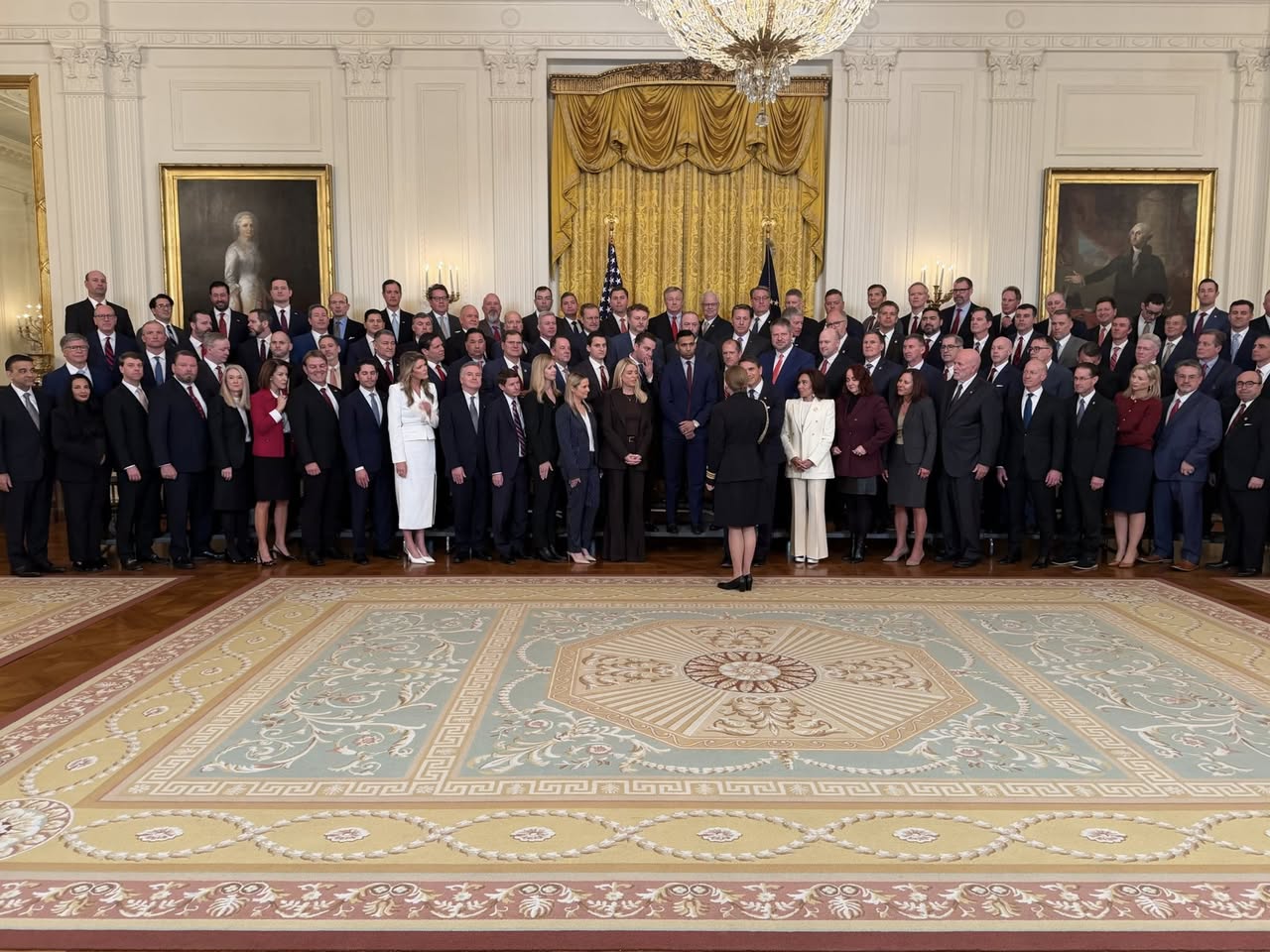
Dozens of U.S. attorneys, who lead prosecutors’ offices around the country, went to the White House Thursday for what was supposed to be a ceremonial photo shoot. After Attorney General Pam Bondi introduced the group of prosecutors, Trump criticized them as ineffective, saying the group was making it difficult for Bondi and Deputy Attorney General Todd Blanche to do their jobs, the people said.
[snip]
Among his grievances with prosecutors, Trump complained that the Justice Department hadn’t yet brought a case against one of his most prominent Democratic adversaries, Sen. Adam Schiff of California, the people said.
The department has been investigating whether Schiff engaged in mortgage fraud. The senator has called the probe a bogus attempt at political retribution.
The president criticized some specific prosecutors by jurisdiction and said he felt betrayed, the people said.
[snip]
Trump’s blowup at Justice Department prosecutors comes as the president ramps up pressure on the agency to more aggressively pursue his priorities. He has complained repeatedly in recent weeks about Bondi, calling her an ineffective enforcer of his agenda.
As WSJ noted in its story on this, the day after Trump’s tantrum, Jeanine Pirro sent a subpoena to Jerome Powell, setting off a crisis for Trump.
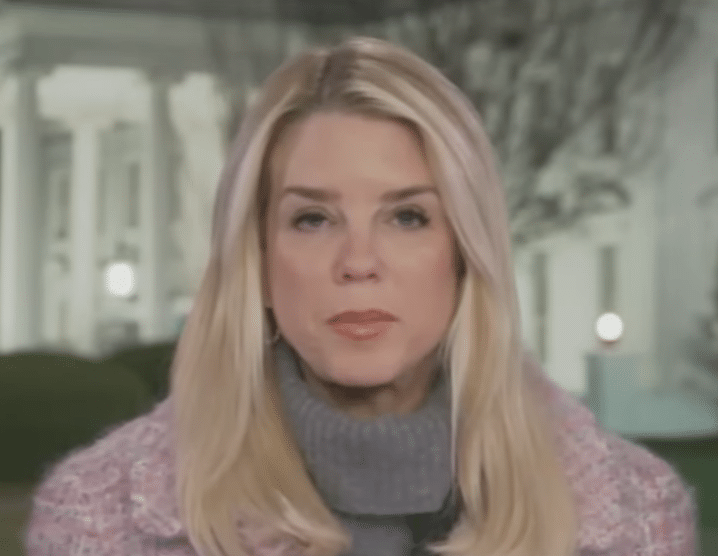
Also in the wake of that attack, the Minnesota US Attorney’s Office decided to investigate Renee Good’s network rather than the guy who shot her, Jonathan Ross, leading to the resignation of six AUSAs in MN and possibly some in the Civil Rights Division in DC, though Pam Bondi — who looked stunning for a 59 year old a year ago but now looks like shit — now claims she fired those MN AUSAs and Harmeet Dhillon claims the Civil Rights attorneys left for other reasons.
Donald Trump has made it the top focus of his DOJ to prosecute his enemies, and as a result, DOJ has been hemorrhaging experience for a year now.
That’s on top of the singular focus on Stephen Miller’s jihad against immigrants, which has led DOJ to reassign lawyers from national security cases to immigration cases (indeed, that’s one of the stated reasons why Bondi fired Robert McBride, because the First AUSA for one of the key national security divisions in the country didn’t sufficiently chase immigration cases).
But there’s another staffing choice that became public in recent weeks.
As multiple outlets have covered and as Jay Clayton detailed in two letters (January 5; January 15) to Judges Richard Berman (who presided over the Epstein case) and Paul Engelmayer (who picked up the Ghislaine Maxwell case after Alison Nathan moved to the 2nd Circuit) — DOJ has dedicated up to 580 people (the 500 reported last week, plus another 80 added this week) to replicating the review that over a thousand FBI personnel did a year ago, this time accounting for victim privacy and “independent privileges” not permitted under the act.
To date, the Department has employed over five hundred reviewers to review and redact millions of pages of materials from the investigations into Epstein and his convicted coconspirator, Maxwell.2 The SDNY alone, in conjunction with the Department, has dedicated significant resources (including AUSAs as well as other SDNY personnel), which this week has been supplemented by approximately 80 attorneys from the Department’s Criminal Division, who will coordinate and work with SDNY during the review of documents identified as likely to contain victim information. As part of that review, the Department is identifying not only those materials the publication of which are required under the Act, but also those that carry independent privileges as well as the need to redact victim-identifying information, among other things. Act, § 2(c).3
3 Any materials withheld on this basis of course will be disclosed in a report to Congress. Act § 3.
We still have no explanation for what the hell Bondi did in the last review, such that she has to dedicate 580 attorneys to replicate the review (though the explanation probably lies in the matters DOJ plans to claim privilege over).
But not only is the need to replicate the work that taxpayers already paid for drawing from national security cases, but it is drawing from other high profile sex trafficking cases.
On Tuesday, another federal judge in the Southern District of New York told prosecutors to hold off of the Epstein assignment to focus on another marquee sex crime prosecution: the case of Oren, Alon and Tal Alexander — a trio of wealthy brothers in real estate accused of using their status to rape and traffic dozens of women.
With that case set to head to trial later this month, U.S. District Judge Valerie Caproni told prosecutors that they need to focus on expeditiously sending over discovery materials.
“A few people can be strung from the Epstein case given that these people are on trial,” said the Obama appointee. “Epstein is dead.”
That’s not good enough, Trump said last week. He needs the hollowed out DOJ to pursue his enemies faster.
Meanwhile, Pam Bondi is so incompetent or corrupt, she has to replicate work she already did, reviewing the Epstein files. 1,000 FBI personnel last March, 580 attorneys now. As a result, she’s neglecting current sex trafficking prosecutions.
And we have yet to tally what the impact of the reassignment of attorneys who focus on real national security issues. Many of them are chasing Stephen Miller’s fever dreams.
https://www.emptywheel.net/wp-content/uploads/2026/01/Screenshot-2026-01-16-at-1.11.15-PM.png556718emptywheelhttps://www.emptywheel.net/wp-content/uploads/2016/07/Logo-Web.pngemptywheel2026-01-16 09:06:092026-01-16 19:06:23“Epstein Is Dead:” Pam Bondi Is Neglecting Live Sex Trafficking Prosecutions to Criminalize Democrats
Back before everyone checked out for the holidays, I did an inventory of the progress we’ve made in four ways to fight fascism (in comments ApacheTrout reminded I should have the courts in there too).
The Erica Chenoweth rule, which says that if you can get 3.5% of a population in the streets, it often leads to regime change.
Beginning to peel off four people in the Senate or eight or nine people in the House.
Rescuing Republicans from a predictable catastrophe like Democrats did in 2008 and 2020.
Waiting until 2026, winning at least one house of Congress, and beginning to rein in Trump that way.
I wrote it intending to kick off the new year with a post of things we can do, or do better. Here we are!
But first, let me explain where I’m coming from. Much of what follows builds on my belief that we’ve been fighting Donald Trump wrong.
Polarization is his superpower. It’s how he has gotten out of every single one of his political jams in the past: by turning his own scandal into a polarizing pivot, thereby turning his own failures and crimes into a matter of tribalism. Once he has done that, he invents some new bullshit story (usually stoking grievance), and getting right wingers to believe it because of that polarization.
This is why I’m such an asshole about the way people serve as data mules for Trump’s tweets: because those damn things are little polarization machines, which always serve to make him the center of attention around which society is re-polarized.
The way to combat someone whose superpower is polarization is not to exacerbate that polarization. It is to use his own tools — grievance and conspiracism — against him.
Back in May, before the Epstein files had created a full-blown crisis for the Trump Administration, Phil Bump and Mike Rothschild wrote about how conspiracism can undermine someone with power (which I added to here).
Discovering Trump was the villain of the Epstein scandal in which she had an unshakeable belief
Opposing Gaza (probably for horrible Jewish space laser reasons) and crypto currency (for justifiable reasons inflamed by conspiratorial thinking)
Seeing Trump mock affordability
After all that (but while she still had her courage), being targeted by Trump mobs
Packaging that in a morality tale, Christianity, whence she derived moral value
Simplifying and ignoring her potential political ambitions, Trump became the thing everyone suspected was being hidden in the Epstein files, and that led to cognitive dissonance that led MTG to revisit a lot of her other differences with Trump.
So some of my logic, below, is simply to focus on the things that are likely to get Trump supporters or sympathizers to feel betrayed by him including by holding people close to him accountable for shitty things we are pretty sure are going to occur. It includes:
Treat Epstein as the base layer
Focus on the Broligarchs and AI
Emphasize Trump’s loser stench
Visualize Trump’s corruption
Brand Trump as the criminal he is
Hold Stephen Miller accountable for his failures
Visualize how Stephen Miller took money for cancer research and veterans care to pay for a goon army snatching grandmothers
Discredit Key Spokespeople
Use Trump’s claimed opposition to antisemitism against him
Reclaim disinformation research
One more point about this. This post is not a To Do list for the DNC (though some people on Bluesky will undoubtedly treat it as such). It’s a To Do list for myself, most of all, but one that others can borrow if they find it useful. Many of these things are attentional activities that are about repetition and focus as much as congressional oversight or electoral politics.
These are meant to be stories we can tell, regardless of what someone in Congress or some candidate in Iowa does.
Treat Epstein as the base layer
Remember that Marc Caputo column — it was published on December 23 — stating that the Epstein releases could last a whole ‘nother week? On the day that would mark that week, December 30, Devlin Barrett published a story saying that, “The document review” of what is now believed to be 5.2 million documents “is expected to take until at least Jan. 20, according to a person familiar with the matter.” Even if they could finish it by January 20 (they won’t), that’ll just be the first go-around. DOJ has not done what they need to do to document the redactions, so there’ll be demands from Congress for them to do that (with obvious areas — including DOJ names and some deliberative documents specifically included in the law, where they’re in violation), they’ll need to repeat the entire process over again, Congress will begin to bring more legal pressure, and all the while survivors will be pointing out things they missed.
A week, Marc Caputo reported, as if that were credible!
This will go on for some time. This will go on for a very long time.
Still, while the Epstein scandal has been absolutely instrumental in loosing Trump’s grip on things, people are naive in thinking that will be enough. “My friends will get hurt,” Trump predicted, but what does it really mean for Trump’s power that Les Wexner has been implicated in the Epstein scandal as a co-conspirator? What is the use of creating right wing cognitive dissonance about Les Wexner, when Wexner is not the oligarch currently helping Trump destroy the country?
In my opinion, the Epstein scandal is a tool. It undercuts Trump’s ability to grab and redirect attention. It can create moments of cognitive dissonance, as it did for MTG. It is a way to turn Trump’s conspiracism and populism against him and may make other related narrative lines more salient. And if there’s a surprise disclosure — perhaps about Melania’s origin story — all the better. But as you keep the focus on Epstein, remember that there needs to be a direction beyond Epstein as well, a direction which incorporates the oligarchs who are still key players in Trump’s network of power.
Focus on the Broligarchs and AI
The Broligarchs who’ve been a key part of Trump’s power are one way to do that (and that’s before we’ve really gotten into Steve Bannon and Peter Thiel’s ties to Epstein).
Tesla Takedown was one of the most successful campaigns of 2025. At a time when Tesla faced cheaper competitors worldwide, the protests incurred a cost on Musk for his DOGE depredations.
Elon was installed in the White House in significant part by fellow South African “alien invader” David Sacks, who is even more conspiratorial and even more pro-Russian than Musk. Sacks was installed in the White House as a Special Government Employee (who, Elizabeth Warren suggests, has overstayed his welcome) to force a bunch of policy decisions that suck for America but ensure that Broligarchs won’t pay any consequences for their rash business deals. When one or both of crypto and AI crash (this is a really good story on how and why AI will burst), he’ll be there to ensure the government bails them out, as he did after playing a role in the failure of Silicon Valley Bank.
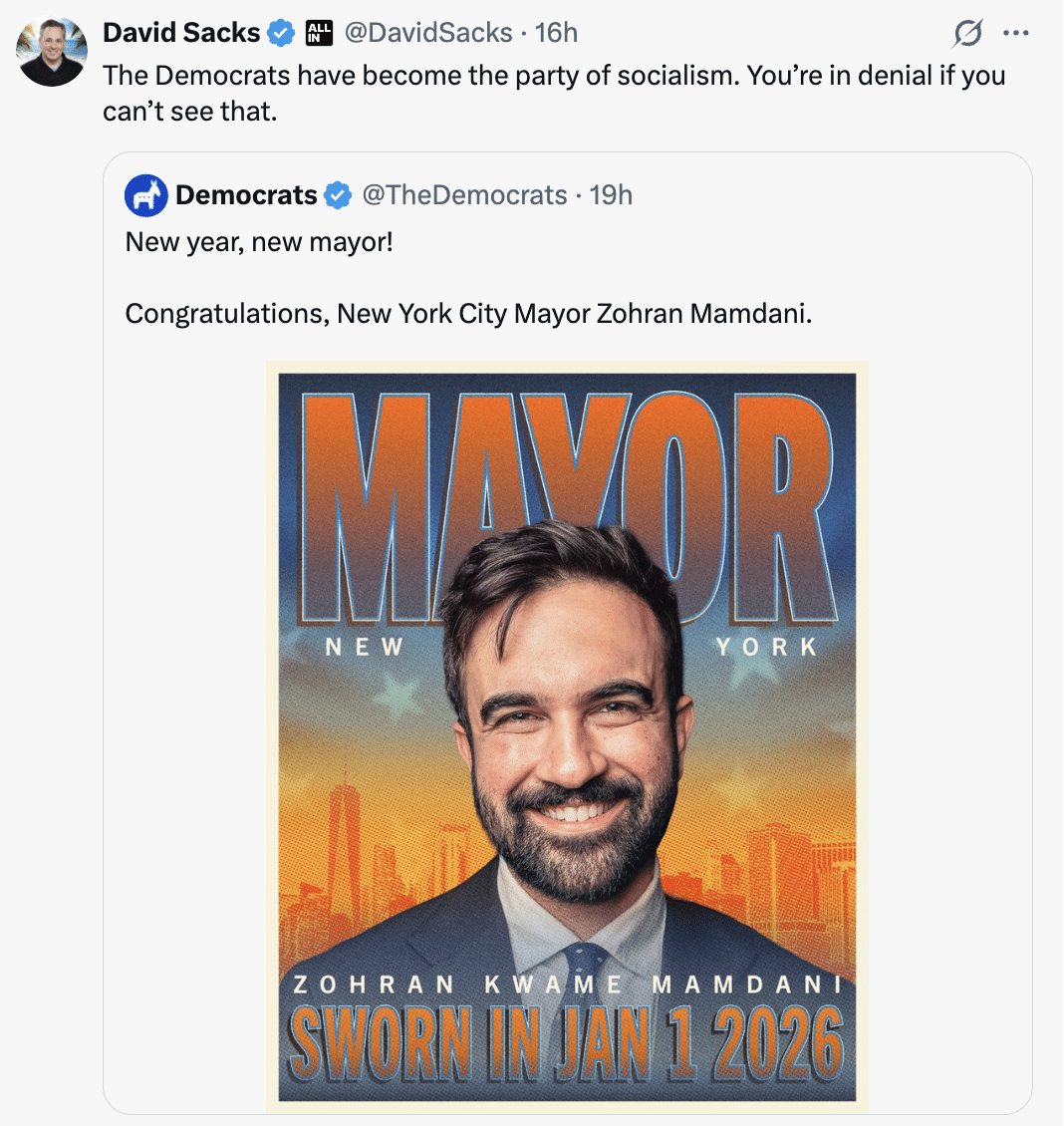
And even as Trump sheds support based on his mockery of affordability, even as MTG split with Trump over that and his support for crypto, Sacks is trying to brand Democrats as being more populist than even Zohran Mamdani is.
Fine. You want Democrats to be the party attending to the needs of working people? You’ve just made the GOP the party of “alien invader” billionaires who got tax cuts as millions lost their health care.
Sacks and the other Broligarchs are going to do something for which they’ll try to dodge accountability. Now is the time to make sure his name comes up as people look for culprits.
Emphasize Trump’s loser stench
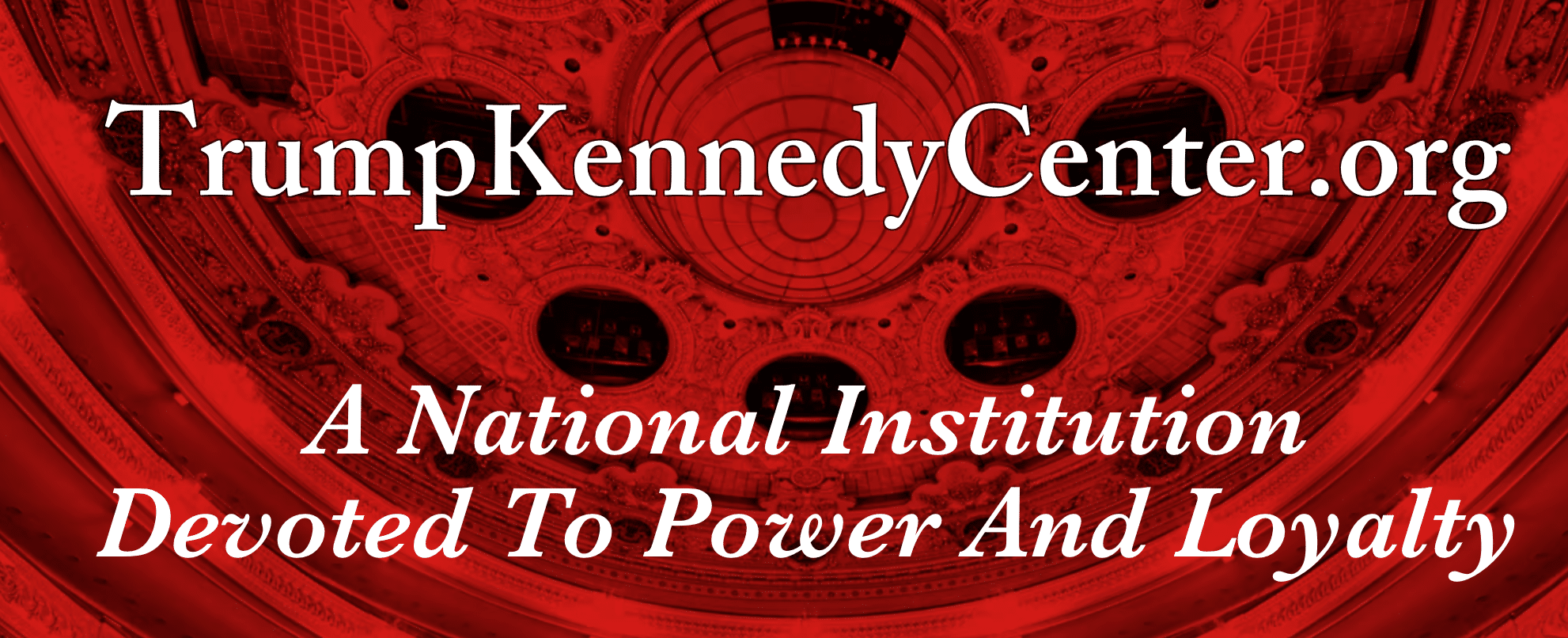
Another thing that will lead people to defect is to realize that Trump is a loser. He has done things — like the takeover of the Kennedy Center — that makes it easy to demonstrate he’s a loser in tangible fashion. Better still, every time Trump attaches his name to something, it provides an opportunity to hijack that brand, as comedian Toby Morton auspiciously managed to do by anticipating Trump’s most venal instincts and buying the domain.
The same is true of his businesses. Trump and his entire family is getting rich off the presidency 2.0. But his businesses are built as cons, sometimes Ponzi schemes. The idea is to leverage the loyalty of MAGAts to get them to invest in something, run up its value, only to collapse, leaving the most vulnerable screwed. In the past, at least, the cult effect was such that even MAGAts bilked by Trump associates, as with Steve Bannon’s Build the Wall graft, were reluctant to turn on the fraudsters; that may change. But at the very least, the volatile nature of Trump’s frauds makes it easy to show that as a businessman, he’s a loser.
Visualize Trump’s corruption
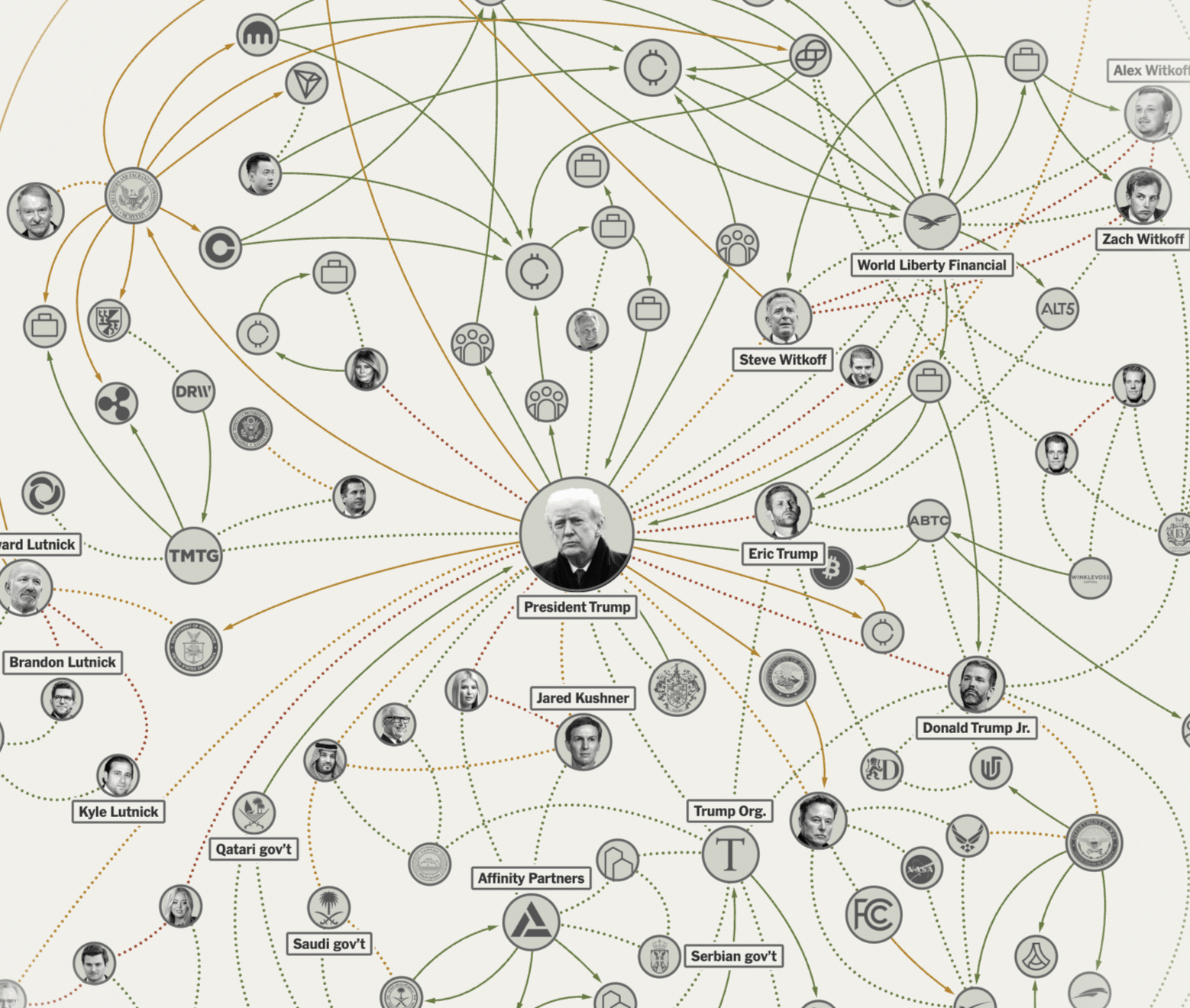
While there has been good reporting on Trump’s corruption — see, for example, NYT’s nifty visualization from New Year’s Eve — there has not been a systematic effort to take on his corruption.
Nevertheless, possibly because of the Epstein scandal, a majority of the country does think Trump is corrupt.
That may actually not be in a bad place to be as we move into 2026. That’s because Democrats can make Republican inaction in the face of Trump’s corruption a campaign issue (and then, if it leads to a Democratic sweep in midterms, the electoral buy-in will be in place to do a lot of oversight and defunding of Trump’s corruption).
Trump’s pardons are similar. There’s actually a solid stream of reporting on how corrupt they are, without yet any political direction to it. Democrats running against Republican incumbents — especially in the Senate — should state as presumed that it is the job of Senators to respond to the kind of naked corruption Trump is engaged in.
Where activists can magnify the good reporting on both Trump’s corruption and his pardons is to focus on the victims. This is actually showing up in the reporting on both topics. WaPo focused on the victims of Trevor Milton who might have gotten restitution had Trump not pardoned him. LAT similarly focused on the victims fucked over by Trump’s pardon of David Gentile.
Rosenberg, a retired wholesale produce distributor living in Nevada, has supported Trump since he entered politics, but the president’s decision in November to commute the sentence of former private equity executive David Gentile has left him angry and confused.
“I just feel I’ve been betrayed,” Rosenberg, 68, said. “I don’t know why he would do this, unless there was some sort of gain somewhere, or some favor being called in. I am very disappointed. I kind of put him above this kind of thing.”
Trump’s decision to release Gentile from prison less than two weeks into his seven-year sentence has drawn scrutiny from securities attorneys and a U.S. senator — all of whom say the White House’s explanation for the act of clemency is not adding up. It’s also drawn the ire of his victims.
“I think it is disgusting,” said CarolAnn Tutera, 70, who invested more than $400,000 with Gentile’s company, GPB Capital. Gentile, she added, “basically pulled a Bernie Madoff and swindled people out of their money, and then he gets to go home to his wife and kids.”
This superb Bloomberg story on the extent to which the Juan Orlando Hernández pardon unraveled years of work starts with a murder arranged by the network.
Five minutes later, González was circling a roundabout when a gray van braked in front of him. At the same time, a green SUV crowded his rear bumper. A motorcycle carrying two men emerged on his left. A man on the back of the bike fired six shots through the driver-side window. González’s head slumped toward his shoulder, and he tilted forward, held upright by the seatbelt. He died instantly.
More than a dozen men streamed out of the two vehicles that had sandwiched his Nissan. They scrambled to collect the spent shell casings on the ground, then scattered other casings across the pavement—decoys to complicate ballistics tracing. They jumped back into their vehicles, circled the roundabout and took the same road Julián had just driven down.
When they approached the Slaughterhouse, the gates opened to let them in, then closed behind them.
Every one of these pardons has a victim — and that’s before you get into the people newly victimized by people who’ve been pardoned by Trump, which NYT covered in November and others are tracking as well.
A New Jersey fraudster who was pardoned by President Trump in 2021 was sentenced to 37 years in prison this month for running a $44 million Ponzi scheme, one of a growing number of people granted clemency by Mr. Trump only to be charged with new crimes.
The man, Eliyahu Weinstein, was pardoned by Mr. Trump in 2021 and was re-indicted by the U.S. attorney’s office in New Jersey three years later. He was accused of swindling investors who thought their money was being used to buy surgical masks, baby formula and first-aid kits bound for Ukraine, and a jury convicted him in April of several crimes, including conspiracy to commit securities and wire fraud.
[snip]
Some of those pardoned for their role in the Jan. 6, 2021, riot at the U.S. Capitol have quickly drawn new attention from law enforcement. The group Citizens for Responsibility and Ethics in Washington said in June that at least 10 of the more than 1,500 who were pardoned had been rearrested and charged, and the number has only grown since then.
Earlier this month, a man who was pardoned after having participated in the Jan. 6 attack was charged with sex crimes against two children. Another man whose original sentence Mr. Trump commuted in 2021 was recently sentenced to 27 months in prison after convictions on physical and sexual assault, among other crimes.
These stories provide an important way to explain the costs of Trump’s corruption.
Brand Trump as the criminal he is
And while we’re talking about telling these stories: We must never ever cede the ground of crime to Stephen Miller’s attempt to brand immigrants as criminals.
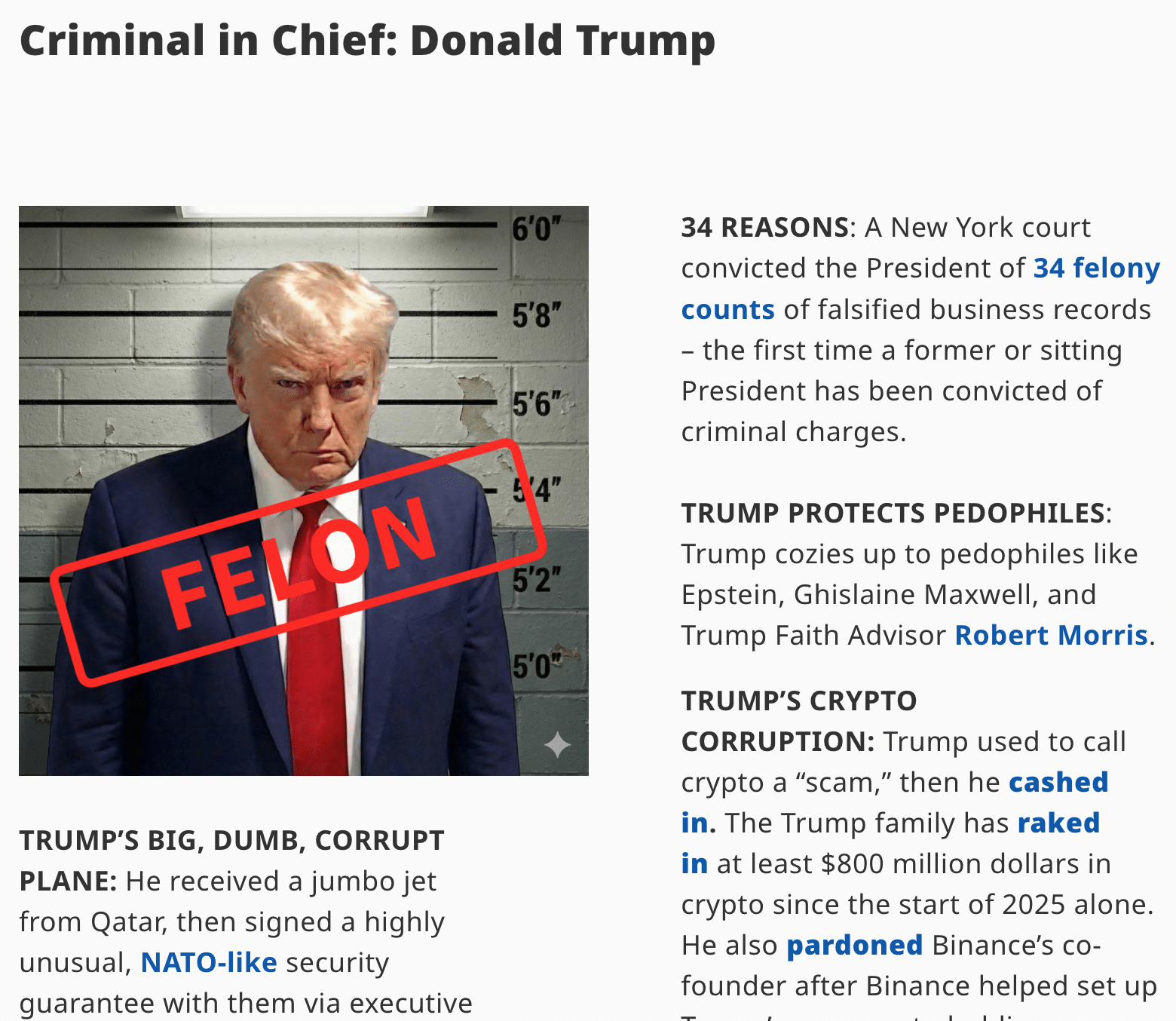
Trump — a felon who freed hundreds of cop assailants on his first day on the job — has an entire infrastructure devoted to trying to spin brown people as criminal. Every time that infrastructure goes into action, including with the effort to brand Somalis in Minnesota as inherently fraudulent when Trump himself is a serial fraudster, we need to repeat, relentlessly, that Trump is a serial criminal who coddles other criminals.
This is something Gavin Newsom just started doing, with an entire website devoted to cataloging Trump’s crime and that of his pardon recipients.
Do not let a conversation about crime go by without focusing on how much of it Trump does.
Crime, in Trump’s era, is a rich white man’s thing. And while it will take a lot of work to adjust a lot of racist priors, until people start seeing Trump as a criminal it will be far too easy for them to make excuses for him.
The import of shifting how we speak of Miller’s considerable power is clear. That’s true because he frankly has done huge damage, even to Trump’s goals, and well more so to average Americans. He’s someone that people, including Republicans, can scapegoat for Trump’s failures (and they’ll be right). And if we don’t make sure that happens, then he’ll scapegoat brown people.
Again, are Somali day care workers or billionaires systematically defrauding average people the problem? One easy to way to drown out Miller’s case that it’s the former is to make it clear how much he personally has harmed average Americans.
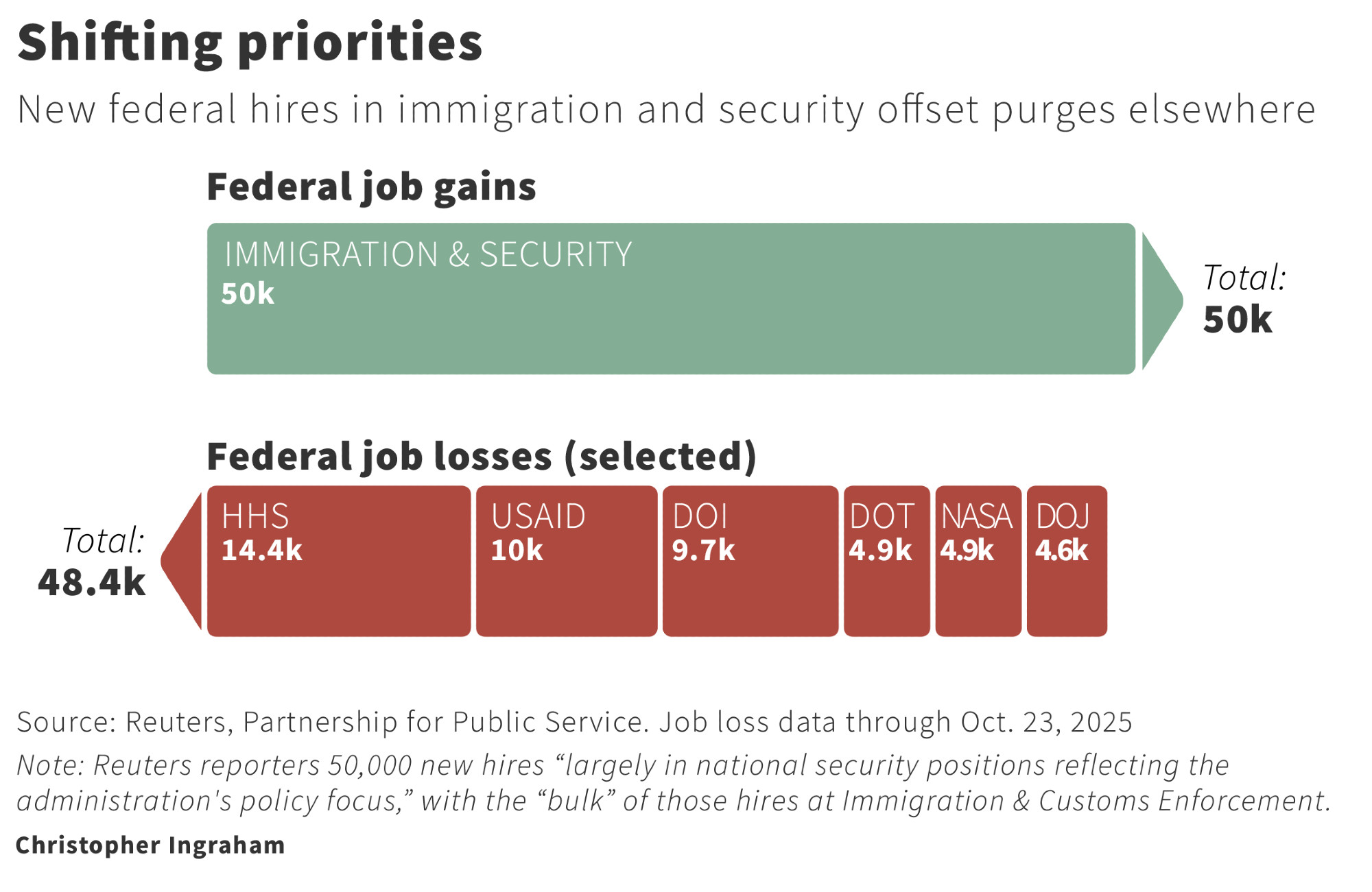
Visualize how Stephen Miller took money for cancer research and veterans care to pay for a goon army snatching grandmothers
But it still retains support of a big chunk of the population, probably because Trump officials routinely blame their own failures to address American problems on migrants, when as often as not, Trump’s response to immigration is the source of the problem.
America can’t have nice things, like cures for cancer and welcoming public schools, because Republicans in Congress took the money used to pay for those things and gave it to Stephen Miller to use to invade America’s neighborhoods.
Discredit Key Spokespeople
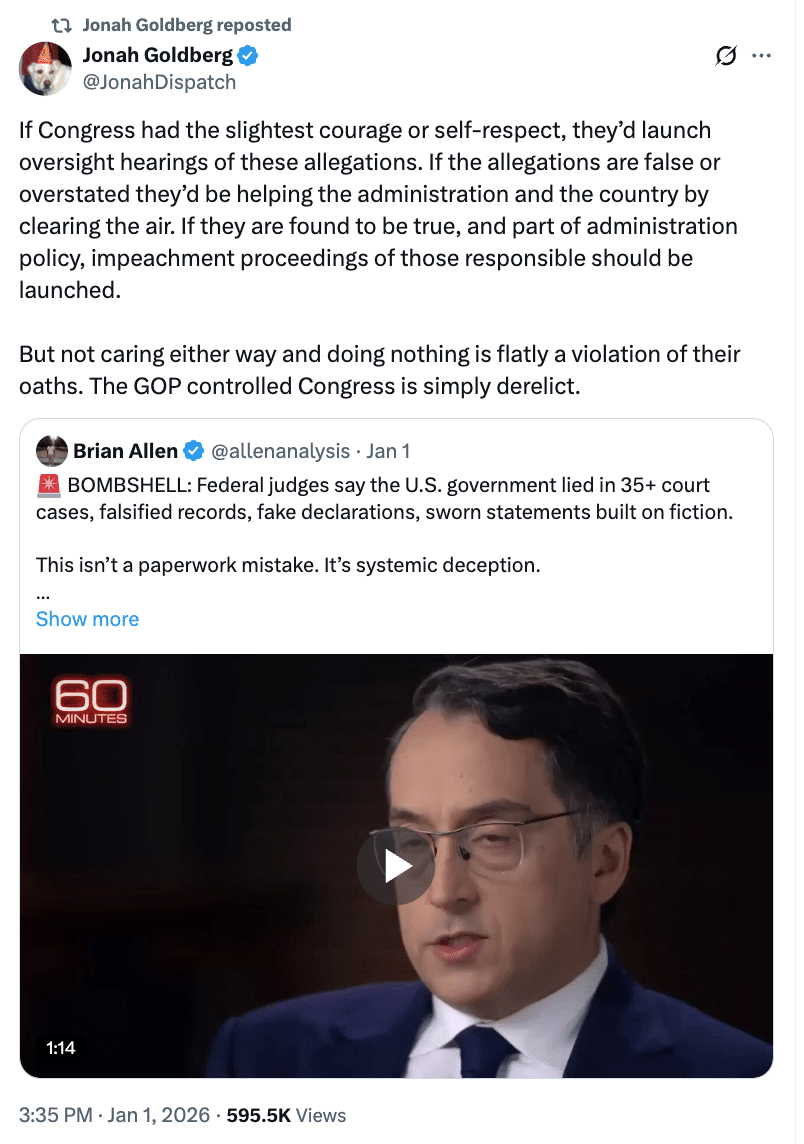
Right wingers like Jonah Goldberg and David French have expressed alarm by an old promo for a 60 Minutes piece (the piece itself was from October) that an influencer reposted yesterday, describing dozens of times when the government lied in court filings.
Judges have caught Trump’s DOJ in several major lies since then. In Chicago, Judge Sara Ellis wrote a 233-page opinion documenting the many lies DHS has told about their Chicago invasion.
And in December, judges in both Kilmar Abrego’s case caught the government obfuscating. In the criminal case, on December 30, Judge Waverly Crenshaw unsealed a December 3 opinion describing how Nashville’s US Attorney lied about how centrally involved Todd Blanche’s office was in demanding Abrego face trial.
The central question after Abrego established a prima facie case of vindictiveness is what information in the government’s control sheds light on its new decision to prosecute Abrego, after removing him from the United States without criminal charges. These documents show that McGuire did not act alone and to the extent McGuire had input on the decision to prosecute, he shared it with Singh and others. (Doc. No. 178-1). Specifically, the government’s documents may contradict its prior representations that the decision to prosecute was made locally and that there were no outside influences. For example, Singh contacted McGuire on April 27, 2025, to discuss Abrego’s case. (See Doc. No. 229 at Abrego-Garcia000001). On April 30, 2025, Singh asked McGuire what the potential charges against Abrego would be, whether the charging document would reference Abrego’s alleged MS-13 affiliation, and asked for a phone call before any charges were filed. (Id. at Abrego-Garcia000007–000008). In a separate email on April 30, 2025, Singh made clear that Abrego’s criminal prosecution was a “top priority” for the Deputy Attorney General’s office (Blanche). (Id. at Abrego-Garcia000037). He then told McGuire to “sketch out a draft complaint for the 1324 charge [making it unlawful to bring in and harbor certain aliens].” (Id.). On May 15th, McGuire emailed his staff that “DAG (Blanche) and PDAG would like Garcia charged sooner rather than later.” (Id. at Abrego-Garcia000060).
And as I’ve already noted, Judge Paula Xinis cataloged the many deliberately ignorant declarations DOJ filed about whether DHS had deportation plans for Abrego when she ruled that he must be released.
Respondents showcased Cantú’s ignorance about the content of his Declaration pertaining to Costa Rica. As the pointed questions of Respondents’ counsel made clear, Cantú’s lack of knowledge was planned and purposeful.
Counsel: So paragraph 4, final sentence [of the Cantú Declaration], do you see where it says the word—the words “certain understandings”?
Cantú: I found it. Yes, I do. I see it.
Counsel: What are the certain understandings referenced in the last sentence?
Cantú: I don’t know . . .
Counsel: What are the “contingencies” referenced in the last sentence?
Cantú: I do not know . . .
Counsel: What are the “interim developments” referenced in paragraph 5?
Cantú: I don’t know.
ECF No. 107 at 26:8–27:12 (counsel for Respondents, Jonathan Guynn (“Guynn”), questioning Cantú). See also id. at 53:8–9 (Guynn, at sidebar with Court, stating “I’ll just say I told you this was exactly what was going to happen,” regarding the witness’ ignorance on Costa Rica as a viable country of removal).
Ultimately, Respondents’ calculated effort to take Costa Rica “off the table” backfired. Within 24 hours, Costa Rica, through Minister Zamora Cordero, communicated to multiple news sources that its offer to grant Abrego Garcia residence and refugee status is, and always has been, firm, unwavering, and unconditional.
It’s a problem that, after huge scoldings like these, right wing critics of Trump don’t understand how much Trump’s people lie — not least because the Supreme Court still credits the most outlandish claims Trump makes, even after they’ve been thoroughly debunked by lower court judges.
Many of these lies are coming from the same people: Stephen Miller, Todd Blanche’s office, DHS spox Tricia McLaughlin, and Greg Bovino.
It is remarkable that so many of these people have been caught lying to courts (or publicly, about people before courts). But it needs to become common knowledge for everyone, so every time Tricia says something, they start from the assumption she’s lying, because she almost always is.
There comes a time when the credibility of systematic liars not named Trump collapse entirely such that every utterance they make discredits the claims they try to sell. Tricia McLaughlin, at least, is close those levels of propaganda, and Stephen Miller is not far behind.
Use Trump’s claimed opposition to antisemitism against him
Within days of his inauguration last year, Trump signed an EO — adding to one he signed in 2019 — claiming to oppose antisemitism. There has been some discussion about the bad faith of this EO and a DOJ lawyer implementing it, Michael Velchik, once wrote a paper from Hitler’s perspective. While it is explicitly targeted at universities (and has been a key tool to attempt to takeover universities), it nevertheless claimed to oppose antisemitism everywhere.
It shall be the policy of the United States to combat anti-Semitism vigorously, using all available and appropriate legal tools, to prosecute, remove, or otherwise hold to account the perpetrators of unlawful anti-Semitic harassment and violence.
This is the kind of statement of principle that can form the basis of political pressure — particularly as the MAGAt movement splinters around the overt antisemitism of people like Nick Fuentes and Candace Owen, and as political opportunists like Ted Cruz attempt to exploit that splinter.
We’re going to have to fight this battle in any case. As part of the revocation of everything Eric Adams did after he was indicted for bribery yesterday, Zohran Mamdani revoked an EO that gave Israel preferential treatment, which Israel is using to stoke division; yet Mamdani preserved the office Adams opened to combat antisemitism.
We need to call out the dripping antisemitism of Trump’s team, from top (at least JD Vance, who refuses to disavow Fuentes) to bottom.
There are two key Trump aides who should be targeted. Most notably, Paul Ingrassia, who had to withdraw his nomination to be Special Counsel after Politico exposed texts in which he confessed to a Nazi streak been installed at GSA instead. In addition, Kingsley Wilson became DOD spokesperson in spite of Neo-Nazi comments. NPR has done good work unpacking these ties.
Reclaim disinformation research
Republicans plan on exporting fascism via US tech platforms.
That’s not new. I’ve been talking about Elon’s plans to use Xitter as a machine for fascism for some time.
And, in the wake of the EU’s sanctions against Elon Musk for — basically — lying about why I have a blue check, Marco Rubio stripped the visas of five people, including US Green Card holder Imran Ahmed, a long time adversary of Elon’s.
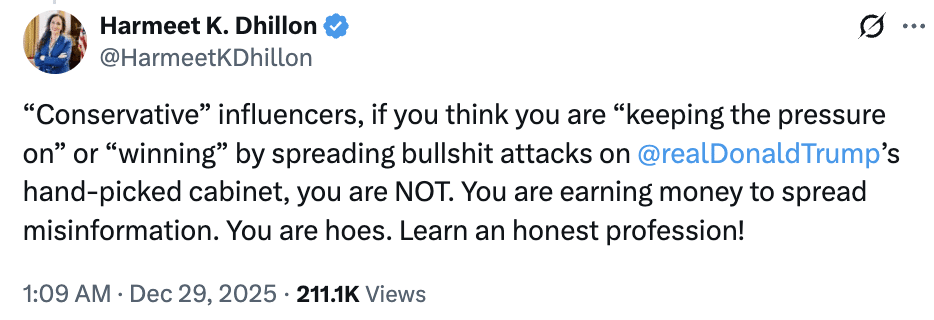
But there are several developments that suggest it is time to renew efforts to defend disinformation research, not least the White House’s absurd effort to attack real journalism, what is sure to be a snowballing failure on Bari Weiss’ part to make propaganda popular, and the meltdown the head of DOJ’s Civil Rights division, Harmeet Dhillon, had over the holidays about right wing “misinformation” targeting Pam Bondi.
The right wingers are doing what they themselves established is unlawful. And that presents both political and legal opportunities to demonize their propaganda.
Some people write short resolutions. I guess I write 4,000-word To Do lists. Join me in my efforts!
https://www.emptywheel.net/wp-content/uploads/2026/01/Screenshot-2026-01-02-at-3.26.59-PM.png13541560emptywheelhttps://www.emptywheel.net/wp-content/uploads/2016/07/Logo-Web.pngemptywheel2026-01-02 11:39:402026-01-02 16:05:04Where We Go from Here
Starting around the same time, DOJ launched some of the most complexly executed Friday Night News dumps going.
Epstein Limited Hangout
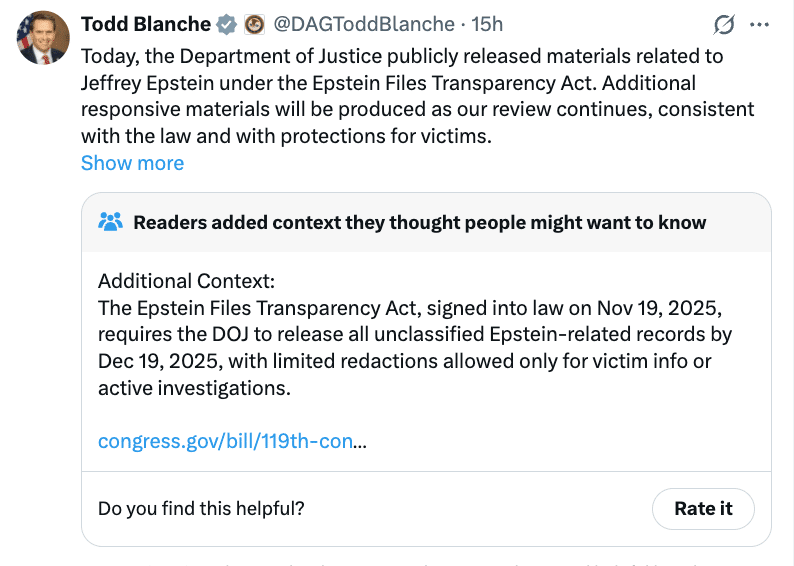
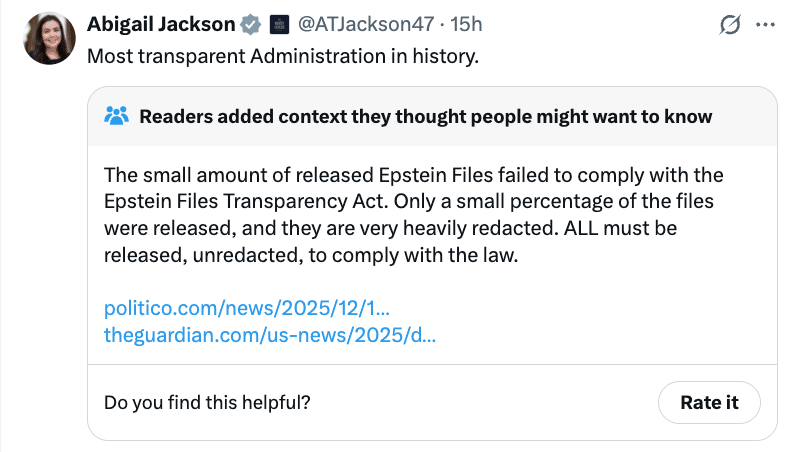
The big attraction was the release of the first batch of the Epstein files. The limited release violates the law, which required all files to be released yesterday.
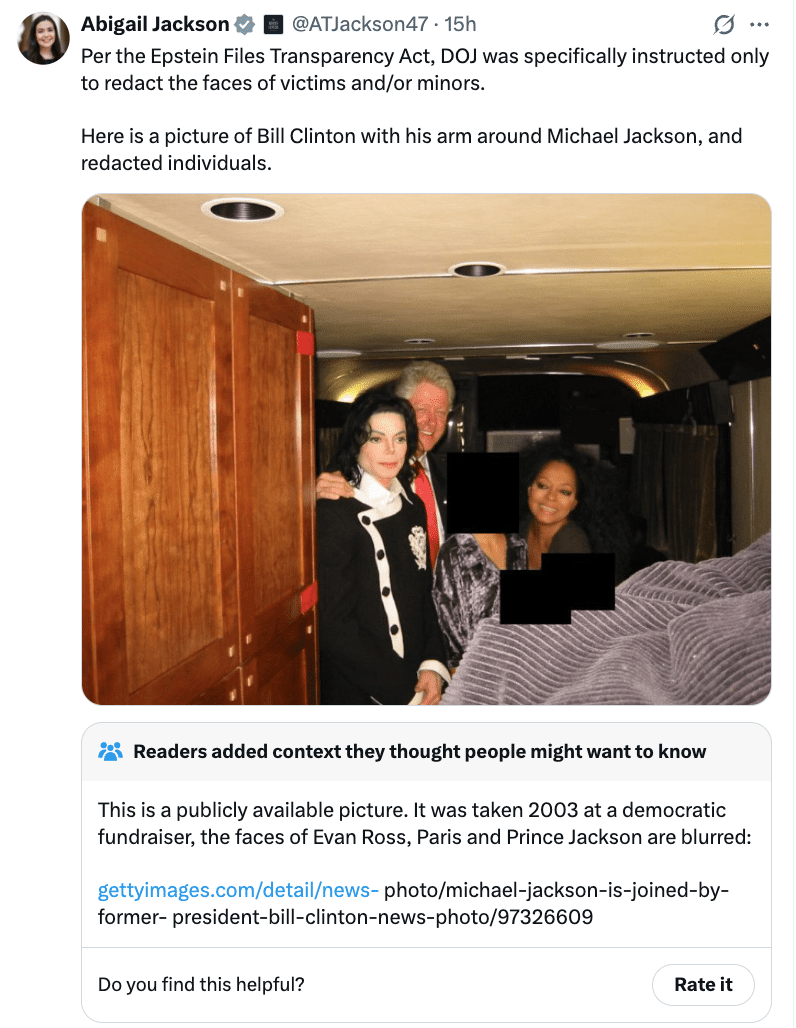
Instead, there were a whole bunch of Bill Clinton photos, the document reflecting Maria Farmer’s complaint from 1996, that went ignored for years, and redacted grand jury transcripts that clearly violate the law. [Update: They have now released the SDNY ones.] The government did not release the proposed indictment and prosecution memo for the indictment that should have been filed in 2007; that may be sealed as deliberative.
Todd Blanche’s wildly dishonest letter (particularly with regards to his claimed concern for victims, after being admonished repeatedly by judges for failing to take that responsibility seriously and a last minute bid that promised but failed to put Pam Bondi on the phone) explaining the release emphasizes how Bondi took over a hundred national security attorneys off their job hunting hackers and spies to conduct a second review; it does not mention the even bigger review the FBI accomplished in March.
The review team consisted of more than 200 Department attorneys working to determine whether materials were responsive under the Act and. if so, whether redactions or withholding was required, The review had multiple levels. First, 187 attorneys from the Department’sNational Security Division (NSD) conducted a review of all items produced to JMD for responsiveness and any redactions under the Act. Second, a quality-control team of 25 attorneys conducted a second-level review to ensure that victim personally identifying information wasproperly redacted and that materials that should not be redacted were not marked for redaction.The second-level review team consisted of attorneys from the Department’s Office of Privacy and Civil Liberties (OPCL) and Office of Information Policy (OIP)—these attorneys are experts in privacy rights and reviewing large volumes of discovery. After the second-level review team completed its quality review, responsive materials were uploaded onto the website for public production as required under the Act. See Sec. 2(a). Finally, Assistant United States Attorneys from the Southern District of New York reviewed the responsive materials to confirm appropriate redactions so that the United States Attorney for the Southern District of New York could certify that victim identifying information was appropriately protected.
That John Eisenberg’s department was in charge of a second pass on these documents is of some interest; there’s no specific competence Nat Sec attorneys would have, but Eisenberg has helped Trump cover stuff up in the past, most notably the transcript of his perfect phone call with Volodymyr Zelenskyy.
Thus far the limited hangout has shifted the focus onto Clinton and away from Trump, but as Kyle Cheney lays out, it risks creating a WikiLeaks effect, in which a focus remains on Epstein for weeks or even months.
Deputy Attorney General Todd Blanche confirmed Friday that the documents would be released on a rolling basis through the holidays — and possibly beyond. And, in court papers filed shortly after Friday’s partial release, the Justice Department emphasized that more files are still undergoing a review and redaction process to protect victims and new Trump-ordered investigations before they can be released.
The daily drip is a remarkable result for President Donald Trump, who has urged his allies to move past the Epstein files — prompting jeers from Democrats who say he’s trying to conceal details about his own longtime relationship with Epstein. Trump has maintained for years that he and Epstein had a falling out years ago, and no evidence has suggested that Trump took part in Epstein’s trafficking operation. Trump advocated for the release of the files only after Republicans in Congress rebuffed his initial pleas to keep them concealed.
[snip]
Trump is no stranger to the political power of intermittent disclosures of derogatory information. In 2016, Trump led the charge to capitalize on the hack-and-leak operation that led to daily publications of the campaign emails of Hillary Clinton and her top allies. The steady drumbeat of embarrassing releases — amplified by Trump and a ravenous press corps — helped sink Clinton’s campaign in its final weeks.
And that’s before the political and legal response to this limited hangout. Some victims are already expressing disappointment — most notably, by the redaction of grand jury material and names they know they shared, as well as the draft indictment from Florida.
Tom Massie and Ro Khanna, while originally giving DOJ the benefit of the doubt, are now contemplating measures they can take — potentially including contempt or impeachment — to enforce this law.
After Fox News was the first to report that the names of some politically exposed persons would be redacted, DOJ’s favorite transcriptionist Brooke Singman told a different story.
And Administration officials are getting burned by Elon’s fascism machine for their dishonesty.
Once again, Trump’s top flunkies may be overestimating their ability to contain their scandal.
Todd Blanche behind the selective prosecution
Meanwhile, efforts by those same flunkies to punish Kilmar Abrego continue to impose costs.
There have been parallel proceedings with Abrego in the last month. Just over a week ago in his immigration docket, Judge Paula Xinis ordered Kilmar Abrego to be released from ICE custody for the first time since March, and then issued another order enjoining DHS from taking him back into custody at a check-in the next day. Effectively, Xinis found the government had been playing games for months, making claims they had plans to ship Abrego to one or another African country instead of Costa Rica, which had agreed to take him. Those games were, in effect, admission they had no order of removal for him, and so could no longer detain him.
[B]ecause Respondents have no statutory authority to remove Abrego Garcia to a third country absent a removal order, his removal cannot be considered reasonably foreseeable, imminent, or consistent with due process. Although Respondents may eventually get it right, they have not as of today. Thus, Abrego Garcia’s detention for the stated purpose of third country removal cannot continue.
But even as that great drama was happening, something potentially more dramatic was transpiring in Abrego’s criminal docket.
Back on December 4, Judge Waverly Crenshaw, who had been receiving, ex parte, potential evidence he ordered the government turn over in response to Abrego’s vindictive prosecution claim, canceled a hearing and kicked off a fight over disclosures with DOJ. Four days later he had a hearing with the government as part of their bid for partial reconsideration, but then provided a limited set of exhibits to Kilmar’s attorneys.
Then yesterday, in addition to a request that Judge Crenshaw gag Greg Bovino — who keeps lying about Abrego — Abrego’s team submitted filings in support of the bid to dismiss the indictment. One discloses that Todd Blanche’s office was pushed by people within Blanche’s office, including Aakash Singh, who is centrally involved in Blanche’s other abuse of DOJ resources, including by targeting George Soros.
Months ago now, this Court recognized that Deputy Attorney General Todd Blanche’s “remarkable” admission that this case was brought because “a judge in Maryland…questioned” the government’s decision to deport Mr. Abrego and “accus[ed] us of doing something wrong”1 may “come close to establishing actual vindictiveness.” (Dkt. 138 at 7-8). The only thing the Court found missing from the record was evidence “tying [Mr. Blanche’s statements] to actual decisionmakers.” (Id. at 8). Not anymore. Previously, the Court rightly wondered who placed this case on Mr. McGuire’s desk and what their motivations were. (Dkt. 185 at 2). We now know: it was Mr. Blanche and his office, the Office of the Deputy Attorney General, or “ODAG.” On April 30, 2025, just three days after Mr. McGuire personally took on this case, one of Mr. Blanche’s chief aides, Associate Deputy Attorney General Aakash Singh, told Mr. McGuire that this case was a [redacted]2 (Abrego-Garcia000007). That same day, Mr. Singh asked Mr. McGuire: [redacted] (Abrego-Garcia000008). Mr. McGuire responded with a timing update, saying he wanted to about a strategic question, and assuring Mr. Singh [redacted] and [redacted] (Abrego-Garcia000008). These communications and others show, as the Court put it, that [redacted] and [redacted] (Dkt. 241 at 5, 7). The “remarkable” statements “com[ing] close” to establishing vindictiveness (Dkt. 138 at 7-8) came from the same place— ODAG—as the instructions to Mr. McGuire to charge this case. The only “independent” decision (Dkt. 199 at 1) Mr. McGuire made was whether to acquiesce in ODAG’s directive to charge this case, or risk forfeiting his job as Acting U.S. Attorney—and perhaps his employment with the Department of Justice—for refusing to do the political bidding of an Executive Branch that is avowedly using prosecutorial power for “score settling.”3
2 The Court’s December 3 opinion (Dkt. 241) remains sealed, and the discovery produced to the defense in connection with Mr. Abrego’s motion to dismiss for vindictive and selective prosecution was provided pursuant to a protective order requiring that “[a]ny filing of discovery materials must be done under seal pending further orders of this Court” (Dkt. 77 at 2). Although the defense does not believe that any of these materials should be sealed for the reasons stated in Mr. Abrego’s memorandum of law regarding sealing (Dkt. 264), the defense is publicly filing a redacted version of this brief out of an abundance of caution pending further orders of the Court.
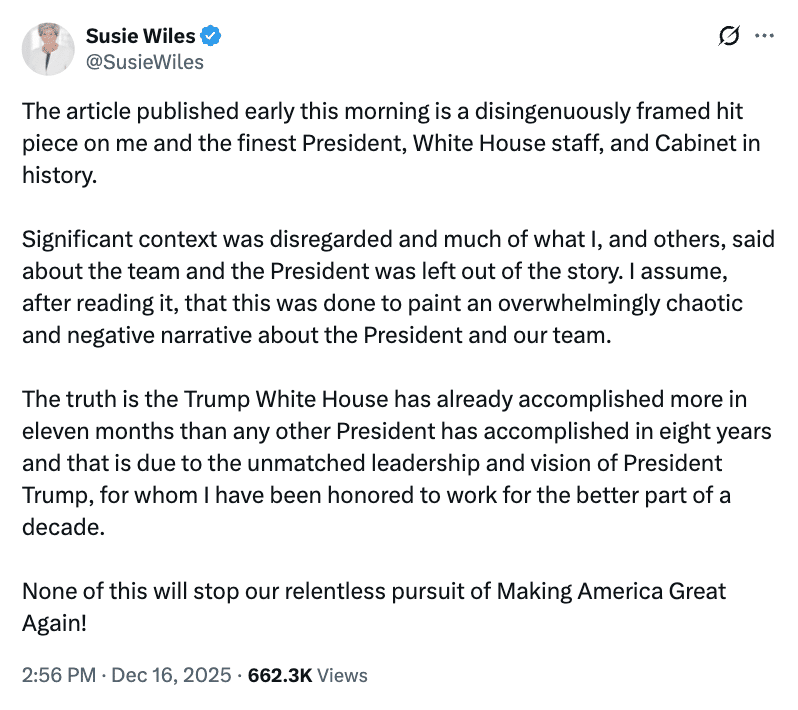
3 See Chris Whipple, Susie Wiles Talks Epstein Files, Pete Hegseth’s War Tactics, Retribution, and More (Part 2 of 2), Vanity Fair (Dec. 16, 2025), https://www.vanityfair.com/news/story/trump-susie-wiles-interview-exclusive-part-2.
While the specific content of this discovery remains redacted, the gist of it is clear: Blanche’s office ordered Tennessee prosecutors to file charges against Abrego in retaliation for his assertion of his due process rights.
We know similar documents exist in other cases — most notably, that of LaMonica McIver, Jim Comey, and Letitia James — but no one else has succeeded in getting their hands on the proof.
The Jim Comey stall
Speaking of which, the news you heard about yesterday is that DOJ filed its notice of appeal in both the Jim Comey and Letitia James’ dismissals.
The move comes after DOJ tried to indict James again in Norfolk on December 4 and then tried again in Alexandria on December 11, after which the grand jury made a point of making the failure (and the new terms of the indictment, which Molly Roberts lays out here) clear; Politico first disclosed the Alexandria filings here.
But I think the more interesting development — filed close to the time of the notice of appeals (the notices landed in my email box around 5:44-46PM ET on the last Friday before Christmas and the emergency motion landed in my email box around 5:17PM) — was yet another emergency motion in the Dan Richman case, something DOJ (under Lindsey the Insurance Lawyer’s name) keeps doing. After Judge Colleen Kollar-Kotelly issued her ruling that sort of said DOJ had to return Dan Richman’s stuff and move the remaining copy to EDVA, DOJ filed an emergency motion asking for clarification and an extension and (in a footnote) reconsideration. After Kollar-Kotelly granted the extension and some clarification (while grumbling about the tardiness and largely blowing off the motion for reconsideration), DOJ asked for another extension. Then DOJ filed a motion just informing Kollar-Kotelly they were going to do something else, the judge issued a long docket order noting (in part) that DOJ had violated their assurances they wouldn’t make any copies of this material, then ordering Richman to explain whether he was cool with this material ending up someplace still in DOJ custody rather than EDVA.
In its December 12, 2025, Order, the Court ordered the Government to “return to Petitioner Richman all copies of the covered materials, except for the single copy that the Court [] allowed to be deposited, under seal, with the U.S. District Court for the Eastern District of Virginia.” See Dkt. No. 20. The Court ordered the Government to certify compliance with its Order by 4:00 p.m. ET on December 15, 2025. Id. The Court further ordered that, until the Government certified compliance with its December 12 Order, the Government was “not to… share, disseminate, or disclose the covered materials to any person, without first seeking and obtaining leave of this Court.” See Order, Dkt. No. 20 at 2 (incorporating the terms of Order, Dkt. No. 10).
On December 15 (the Government’s original deadline to certify compliance with the Court’s December 12 Order), the Government requested a seven-day extension of its deadline to certify compliance with the Court’s December 12 Order. Dkt. No. 22. Petitioner Richman consented to this extension. Id. And the Government represented that it would “continue to comply with its obligation… not to access or share the covered materials without leave of the Court.” Id. at 11 (citing Order, Dkt. No. 10 and Order, Dkt. No. 20). So the Court granted the Government’s request for extension, thereby continuing the Government’s deadline to certify compliance with the Court’s December 12 Order to 4:00 p.m. ET on December 22. Order, Dkt. No. 26.
As of this date, the Government has not certified compliance with the Court’s December 12 Order. Accordingly, the Government is still under a Court order that prohibits it from accessing Petitioner Richman’s covered materials or sharing, disseminating, or disclosing Petitioner Richman’s covered materials to any person without first seeking and obtaining leave of this Court. See Dkt. No. 10; Dkt. No. 20; Dkt. No. 22; Dkt. No. 26. As the Government admits, the Government provided this copy of Petitioner Richman’s materials to the CISO “after the Government filed its emergency motion,” Gov’t’s Mot., Dkt. No. 31 at 1, fn. 1, in which the Government represented that it would “continue to comply with its obligation… not to access or share the covered materials without leave of the Court.” Dkt. No. 22 at 11.
In last night’s motion for emergency clarification (which had all the clarity of something written after a Christmas happy hour), DOJ explained that they couldn’t deposit the materials (which according to Kollar-Kotelly’s orders, would no longer have the single up-classified memo that Richman first shared his entire computer so FBI could get eight years ago) because there was no Classified Information Security Officer in the courthouse serving DOD, CIA, and ODNI. So they raised new complaints — basically, yet another motion for reconsideration. After having claimed, last week, that they had just a single copy of Richman’s data, they noted that actually they had it in a bunch of places, then pretended to be confused about storage devices.
d. The Court further clarified its order on December 16, 2025, stating that the Court “has not ordered the Government to delete or destroy any evidence.” ECF No. 27 at 2. But the Court has also instructed the Government that it may not “retain[] any additional copies of the covered materials.” ECF No. 20 at 2. The government has copies of the information in its systems and on electronic media. It is not clear how the government can avoid “retaining” the materials without deleting them.
e. The Court has not yet otherwise explained whether the Government must provide to Richman the original evidence “obtained in the Arctic Haze investigation (i.e., hard and/or flash drives and discs currently in the custody of the FBI,” ECF No. 22 at 9, some subset thereof (e.g., not including classified information), whether the Government must provide Richman the covered materials in some other fashion, and what else the Government must do (or not do) to comply with the December 12, 2025 order.
After they confessed, last week, that neither the discontinued e-Discovery software nor the now-retired and possibly impaired FBI agent could reconstruct what happened with Richman’s data five years ago, they insisted they were really keeping track of the data, Pinky Promise.
f. Notwithstanding the passage of time, changes in personnel, and the limits of institutional memory, the Government emphasizes that the materials at issue have at all times remained subject to the Department of Justice’s standard evidence-preservation, record-retention, and chain of custody protocols. The Government is not aware of any destruction, alteration or loss of original evidence seized pursuant to valid court-authorized warrants. Any uncertainty reflected in the Government’s present responses regarding the existence or accessibility of certain filtered or derivative working files does not undermine the integrity, completeness, or continued preservation of the original materials lawfully obtained and retained. The Government’s responses are offered to assist the Court in tailoring any appropriate relief under Rule 41(g) in a manner consistent with its equitable purpose, while preserving the Government’s lawful interests and constitutional responsibilities with respect to evidence obtained pursuant to valid warrants and subject to independent preservation obligations.
Every single thing about the treatment of Richman’s data defies this claim, which is why he had a Fourth Amendment injury to be redressed in the first place.
Nevertheless, in this their second motion fashioned as a motion for clarification, they they propose, can’t we just keep all the data and Pinky Promise not to do anything with it?
g. Rather than require the government to “return” or otherwise divest its systems of the information, the government respectfully suggests that the more appropriate remedy would simply be to direct the government to continue not to access the information in its possession without obtaining a new search warrant. It is not clear what Fourth Amendment interest would be served by ordering the “return” of copies of information (other than classified information) that is already in the movant’s possession, and that the government continues to possess, at least in the custody of a court (or the Department of Justice’s Litigation Security group, as may be appropriate given the presence of classified information). And the Court’s order properly recognizes that it is appropriate for the government to retain the ability to access the materials for future investigative purposes if a search warrant is obtained. ECF No. 20 at 1. Forcing transfer of evidentiary custody from the Executive Branch to the Judiciary would depart from the traditional operation of Rule 41(g), which is remedial rather than supervisory, and would raise substantial separation-of-powers concerns. The government respectfully suggests that the best way to do that is to allow the executive branch of government to maintain the information in its possession, rather than forcing transfer of evidence to (and participation in the chain of custody by) a court. See, e.g., United States v. Bein, 214 F.3d 408, 415 (3d Cir. 2000) (applying then-Rule 41(e) and noting that it provided for “one specific remedy—the return of property”); see also Peloro v. United States, 488 F.3d 163, 177 (7th Cir. 2007) (same regarding now-Rule 41(g)).
Having violated their promise not to make copies without permission once already, they Pinky Promised, again, they wouldn’t do so.
b. The Government shall continue not to access or share the covered materials without leave of the Court. See ECF No. 10 at 4; ECF No. 20 at 2.
And then they offered a horseshit excuse to ask for a two week extension beyond the time Kollar-Kotelly responds to their latest demands (partly arising from their own stalling of this matter into Christmas season) — that is, not a two week extension from yesterday, which would bring them to January 2, but instead two weeks from some date after December 22, which was at the time Richman’s next deadline.
a. Because it is yet not clear to the Government precisely what property must be provided to Richman by December 22, 2025 at 4:00 PM (and what other actions the Government must or must not take to certify compliance with the December 12, 2025 order as modified), the Government respectfully requests that it be provided an additional fourteen days (because of potential technological limitations in copying voluminous digital data and potential personnel constraints resulting from the upcoming Christmas holiday) from the date of the Court’s final order clarifying the December 6, 2025 order to certify compliance. 1
1 An extension of the compliance deadline is merited by the extraordinary time pressure to which the Government has been subjected and the necessity of determining, with clarity, what the Government must do to comply with the December 12, 2025 order as clarified and modified. See Fed. R. Civ. P. 60(b)(6); see also ECF No. 22 at 6–7 (summarizing applicable legal principles). [my emphasis]
They asked, effectively, to stall compliance for a month.
As a reminder, the grand jury teed up before Aileen Cannon convenes on January 12.
Kollar-Kotelly’s response (which landed in my email box at 7:06, so definitely after prime Christmas happy hour time) was … weird. In addition to granting the government part of the extension they requested (until December 29), she all of a sudden asked Richman what happened after he voluntarily let the FBI image his computer so they could ensure there was no classified information in it.
At present, in this second request, the Court would benefit from additional detail from Petitioner Richman regarding the Government’s imaging of Petitioner Richman’s personal computer hard drive in 2017. In 2017, Petitioner Richman consented to have the Government seize his personal computer hard drive, make a copy (an “image”) of his personal computer hard drive, and search his personal computer hard drive for the limited purpose of identifying and deleting a small subset of specified material. The Court is requesting information as to whether the hard drive that Petitioner Richman consented to have imaged by the Government was ever returned to Petitioner Richman, and, if so, whether any of the specified material had been removed from the hard drive that was returned.
Now maybe she’s asking this question simply to refute DOJ’s claim that any material independently held has to be held by a CISO.
On June 13, 2017, FBI agents went to Richman’s home in New York to remove his desktop computer. On June 22, 2017, FBI agents returned the desktop computer to Richman at his home in New York after taking steps to permanently remove the Memos from it. While at Richman’s residence on June 22, 2017, the FBI agents also assisted Richman in deleting the text message with the photographs of Memo 4 from his cell phone.
It’s not clear why they ever kept the image in the first place (remember, they didn’t obtain a warrant to access it until well over two years later).
But I worry that Kollar-Kotelly is getting distracted from the clear recklessness — including DOJ’s most recent defiance of her order and their own Pinky Promises — for which Richman is due a remedy by the distinction between his physical property (the hard drive he got back eight years ago) and his digital property (the image of that hard drive, his Columbia emails, his iCloud, his iPhone, and iPad). The most serious abuse of his Fourth Amendment rights involved his phone, which DOJ only ever had in digital form, regardless of what kind of storage device they stored that content on (which we know to be a Blu-ray disc).
And meanwhile, everything about the government’s actions suggest they’re going to string Kollar-Kotelly along until they can get a warrant from the judge, Cannon, who once said Trump had to be given boxes and boxes of highly classified documents back because they also contained a single letter written by Trump’s personal physician and another letter published in Mueller materials.
They are just dicking around, at this point.
There’s a lot of shit going down in documents signed (as this emergency motion is) with Todd Blanche’s name. He still seems to believe he can juggle his way through politicizing the Department of Justice with some carefully executed Friday Night document dumps.
https://www.emptywheel.net/wp-content/uploads/2025/12/Screenshot-2025-12-20-at-1.23.16-PM.png1028796emptywheelhttps://www.emptywheel.net/wp-content/uploads/2016/07/Logo-Web.pngemptywheel2025-12-20 11:52:022025-12-20 12:17:34The Most Complex Friday Night News Dump, Ever?
One of the longest part of Vanity Fair’s two-part (one, two) interview with Susie Wiles focuses on Jeffrey Epstein. It goes like this:
¶1: Chris Whipple’s explanation of why it’s important.
¶2: Wiles’ admission she underestimated the import of it.
¶3: A review of Pam Bondi’s binder fiasco, with Wiles commenting on Bondi’s fuck-up.
¶4: A report on how many FBI agents reviewed the files, with Wiles’ claim they weren’t just searching for Trump.
¶5: Wiles’ claim there was nothing bad on Trump in the files, just him and Epstein being “young, single playboys.”
¶6: Wiles debunking Trump’s false claims about Clinton’s ties to Epstein.
¶7: Wiles describing that Kash Patel and Dan Bongino really understood Epstein, except Kash was wrong.
¶8: Wiles’ failure to offer an explanation for Todd Blanche’s interview with Ghislaine Maxwell.
¶9: Wiles’ claim that Trump was pissed Ghislaine got moved.
¶10: Wiles’ claim that the birthday letter to Epstein is not from Trump.
¶11 – ¶12: Wiles’ claim that Trump would sit for a deposition in his WSJ lawsuit if necessary.
¶13: Whipple explaining the threat of the Epstein files again, then quoting Wiles on who cares about it.
¶14: Someone at the White House who might be JD Vance explaining who cares about it.
¶15: A specific mention of Vance, with further explanation of those who care about Epstein.
Elsewhere, Wiles credits herself with a great read of electoral outcomes (even while describing her own prediction that Jack Ciattarelli might beat Mikie Sherill last month): She was certain they would win last year, she didn’t think November would be that bad, they’re going to win midterms.
Her confidence (even if feigned) is why I’m so interested in Wiles’ description of the relative knowledge about Epstein. As noted, she admitted to Whipple that she didn’t understand how important this scandal could be, deferring knowledge on such issues to Kash Patel, Dan Bongino, and JD Vance — two of whom she describes as conspiracy theorists.
Wiles told me she underestimated the potency of the scandal: “Whether he was an American CIA asset, a Mossad asset, whether all these rich, important men went to that nasty island and did unforgivable things to young girls,” she said, “I mean, I kind of knew it, but it’s never anything I paid a bit of attention to.”
[snip]
The people that really appreciated what a big deal this is are Kash [Patel] and [FBI deputy director] Dan Bongino,” she said. “Because they lived in that world. And the vice president, who’s been a conspiracy theorist for a decade…. For years, Kash has been saying, ‘Got to release the files, got to release the files.’ And he’s been saying that with a view of what he thought was in these files that turns out not to be right.” [brackets original]
But then six paragraphs after describing that longtime Trump loyalist Kash Patel was totally into [a false belief] about the Epstein files, first Wiles and then someone who might be JD Vance (who is mentioned in the following paragraph) describe their understanding of who cares about this: “people that are sort of new to our world.”
The Epstein files debacle poses a dire political threat to Trump and the future of the GOP. “The people that are inordinately interested in Epstein are the new members of the Trump coalition, the people that I think about all the time—because I want to make sure that they are not Trump voters, they’re Republican voters,” Wiles said. “It’s the Joe Rogan listeners. It’s the people that are sort of new to our world. It’s not the MAGA base.”
A senior White House official described the mindset of an overlapping bloc of voters who are angered by both Trump’s handling of the Epstein files and the war in Gaza. It’s as much as 5 percent of the vote and includes “union members, the podcast crowd, the young people, the young Black males. They are interested in Epstein. And they are the people that are disturbed that we are as cozy with Israel as we are.”
Susie Wiles, who has been around Trump since he was first elected, claims “the people that are inordinately interested in Epstein” are “not the MAGA base”!!!
And then that anonymous White House official who might be JD Vance (whom Wiles explains is a conspiracy theorist) describes that the “young Black males” are the ones who care about Epstein.
To be fair, it is the case that the MAGAt base voters who do care deeply about this — people like Charlie Kirk, Benny Johnson, and Jack Posobiec — quickly fell in line when Trump demanded they stop talking about Epstein in July.
But like Kash and Bongino themselves, these are the people who made Epstein specifically and conspiracy theories about pedophiles more generally some of the central glue of Trump’s coalition.
As I wrote for TPM’s anniversary series, the superpower of reclaiming attention which Trump has honed with these same far right trolls has always been developed in parallel with the use of conspiracy theories about pedophilia — from Posobiec’s Pizzagate, to QAnon, to Epstein — to keep that attention.
On July 8, something happened to Donald Trump that I’ve not seen happen in the entire decade he has dominated presidential politics. As his base clamored for more disclosures about sex trafficker Jeffrey Epstein, his superpower — his ability to grab and redirect attention — briefly failed him. “Are you still talking about Jeffrey Epstein?” he whined when a journalist asked about the Justice Department’s decision to abort any further disclosure of documents related to the case. “This guy’s been talked about for years.”
[snip]
Two things had disrupted Trump’s superpower. First, after Trump’s top DOJ appointees — Attorney General Pam Bondi, FBI Director Kash Patel, and his deputy Dan Bongino – had fueled, then disappointed, MAGA’s demand for Epstein disclosures, the failure to fulfill their promises fed the conspiracy itself. By thwarting the conspiracists’ demands, Bondi, especially, created rifts and distrust in Trump’s own base.
Conspiracy theories about Epstein were always non-falsifiable; the mob will never be satisfied. But Bondi made that dynamic worse.
More important for understanding what happened in July: the very same online trolls who’ve been critical partners in Trump’s success managing attention were precisely the same people who had spun those conspiracy theories. There is a direct through-line from a relatively small set of social media accounts that helped Trump win the 2016 election to PizzaGate and, after that, QAnon. QAnoners played a key role in Trump’s 2021 insurrection attempt, and its adherents remain a substantial portion of Trump’s base. Since 2016, pro-Trump trolls’ exploitation of social media algorithms to redirect political news coverage — whether from legacy media or newer outlets — has disrupted traditional news cycles.
And while some of what Wiles says about Epstein — her claim Trump was pissed Ghislaine got moved, her feigned certainty that the birthday letter is not from Trump — is clearly bullshit, Wiles and the anonymous person who might be JD nevertheless offered a very specific, and very inaccurate, description of which Trump voters care about Epstein.
Maybe they’re telling this tale because it’s the same thing they told House members in a bid to kill the Massie-Khanna discharge petition. Maybe they’re telling this tale because everyone Wiles thinks knows about Epstein is a conspiracy theorist and the guy who really knows is just a former young playboy.
But even though Trump got Kirk and Benny and Posobiec to give up their sustained demand for Epstein materials, it remains the case that Trump has never fully recovered from the fiasco in July. First Mike Johnson had to flee a week early in July or risk embarrassing votes, then Bondi’s desperate bid — using the White House situation room — to convince Lauren Boebert to defect from the discharge petition backfired, then the Epstein fiasco ultimately led Marjorie Taylor Greene to break with Trump more substantially.
And tomorrow, DOJ will be forced to hand over the Epstein files themselves.
For five months, Epstein has remained at least a low-level burn undermining Trump’s ability to manage the public’s focus and his own policy goals. The Epstein thing was the first thing that led Republicans to defect, and now they’re defecting left and right.
And yet Wiles (and her anonymous friend who might be conspiracy theorist JD Vance) professes to believe the only people who care about Epstein are the young Black voters that Trump just won over last year?
That’s either a fantastic lie. Or a confession that explains far more about why Trump has bolloxed Epstein so badly.
Update: On Xitter, Liz Wheeler (no known relation), one of the recipients of Bondi’s binder, focuses on the same passages I did — blaming Wiles for misinforming Trump about how important this is to MAGAts. But she doesn’t note what I do: that Wiles, at least, is still unclear how important it is.
It now makes total sense as to why President Trump has—at times—dismissed the Epstein scandal and even called it a “hoax.” Over the summer, Trump said he did not understand why many of his supporters were so fixated on Epstein.
Well, now why know why he said that—it would seem Susie Wiles was the one misinforming Trump about the MAGA base’s concerns.
We care about the Epstein files because we want transparency, we want the elites held accountable, and we want JUSTICE for the Epstein victims.
https://www.emptywheel.net/wp-content/uploads/2025/12/Screenshot-2025-12-16-at-3.50.16-PM.png710798emptywheelhttps://www.emptywheel.net/wp-content/uploads/2016/07/Logo-Web.pngemptywheel2025-12-16 11:27:082025-12-19 14:46:42The Epistemology of the Epstein Scandal
Note, as we discuss at the very end of this, we’re wondering when/if you think we should record next week. We could do it on Wednesday, Friday, or not at all. Let us know!
Also, here’s that graphic Nicole mentioned, which shows that we’re firing cancer researchers and VA nurses and replacing them with ICE goons.
Or rather, Democrats led by Ro Khanna, survivors, and a handful of Republicans who could not give a fuck, starting with Tom Massie, forced Trump to retreat.
And they’re laughing at the position it puts Mike Johnson in. (Well, not CNN. CNN pretends Johnson had a “strategy” on Epstein.)
President Trump’s stunning reversal on the “Epstein files” discharge petition has undercut months of work by Speaker Mike Johnson.
Why it matters: The Epstein issue has plagued the House since the summer. Now the speaker is about to suffer a clear defeat over Reps. Thomas Massie’s (R-Ky.) and Ro Khanna’s (D-Calif.) discharge petition.
Johnson cut the week short before the August recess after Democrats forced multiple votes on releasing the files. He then kept the House out of session for nearly two months — a move that, intentionally or not, delayed the discharge petition from reaching the floor.
“What I am opposed to is the reckless disregard that was used in drafting this discharge petition,” Johnson told reporters on Wednesday.
But on Sunday, Trump reversed months of calls to block an Epstein vote, saying Republicans should vote for it. On Monday, he said he’d sign the bill.
Tuesday’s vote is expected to pick up significant GOP support, including from Rep. Lisa McClain (R-Mich.), the highest-ranking woman in the House GOP leadership.
Zoom in: Johnson’s posture about the legislation hasn’t changed, a source familiar with his thinking told Axios.
But after months of railing against it, he opened the door Monday to supporting it.
The focus here is on Mike Johnson. Not the way Democrats chased Johnson out of DC a week early this summer, literally stealing him of the power of his gavel, then forced his members to stay home (and Adelita Grijalva to wait to be serve her constituents) for two months while Americans suffered the costs of the shutdown.
It doesn’t consider that by undercutting Johnson, Trump risks destroying the way he set Johnson up as his functionary. Trump and Johnson are both treated as the agents here.
Both NYT and CNN view this as a rare retreat from Trump.
For the first 10 months of his presidency, Mr. Trump has steered the narrative and bullied Congress into doing whatever he wanted with almost no pushback. But as Republicans gear up for midterm elections and some begin to plot a future after Mr. Trump, the Epstein episode is a rare instance in which he has lost control.
For months, House Republicans had dreaded the prospect of a vote on releasing the Epstein files. Such a moment would leave them torn between pressure from a fervent base demanding that they support the release of the files and a vengeful president who was demanding the opposite.
Mr. Trump’s about-face was a bow to the inevitable that came after it had become clear that many, if not most, Republicans were planning to support the measure, wary of appearing to aid in a coverup for a sex offender.
Kyle Cheney is one of the only people noting that this is not coming in isolation, citing these six (he says seven) signs that Trump is losing his grip.
Republicans refuse to back down on Epstein vote
Indiana GOP lawmakers don’t bite on redistricting
Warning signs appear for tariffs at the Supreme Court
No luck on the filibuster or the blue slip, either
Trump gets a one-two punch after pardoning 2020 allies
MAGA rebukes Trump on 50-year mortgages, H1B visas
He included seventh on social media: 7) Voters overwhelmingly rejects Rs in off-year elections.
I’d add to this list: Trump’s coalition is also unraveling over whether they should be enthusiastic champions or opponents to Nazism, both a squalid fight played out in real life, and potentially useful given revelations that one of his House Nazis, Paul Ingrassia, also interceded to help accused sex trafficker Andrew Tate.
If we use it right, we can use the anti-Nazi backlash as a way to offer an exit ramp to Republicans fleeing the ship, one JD Vance, at least, intends to go down with.
But the Epstein retreat comes amid another important retreat, one only partly captured by Cheney’s list. Last week, the reality that American can’t grow (much) bananas or coffee caught up to Trump and after he single-handedly spiked the price of key breakfast goods, Trump started to retreat — like the Epstein vote — before his partners-in-crime, this time the Supreme Court, abandoned him.
Trump is trying to do with tariffs what he is also trying to do with Epstein, squeeze some victory out of his defeat, float rebates as a way to avoid explaining to voters that Trump single-handedly made Barbie unaffordable for Christmas and, depending on how SCOTUS rules, the possibility he created an enormous hole in his budget and the onerous process of paying back importers.
Both of these may be (attempted) tactical retreats. Pam Bondi may attempt to bottle up the Epstein files at DOJ. Some of Trump’s stupid tariffs were lawfully enacted, and also stupid.
But it’s important to note that these retreats are happening in parallel, not least because tariffs are one area where Republicans have always agreed with Democrats, even while hoping someone else would make the problem go away.
https://www.emptywheel.net/wp-content/uploads/2025/09/Trump-pubic.jpeg14051116emptywheelhttps://www.emptywheel.net/wp-content/uploads/2016/07/Logo-Web.pngemptywheel2025-11-18 07:58:462025-11-18 07:58:46Trump Trips over Own Feet Hastening Parallel Retreats
The thing about Bill Pulte’s corruption is that a fair number of Republicans seem have it in for him, too (as laid out in this Politico piece in September).
That may help to explain the 3,000 word profile airing the family’s dirty laundry while detailing that Pulte’s closest ties to his family’s developing empire are to some decrepit trailer parks.
He did not issue press releases about the five mobile home parks his companies acquired in Florida for about $3 million in the two years before he was nominated to become the F.H.F.A. director in January.
Recent visits to two of the mobile home parks revealed a broken fence and overflowing trash bins. The dozen or so trailers at the parks were aging. Some had windows covered with faded American flags and cardboard. Duct tape patched torn screens.
Documents show Mr. Pulte was the signatory on a $2 million mortgage taken out on three of the properties in August 2024. The woman listed as an agent on some of the mobile home parks also works in his charitable organization. In January 2024, he told an interviewer on an investing podcast that the “Pulte Family” was buying mobile home parks and planning to revamp them amid a market of rising rents.
In the same interview, Mr. Pulte said he planned to make them into “nice communities.”
But his companies have been slow to make repairs, said residents of three of the parks, who spoke on the condition of anonymity because they feared retribution.
A resident of one property, in Lake Worth in Palm Beach County, said he had gone months without a working stove, despite asking the management company to fix it. Another resident said he had spent $300 to repair his broken air-conditioning unit. Some trailer park leases warn tenants that if they miss rent payments, which are due weekly, “they will be removed for trespassing by the local sheriff!!”
At some properties, rents have been rising. A resident at a mobile home park in Cottondale in the Florida panhandle said in a filing in Jackson County Court this summer that his monthly rent had increased to $950 from $550 after Mr. Pulte’s company took over. At a park in Ruskin, south of Tampa, rents recently rose $100 a month — about 16 percent — to pay for a new dumpster, several residents said.
None of the mobile home properties carry the Pulte family’s name.
One of the quickest ways to taint someone in Trump’s eyes is to make him look squalid.
Meanwhile — and purely by happenstance — the Epstein dump James Comer released to distract from Trump’s knowledge of Epstein’s sex trafficking included a document that seems to be Epstein’s side of the split with Trump.
In a February 1, 2019 email first sent to himself (possibly BCCed to someone else?), and then sent to Michael Wolff, Epstein transitions directly from a claim in one of the letters from which Comer was trying to distract — that Trump came to his house a lot while someone Epstein trafficked was there, purportedly Virginia Giuffre — to his description over the fight about the property that Trump would one day launder into cash from Dmitry Rybolovlev, the fight that Trump had also publicly used to explain the split. Much of Epstein’s focus was on his suspicions that Trump didn’t have the money to buy the mansion in the first place and probably didn’t pay taxes on it.
But amid the description, Epstein describes that “his friend pulty the developer” was part of Trump’s bid. If that is Pulte, it would be Pulte’s father who, like Trump’s dad, fronted him in the real estate business. [Update, corrected per this report. h/t DrAwkward]
In Epstein’s mind, then, there’s a tie between Trump’s knowledge he “stole” his spa girl and the fight over the Palm Beach mansion, a fight in which “pulty the developer” played some part.
But all that is in the past.
Let’s move onto concerns about the present and future.
AP reports that an aide to Pulte pulled information on single home mortgage rates and shared it with a competitor. When Fannie executives pointed out this was collusion, they were fired (another part of the explanation for Pulte’s purge last month).
A confidant of Bill Pulte, the Trump administration’s top housing regulator, provided confidential mortgage pricing data from Fannie Mae to a principal competitor, alarming senior officials of the government-backed lending giant who warned it could expose the company to claims that it was colluding with a rival to fix mortgage rates.
Emails reviewed by The Associated Press show that Fannie Mae executives were unnerved about what one called the “very problematic” disclosure of data by Lauren Smith, the company’s head of marketing, who was acting on Pulte’s behalf.
“Lauren, the information that was provided to Freddie Mac in this email is a problem,” Malloy Evans, senior vice president of Fannie Mae’s single-family mortgage division, wrote in an Oct. 11 email. “That is confidential, competitive information.”
He also copied Fannie Mae’s CEO, Priscilla Almodovar, on the email, which bore the subject line: “As Per Director Pulte’s Ask.” Evans asked Fannie Mae’s top attorney “to weigh in on what, if any, steps we need to take legally to protect ourselves now.”
While Smith still holds her position, the senior Fannie Mae officials who called her conduct into question were all forced out of their jobs late last month, along with internal ethics watchdogs who were investigating Pulte and his allies.
This effort seems to stem from Pulte’s response to Trump’s orders to push builders to build more single family homes.
Pulte’s power over the mortgage lending industry is unusual. Not long after his Senate confirmation, he appointed himself chairman of both Fannie Mae and Freddie Mac, which hold trillions of dollars in assets. The companies serve as a crucial backstop for the home lending industry by buying up mortgages from individual lenders, which are packaged together and sold to investors.
The three competing roles present the potential for a conflict of interest that is detailed in emails reviewed by AP. Like many matters of public policy in Trump’s Washington, it appears to have begun with a social media post.
In October, Trump criticized the homebuilding industry, which he likened to the oil-market-dominating cartel OPEC.
“They’re sitting on 2 million empty lots, A RECORD,” the president posted to his social media platform, Truth Social. “I’m asking Fannie Mae and Freddie Mac to get Big Homebuilders going.”
“On it,” Pulte posted in response on X.
That is, Pulte may have abused his overlapping roles running the country’s housing finance in an attempt to solve the fact that he’s not otherwise good at his job.
And so he tried to cheat.
And when caught cheating, he fired the people who caught him.
The fact that Pulte keeps getting caught botching his day job — the one that, when he fails, could tank the entire US if not global economy — has not distracted him from his real love: framing Trump’s enemies.
A top housing official in President Donald Trump’s administration has referred California Democratic Rep. Eric Swalwell to the Justice Department for a potential federal criminal probe, based on allegations of mortgage and tax fraud related to a Washington, D.C., home, according to a person familiar with the referral.
He is the fourth Democratic official to face mortgage fraud allegations in recent months.
Bill Pulte, the director of the Federal Housing Finance Agency, alleged in a letter sent to Attorney General Pam Bondi on Wednesday that Swalwell may have made false or misleading statements in loan documents.
The matter has also been referred to the agency’s acting inspector general, this person said.
“As the most vocal critic of Donald Trump over the last decade and as the only person who still has a surviving lawsuit against him, the only thing I am surprised about is that it took him this long to come after me,” Swalwell said in a statement to NBC News.
Perhaps Pulte has a whole portfolio of flimsy claims about Trump’s enemies in a folder somewhere, to deliver up to Trump every time someone, even some Republican, raises real concerns about his basic competence.
Thus far, it seems to have insulated him from any real accountability.
https://www.emptywheel.net/wp-content/uploads/2025/11/pulty-the-developer.jpeg1200922emptywheelhttps://www.emptywheel.net/wp-content/uploads/2016/07/Logo-Web.pngemptywheel2025-11-14 08:07:012025-11-14 11:31:55Trailer Park Slum Lord: The Generational Corruption of Bill Pulte