Posts

Smirnov and [a]Blow

There should be a slew of Hunter Biden filings coming in today, most in CA.

I’ll post them here until I do a longer read.

But they’ve filed their first one — a reply on their motion to compel — that we can have fun with in the meantime.

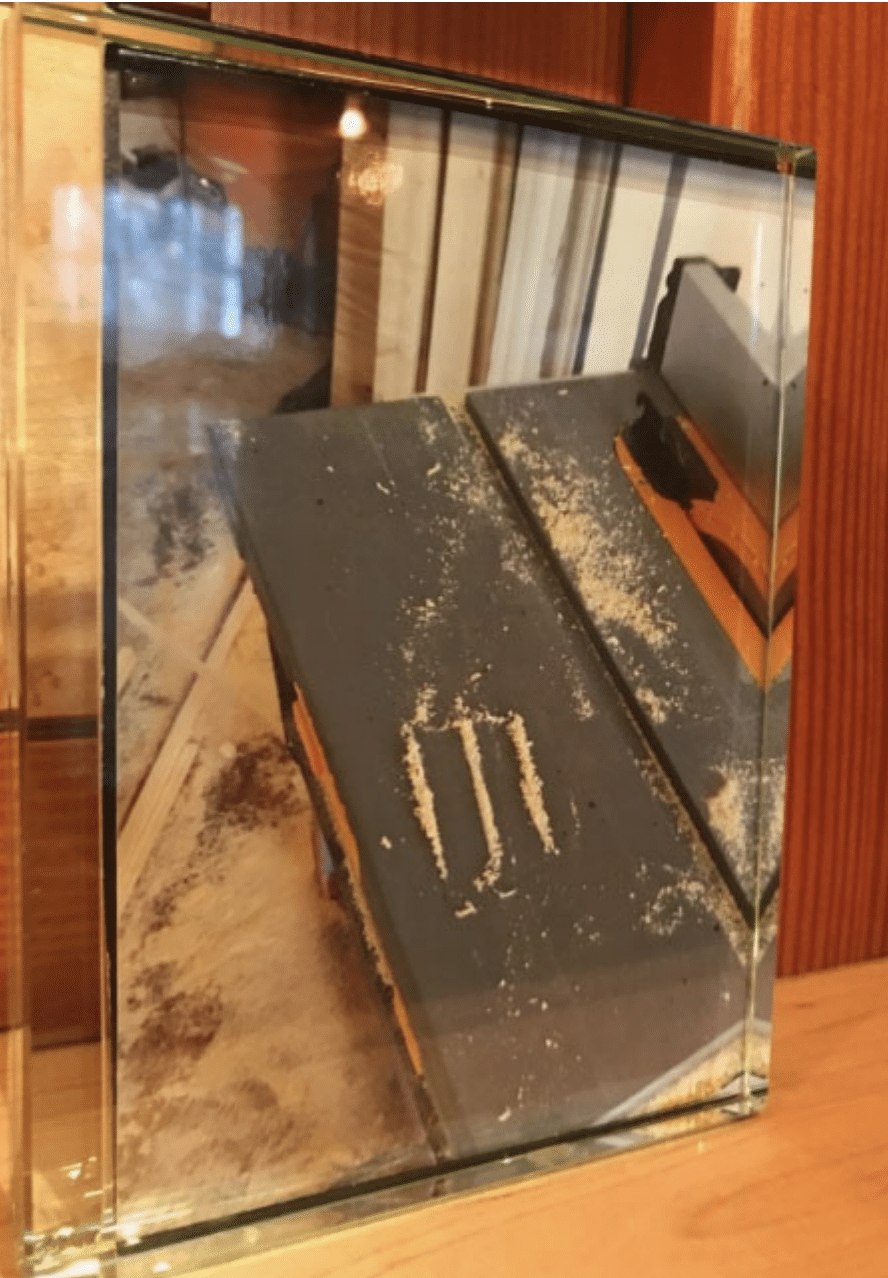
Hunter’s lawyers mock David Weiss, first, for mistaking sawdust for cocaine (they cite me), and then raise the arrest of Alexander Smirnov.

The Smirnov bit is the more important argument, because it makes the same (in my very humble opinion) compelling argument I did: That the renewed focus on the Smirmov allegations are probably what led David Weiss to renege on a plea deal.

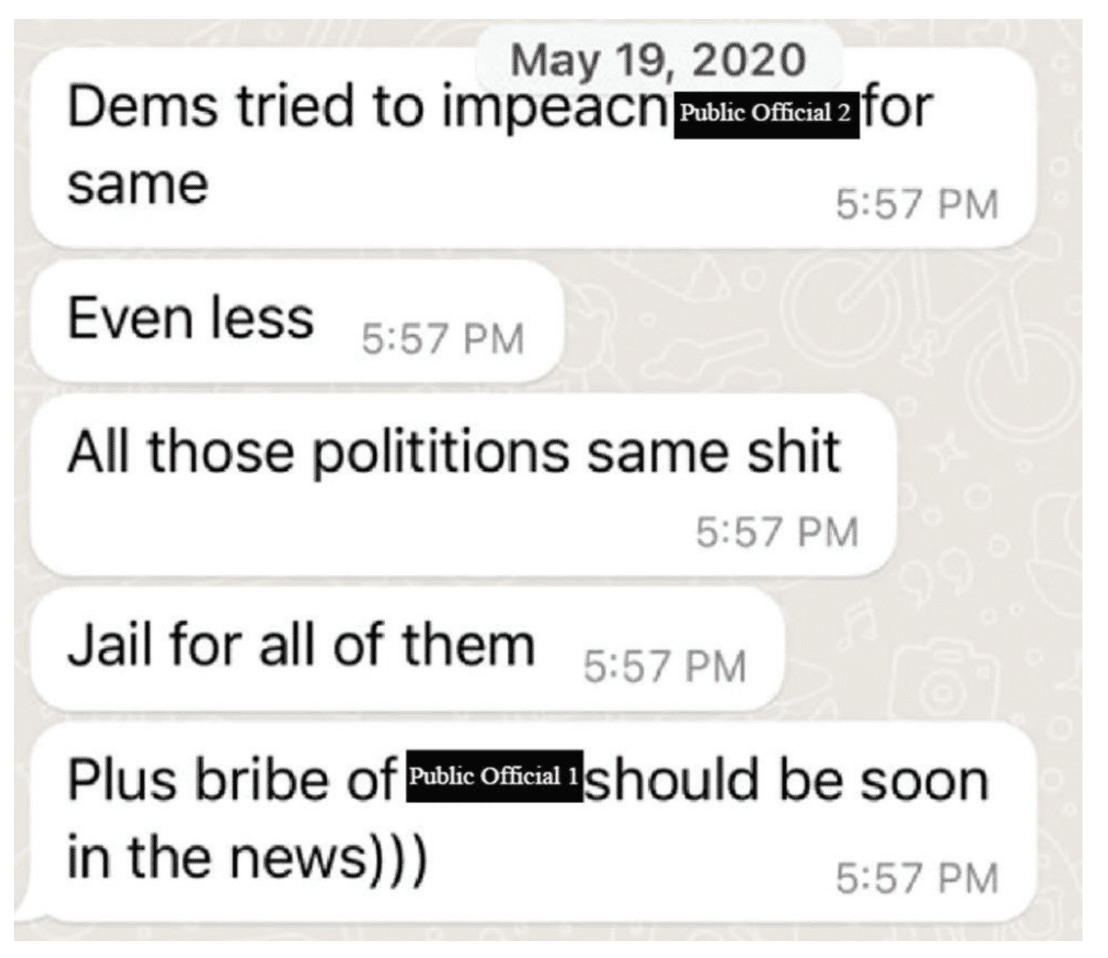
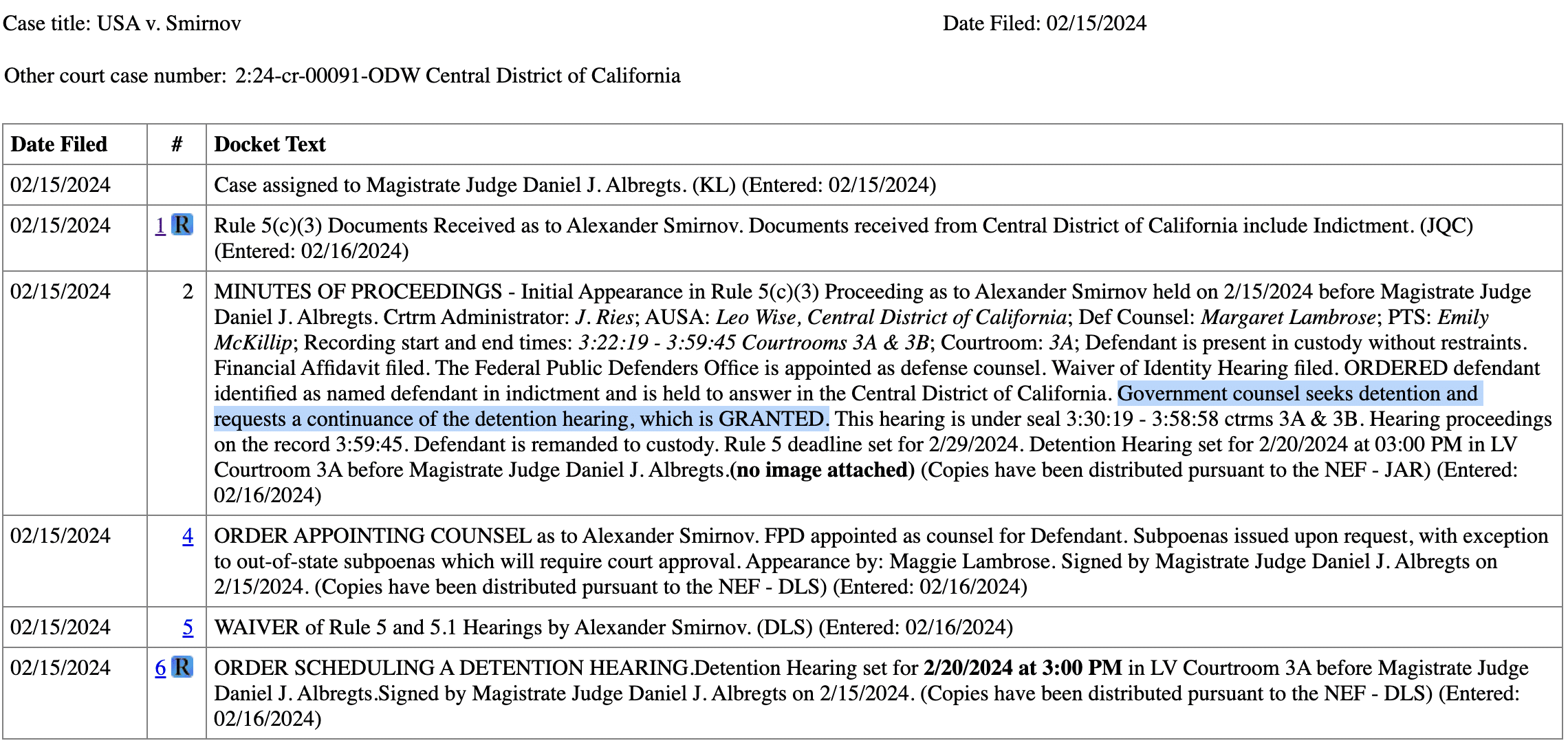
Another development, just last week, further informs Mr. Biden’s request for an now motion to compel discover. On February 15, 2024, Special Counsel David Weiss unsealed the remarkable indictment of former FBI informant Alexander Smirnov. United States v. Smirnov, 2:24-cr-00091-ODW (C.D. Cal.). The Special Counsel’s indictment notes that Mr. Smirnov expressed his “bias” against President Biaden and was telling a farcical tale that Burisma, a Ukrainian company, enlisted Mr. Biden as an unregistered foreign agent and paid bribes to him and then-Vice President Biden that proved to be so outlandish and unsubstantiated that the FBI field team recommended its investigation be closed and the then-FBI Deputy Director and thenPrincipal Associate Deputy Attorney General (Richard Donoghue) agreed in August 2020. 3 (Id. DE1 at ¶ 40 (“Smirnov Indict.”).) Nevertheless, with prodding from extremist Republican Members of Congress (who initiated an impeachment inquiry of President Biden based on the same baseless allegations) and the right-wing media, the prosecution team that was already pursuing Mr. Biden resuscitated the baseless investigation of Mr. Smirnov’s ridiculous claims against Mr. Biden thirty-four months later. (Id. ¶ 41.) It now seems clear that the Smirnov allegations infected this case, and why, on July 26, 2023, the Special Counsel answered as it did the Court’s question about whether the Diversion Agreement’s immunity provision would bar charges under the Foreign Agents Registration Act (7/26/23 Tr. at 55). 4

Lo and behold, some seven months later, the Special Counsel finally figured out that Mr. Smirnov was lying—which should have been obvious to everyone, certainly by August 2020 when DOJ closed the investigation. The Special Counsel charged Mr. Smirnov with lying and obstruction, but the more interesting part of this story is not that Mr. Smirnov lied. It is more remarkable that beginning in July 2023, the Special Counsel’s team would follow Mr. Smirnov down his rabbit hole of lies as long as it did. (Smirnov Indict. ¶¶ 41–46.) Disclosure about why the Special Counsel abandoned its June/July 2023 agreements with Mr. Biden and the role played by the Smirnov allegations may reveal flaws worse than mistaking sawdust for cocaine.5 Despite the prosecution’s strong words in its opposition to this motion, its actions demonstrate that the prosecution has gotten much wrong and provides good cause for Mr. Biden to question whether it has gotten its discovery obligations right.

3 Mr. Biden’s DOJ requests (see infra at 18–19), as well as his Rule 17 subpoena requests (DE 58) seeking communications and records from, among others, Principal Associate Deputy Attorney General Richard Donoghue and former U.S. Attorney for the Western District of Pennsylvania Scott Brady, bear directly on and are probative of the allegations in the Smirnov Indictment. The fact that Special Counsel Weiss handled the Smirnov investigation and is prosecuting the case makes Mr. Biden’s requests all the more important.

4 The discussion about the scope of the immunity agreement appears shaped by the prosecution’s investigation of the Smirnov allegations, which it began looking into just days before the July 26, 2023 hearing. (Smirnov Indict. ¶ 41 (noting the prosecution team began investigating Smirnov’s claims in July 2023).) While a host of possible crimes had been investigated, the defense understood that the FARA/bribery investigation had been closed and that the only pending issues concerned gun and tax charges. The Diversion Agreement resolved the gun and tax charges, which is why defense counsel believed the immunity agreement covered everything and would conclude the investigation. The push back from the prosecution and its discussion of an “ongoing” investigation—apparently tied to the Smirnov allegations—came as a surprise to defense counsel. (7/26/23 Tr. at 50, 54.) Having taken Mr. Smirnov’s bait of grand, sensational charges, the Diversion Agreement that had just been entered into and Plea Agreement that was on the verge of being finalized suddenly became inconvenient for the prosecution, and it reversed course and repudiated those Agreements.

5 The prosecution’s outrage over criminal activity by those associated with its investigation remains rather selective. Last month, a former government contractor working at the IRS, who unlawfully leaked private taxpayer information concerning former President Trump , was sentenced to five years in prison—a significant sentence for a serious crime. United States v. Charles E. Littlejohn, No. 23-cr-00343-ACR (D.D.C. 2023). Nevertheless, two IRS agents on the prosecution’s team investigating Mr. Biden blatantly and publicly did the same thing, on television no less, and yet they have not been prosecuted or even fired by the IRS. Mr. Biden raised the agents’ misconduct several times with the Inspector General and Mr. Weiss. Neither have yet acknowledged the complaint. Thus, Mr. Biden brought a civil action based on these agents’ misconduct and their agency’s failure to act. Biden v. IRS, No. 23-cv-02711-TJK (D.D.C. 2023). Still, however, neither the IRS nor the prosecution has taken action against them. Ironically, the same extremist Republican voices who now angrily complain that Mr. Trump’s leaker got off too easy simultaneously claim the two IRS agents who leaked confidential tax information concerning Mr. Biden should be hailed as courageous “whistleblowers.” Chairman Jordan Opens Inquiry into DOJ’s Sweetheart Deal for Trump Tax Return Leaker, H. Judiciary Comm. (Feb. 8, 2024), https://judiciary.house.gov/media/press-releases/chairman-jordan-opens-inquiry-dojs-sweetheartdeal-trump-tax-return-leaker; Arjun Singh, Top GOP Rep Calls On More Whistleblowers To Come Forward, Pledges ‘Zero Tolerance’ For Retaliation, Daily Caller (July 19, 2023), https://dailycaller.com/2023/07/19/jason-smith-irs-whistleblower-retaliation/. The prosecution’s various actions and inactions send the very message that Mr. Biden’s motions to dismiss allege— misbehave when dealing with former President Trump and there will be consequences; do the same in the unprecedented charges against Mr. Biden and you will be praised.

This will be the last briefing Judge Maryellen Noreika gets before deciding on the motions to dismiss, so the timing of the Smirnov indictment becomes important.

Anyway, I’ll update when those other filings get posted.

58A-PG-3250958: Curiosities about the Alexander Smirnov Case

I wanted to flag two details of the Alexander Smirnov case — the FBI informant arrested upon arriving in Las Vegas last week on charges he made up a false claim that Mykola Zlochevsky had bribed Joe Biden.

First, the indictment repeatedly includes the assessment case number.

As part of that process, FBI Pittsburgh opened an assessment, 58A-PG-3250958, and in the course of that assessment identified the 2017 1023 in FBI holdings and shared it with USAO WDPA. USAO WDPA then asked FBI Pittsburgh to reach out to the Handler to ask for any further information about the reference in his 2017 1023 that stated, “During this call, there was a brief, non-relevant discussion about former [Public Official 1]’s son, [Businessperson 1], who is currently on the Board of Directors for Burisma Holdings [No Further Information]”.

[snip]

By August 2020, FBI Pittsburgh concluded that all reasonable steps had been completed regarding the Defendant’s allegations and that their assessment, 58A-PG-3250958, should be closed. On August 12, 2020, FBI Pittsburgh was informed that the then-FBI Deputy Director and then-Principal Associate Deputy Attorney General of the United States concurred that it should be closed. [my emphasis]

In my experience, it is exceedingly unusual to include case file numbers in public documents. One big exception to that rule — the Crossfire Hurricane-related case filings — is instructive: Trump had those case numbers released as part of his effort to burn the investigation.

This case number — 58A — marks this as a bribery assessment.

That makes Bill Barr’s project sketchier than it already was. Here’s how Chuck Grassley described the genesis of this lead:

Although investigative activity was scuttled by the FBI in 2020, the origins of additional activity relate back to years earlier. For example, in December 2019, the FBI Washington Field Office closed a “205B” Kleptocracy case, 205B-[redacted] Serial 7, into Mykola Zlochevsky, owner of Burisma, which was opened in January 2016 by a Foreign Corrupt Practices Act FBI squad based out of the FBI’s Washington Field Office. This Foreign Corrupt Practices Act squad included agents from FBI HQ. In February 2020, a meeting took place at the FBI Pittsburgh Field Office with FBI HQ elements. That meeting involved discussion about investigative matters relating to the Hunter Biden investigation and related inquiries, which most likely would’ve included the case against Zlochevsky. Then, in March 2020 and at the request of the Justice Department, a “Guardian” Assessment was opened out of the Pittsburgh Field Office to analyze information provided by Rudy Giuliani.

So during Trump’s impeachment for extorting a bribery investigation, Bill Barr’s DOJ shut down a kleptocracy investigation of Mykola Zlochevsky, then, weeks later, opened up a back channel for Rudy Giuliani that led to an assessment of whether Mykola Zlochevsky had bribed Joe Biden.

Close a corruption investigation into Zlochevsky, then open a corruption investigation into an make-believe bribe Zlochevsky made to Joe Biden.

Somehow Scott Brady’s team found a passing notice about Hunter Biden in a 2017 informant report from Smirnov — he offered conflicting explanations of how he found this FD-1023 in his House Judiciary Committee interview — which led to the interview where Pittsburgh’s FBI allowed Smirnov to make allegations about Zlochevsky claiming to have bribed Biden that should have easily been debunked.

And then, after the assessment had been shut down, days after Trump yelled at Bill Barr about the Hunter Biden investigation, David Weiss’ team was ordered, by Richard Donoghue (who had concurred in closing the assessment), to accept a briefing on it. Barr’s story and the indictment conflict about whether Weiss should have investigated in 2020, which would have led him to discover these lies then, or was only asked to investigate further after Republicans (and Bill Barr!) had made a stink about the informant report again.

Meanwhile, it seems to have escaped notice that Weiss’ team is seeking to detain Smirnov pretrial.

It is almost unheard of to seek detention for a false statements case. Even assuming Weiss argues that Smirnov is a flight risk, people usually aren’t detained on such charges.

So detention may be more about the other claims Smirnov made to investigators last September: That he had (faked) recordings of Hunter Biden from a hotel in Kyiv, and that he had been working with some Russians since May 2023 to end the Ukraine war, a plan that had some tie to the 2024 election.

51. The Defendant also shared a new story with investigators. He wanted them to look into whether Businessperson 1 was recorded in a hotel in Kiev called the Premier Palace. The Defendant told investigators that the entire Premier Palace Hotel is “wired” and under the control of the Russians. The Defendant claimed that Businessperson 1 went to the hotel many times and that he had seen video footage of Businessperson 1 entering the Premier Palace Hotel.

52. The Defendant suggested that investigators check to see if Businessperson 1 made telephone calls from the Premier Palace Hotel since those calls would have been recorded by the Russians. The Defendant claimed to have obtained this information a month earlier by calling a high-level official in a foreign country. The Defendant also claimed to have learned this information from four different Russian officials.

53. The Defendant told investigators that the four different Russian officials are all top officials and two are the heads of the entities they represent. These Russians said that conversations with Ukrainians about ending the war will include the next U.S. election. The Defendant told investigators he is involved in negotiations over ending the war and had been for the previous four months. According to the Defendant, the Russians want Ukraine to assist in influencing the U.S. election, and the Defendant thinks the tapes of Businessperson 1 at the Premier Palace Hotel is all they have. The Defendant told investigators he wants them to ask Businessperson 1 how many times he visited and what he did while at the Premier Palace Hotel. [my emphasis]

That is, seemingly of the belief that the FBI would be amenable to this plan, Smirnov claimed to be involved in an information operation for the third straight election.

Remember, the indictment ties Smirnov to the Andri Derkach influence operation in 2020 by tying the genesis of Smirnov’s 2020 bribery claims to this article, reporting on probably fabricated tapes between Joe Biden and Petro Poroshenko.

A Ukrainian lawmaker who met with Rudolph W. Giuliani late last year released recordings of private phone calls several years ago between Vice President Joe Biden and Petro Poroshenko, then Ukraine’s president, in a new broadside against the presumptive Democratic nominee for U.S. president that has raised questions about foreign interference in the 2020 election.

The recordings played at the news conference Tuesday shed relatively little new light on Biden’s actions in Ukraine, which were at the center of President Trump’s impeachment last year. They show that Biden, as he has previously said publicly, linked loan guarantees for Ukraine to the ouster of the country’s prosecutor general in 2015. But Derkach used the new clips to make an array of accusations not proven by the tapes.

Smirnov even claimed to have met with Poroshenko and Viktor Shokin in 2016.

One of the two AUSAs on this case, Sean Mulryne, is a Public Integrity prosecutor who has worked FARA cases (including that of Elliott Broidy-related Nickie Lum Davis, who was represented by Abbe Lowell).

There may be — likely is! — more to this case than a simple false statement. But that’s another reason why David Weiss has no business overseeing a case in which he is a direct witness.

David Weiss Is a Direct Witness to the Crimes on Which He Indicted Alexander Smirnov

On the day that Bill Barr aggressively intervened in the parallel impeachment inquiry and Hunter Biden prosecutions last summer, David Weiss’ office sent out a final deal that would resolve Hunter’s case with no jail time and no further investigation. Within weeks, amid an uproar about claims in an FD-1023 that David Weiss now says were false, Weiss reneged on that deal. With the indictment yesterday of Alexander Smirnov, the source of those false claims, Weiss confesses he is a direct witness in an attempt to frame Joe Biden, even as he attempts to bury it.

On June 7, 2023, Bill Barr went on the record to refute several things that Jamie Raskin described learning about Smirnov’s FD-1023. Specifically, the former Attorney General insisted that the investigation into the allegations Smirnov made continued under David Weiss.

It’s not true. It wasn’t closed down,” William Barr told The Federalist on Tuesday in response to Democrat Rep. Jamie Raskin’s claim that the former attorney general and his “handpicked prosecutor” had ended an investigation into a confidential human source’s allegation that Joe Biden had agreed to a $5 million bribe. “On the contrary,” Barr stressed, “it was sent to Delaware for further investigation.”

“It wasn’t closed down,” Bill Barr claimed. As I’ll show below, according to the indictment obtained under David Weiss’ authority yesterday, that’s a lie. “It was sent to [David Weiss] for further investigation,” Bill Barr claimed, not confessing that it was sent to Delaware on October 23, 2020, days after Trump had yelled at him personally about the investigation into Hunter Biden. According to Barr, Weiss was tasked with doing more investigation into the Smirnov claims than Scott Brady had already done.

In the Smirnov indictment, Weiss now says that he only did that investigation last year, and almost immediately discovered the allegations were false.

The same day the Federalist published those Barr claims, June 7, and one day after Hunter Biden attorney Chris Clark spoke personally with David Weiss, Lesley Wolf sent revised language for the diversion agreement that strengthened Hunter Biden’s protection against any further prosecution.

The United States agrees not to criminally prosecute Biden, outside of the terms of this Agreement, for any federal crimes encompassed by the attached Statement of Facts (Attachment A) and the Statement of Facts attached as Exhibit 1 to the Memorandum of Plea Agreement filed this same day.

That language remains in the diversion agreement Leo Wise signed on July 26, 2023.

According to an unrebutted claim from Clark, on June 19, 2023, Weiss’ First AUSA Shannon Hanson assured him there was no ongoing investigation into his client.

36. Shortly after that email, I had another phone call with AUSA Hanson, during which AUSA Hanson requested that the language of Mr. Biden’s press statement be slightly revised. She proposed saying that the investigation would be “resolved” rather than “concluded.” I then asked her directly whether there was any other open or pending investigation of Mr. Biden overseen by the Delaware U.S. Attorney’s Office, and she responded there was not another open or pending investigation.

That day, June 19, was the first day Wise made an appearance on the case.

On July 10, a month after the former Attorney General had publicly claimed that his office sent the Smirnov FD-1023 to Weiss’ office for further investigation in 2020, Weiss responded to pressure from Lindsey Graham explaining why he couldn’t talk about the FD-1023: “Your questions about allegations contained in an FBI FD-1023 Form relate to an ongoing investigation.” The next day, Hanson fielded a request from Clark, noting she was doing so because “the team” was in a secure location unable to do so themselves. “The team” should have had no purpose being in a secure location; they should have been preparing for the unclassified plea deal.

By July 26, the same day Leo Wise signed a diversion agreement that said Hunter wouldn’t be further charged, he made representations that conflicted with the document he had signed, claiming Hunter could still be charged with FARA. That was how, with David Weiss watching, Wise reneged on a signed plea deal and reopened the investigation into Hunter Biden, leading to two indictments charging six felonies and six misdemeanors.

According to the Smirnov indictment, sometime in July (tellingly, Weiss does not reveal whether this preceded his letter to Lindsey Graham, whether it preceded the plea colloquy where Leo Wise reneged on a signed deal), the FBI asked Weiss’ office to help in an investigation regarding the FD-1023.

In July 2023, the FBI requested that the U.S. Attorney’s Office for the District of Delaware assist the FBI in an investigation of allegations related to the 2020 1023. At that time, the United States Attorney’s Office for the District of Delaware was handling an investigation and prosecution of Businessperson 1.

It is virtually certain that the FBI asked Weiss to pursue whether any leads had been missed in 2020, not whether Joe and Hunter Biden had been unfairly framed. That’s because Weiss cannot — should never have — led an investigation into how the Bidens were framed. He’s a witness in that investigation. 

So it is almost certain that the FBI decided to reopen the investigation into the FD-1023, perhaps based in part on Bill Barr’s false claims. It is almost certain that this investigation, at that point, targeted Joe and Hunter Biden. It is almost certain that this is one thing Weiss used to rationalize asking for Special Counsel authority.

And that’s probably why, when Weiss’ team interviewed Smirnov on September 27, Smirnov felt comfortable adding new false allegations.

51. The Defendant also shared a new story with investigators. He wanted them to look into whether Businessperson 1 was recorded in a hotel in Kiev called the Premier Palace. The Defendant told investigators that the entire Premier Palace Hotel is “wired” and under the control of the Russians. The Defendant claimed that Businessperson 1 went to the hotel many times and that he had seen video footage of Businessperson 1 entering the Premier Palace Hotel.

52. The Defendant suggested that investigators check to see if Businessperson 1 made telephone calls from the Premier Palace Hotel since those calls would have been recorded by the Russians. The Defendant claimed to have obtained this information a month earlier by calling a high-level official in a foreign country. The Defendant also claimed to have learned this information from four different Russian officials.

Smirnov seemingly felt safe telling new, even bigger lies. In his mind, Hunter and Joe were still the target! Again, that is consistent with the investigation into Hunter Biden being reopened based off Bill Barr’s public pressure.

According to the Smirnov indictment, David Weiss’ team found evidence that proves Bill Barr lied and Scott Brady created a false misimpression — the former, to pressure him — Weiss — and the latter, in testimony to Congress that was also part of the pressure campaign against the Bidens.

Compare Bill Barr’s claim made on the day when Weiss agreed that Hunter would face no further charges with what the Smirnov indictment states as fact. The Smirnov indictment says that Scott Brady’s office closed the assessment, with the concurrence of David Bowdich and Richard Donoghue, which is what Jamie Raskin said (though Raskin said Barr himself concurred).

40. By August 2020, FBI Pittsburgh concluded that all reasonable steps had been completed regarding the Defendant’s allegations and that their assessment, 58A-PG-3250958, should be closed. On August 12, 2020, FBI Pittsburgh was informed that the then-FBI Deputy Director and then-Principal Associate Deputy Attorney General of the United States concurred that it should be closed.

But Barr told the Federalist that it was not closed down, it was forwarded — by Richard Donoghue, days after the President yelled at Barr about this investigation (though he didn’t say that) — to David Weiss for more investigation.

It’s not true. It wasn’t closed down,” William Barr told The Federalist on Tuesday in response to Democrat Rep. Jamie Raskin’s claim that the former attorney general and his “handpicked prosecutor” had ended an investigation into a confidential human source’s allegation that Joe Biden had agreed to a $5 million bribe. “On the contrary,” Barr stressed, “it was sent to Delaware for further investigation.”

Had it been forwarded to David Weiss for more investigation, had he taken those additional investigative steps Barr claims he was ordered to do, Weiss would have discovered right away the key things that proved Smirnov was lying, the claims that Scott Brady had claimed to investigate, the things that the Smirnov indictment suggest he newly discovered months ago.

According to Scott Brady’s testimony to Congress, his team asked Smirnov’s handler about things like travel records and claimed that it was consistent.

Mr. Brady. So we attempted to use opensource material to check against what was stated in the 1023. We also interfaced with the CHS’ handler about certain statements relating to travel and meetings to see if they were consistent with his or her understanding.

Q And did you determine if the information was consistent with the handler’s understanding?

A What we were able to identify, we found that it was consistent. And so we felt that there were sufficient indicia of credibility in this 1023 to pass it on to an office that had a predicated grand jury investigation. [my emphasis]

According to the Smirnov indictment, Weiss’ team asked the handler the same question — about travel records. Only, they discovered that Smirnov’s travel records were inconsistent with the claims the handler himself recorded in the FD-1023.

43. On August 29, 2023, FBI investigators spoke with the Handler in reference to the 2020 1023. During that conversation, the Handler indicated that he and the Defendant had reviewed the 2020 1023 following its public release by members of Congress in July 2023, and the Defendant reaffirmed the accuracy of the statements contained in it.

44. The Handler provided investigators with messages he had with the Defendant, including the ones described above. Additionally, the Handler identified and reviewed with the Defendant travel records associated with both Associate 2 and the Defendant. The travel records were inconsistent with what the Defendant had previously told the Handler that was memorialized in the 2020 1023.

Tellingly, when Brady was asked more specific questions about Smirnov’s travel records, his attorney, former Trump-appointed Massachusetts US Attorney Andrew Lelling, advised him, twice, not to answer.

Q And did you determine that the CHS had traveled to the different countries listed in the 1023?

Mr. Lelling. I would decline to answer that.

[snip]

Q The pages aren’t numbered, but if you count from the first page, the fourth page, the first full paragraph states, following the late June 2020 interview with the CHS, the Pittsburgh FBI Office obtained travel records for the CHS, and those records confirmed the CHS had traveled to the locales detailed in the FD1023 during the relevant time period. The trips included a late 2015 or early 2016 visit to Kiev, Ukraine, a trip a couple months later to Vienna, Austria, and travel to London in 2019. Does this kind of match your recollection of what actions the Pittsburgh FBI Office was taking in regards to this.

Mr. Lelling. Don’t answer that. Too specific a level of detail

Q You had mentioned last hour about travel records.

Did your office obtain travel records, or did you have knowledge that the Pittsburgh FBI Office obtained travel records?

Mr. Lelling. That you can answer yes or no.

Mr. Brady. Yes.

If Brady obtained those travel records, he would have discovered what Weiss did: Neither Smirnov’s travel records nor those of his subsource, Alexander Ostapenko, are consistent with the story Smirnov told.

o. Associate 2’s trip to Kiev in September 2017 was the first time he had left North America since 2011. Thus, he could not have attended a meeting in Kiev, as the Defendant claimed, in late 2015 or 2016, during the Obama-Biden Administration. His trip to Ukraine in September 2017 was more than seven months after Public Official 1 had left office and more than a year after the then-Ukrainian Prosecutor General had been fired.

[snip]

34. Further, the Defendant did not travel to Vienna “around the time [Public Official 1] made a public statement about [the thenUkrainian Prosecutor General] being corrupt, and that he should be fired/removed from office,” which occurred in December 2015.

Paragraph after paragraph of the Smirnov indictment describe how the travel records — the very travel records that the handler and Scott Brady claimed corroborated the allegation — proved Smirnov was lying.

The record is quite clear that Bill Barr and Scott Brady made false representations about activities that directly involved David Weiss in 2020.

And yet Weiss has been playing dumb.

Abbe Lowell made a subpoena request and a discovery request relating to these matters on November 15. Lowell not only laid out this scheme in his selective and vindictive prosecution claim, but he cited the Federalist story in which Barr lied. He cited these matters in his discovery request.

Rather than acknowledging that Weiss’ team had discovered evidence that proved the claims of Barr and Brady were misrepresentations, Weiss’ team lied about the extent of Richard Donoghue’s role — documented in a memo shared by Gary Shapley — in forcing Weiss to accept the FD-1023 on October 23, 2022.

Next, defendant alleges that “certain investigative decisions were made as a result of guidance provided by, among others, the Deputy Attorney General’s office.” ECF 58, at 3 n.4. In fact, the source cited revealed that the guidance was simply not to conduct any “proactive interviews” yet.

And now, on the eve of Abbe Lowell submitting a reply on his motion to compel and a selective prosecution and discovery request in California, David Weiss has unveiled a belated indictment proving that Lowell’s allegations were entirely correct. The indictment may well provide excuse to withhold precisely the discovery materials Lowell has been demanding for months, and it may create the illusion that Barr’s pressure led Weiss to renege on a plea deal. But it is a confession that there was an attempt to frame Joe Biden and his son in 2020.

What David Weiss discovered — if he didn’t already know about it — is that he was part of an effort to frame Joe Biden in 2020, an effort that involved the Attorney General of the United States. If Merrick Garland is going to appoint Special Counsels for these kinds of things, one should be appointed here, especially given that Donoghue required the briefing on the FD-1023 days after Trump personally intervened with Bill Barr.

But David Weiss can’t lead that investigation. He’s a witness to that investigation.

Update: Fixed how long it took Weiss to renege on the deal after Bill Barr’s false claim.

See Hunter Biden’s Eight Legal Chessboards for links to all the filings.

Where Derek Hines Claims to Have Gotten the Hunter Biden Dick Pics He Sniffed

Even if Judge Maryellen Noreika threw out the gun charges against Hunter Biden today, I’d be grateful for the recent squabble over Hunter Biden’s motion to compel, and not just for the endless amusement of seeing an experienced drug prosecutor like Derek Hines claim sawdust on a table saw is cocaine.

That’s because by providing what he thinks is solid proof that Hunter was an addict in 2018, Hines has revealed a bit about where such evidence exists among the digital evidence he has in hand and where it doesn’t.

Most significantly, for this case, it appears Derek Hines relied exclusively on the laptop to get the texts surrounding the period immediately after Hunter Biden bought a gun. Particularly given the turmoil in Hunter’s access to his devices in those precise days, without validation of the texts in an Apple database, that would make the texts far harder to use at trial.

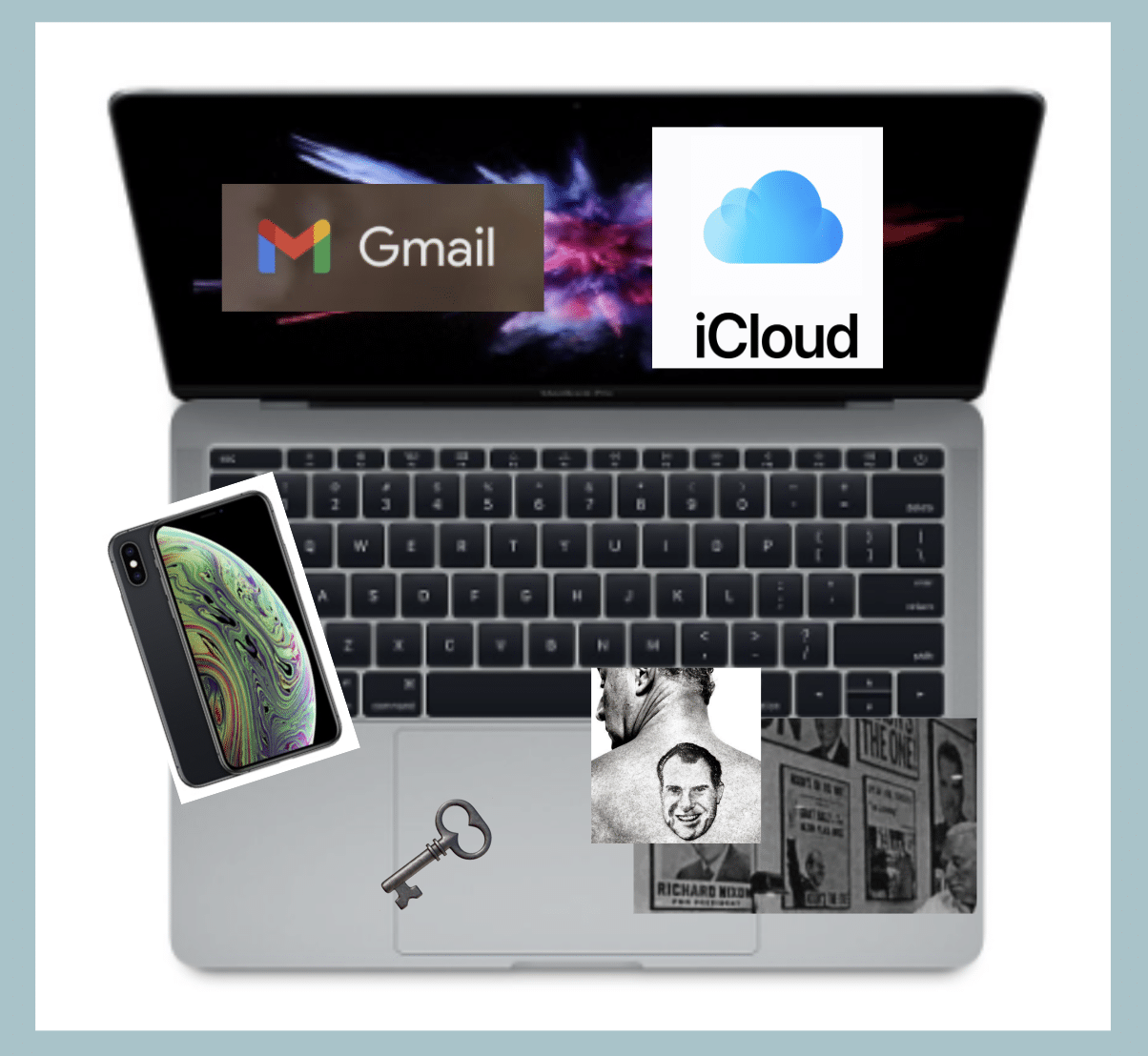
As a reminder, the Apple data at issue comes from three places:

In December, Hines got a warrant to search the existing data for gun crime evidence, but did not go back to obtain a warrant to access any backed up devices — if they exist — that would be more appropriate to the gun charges.

Hines claimed, in his response to Hunter’s selective prosecution bid that, “the results of the search” of the laptop “were largely duplicative of information investigators had already obtained from Apple.” In his response to Hunter’s motion to compel, he claimed that, “Many of the same messages, photographs, and information that were obtained from the iCloud warrants were also located on the defendant’s laptop,” but made no representations about the reverse — whether all the messages present on the laptop were in the iCloud production.

It appears they were not.

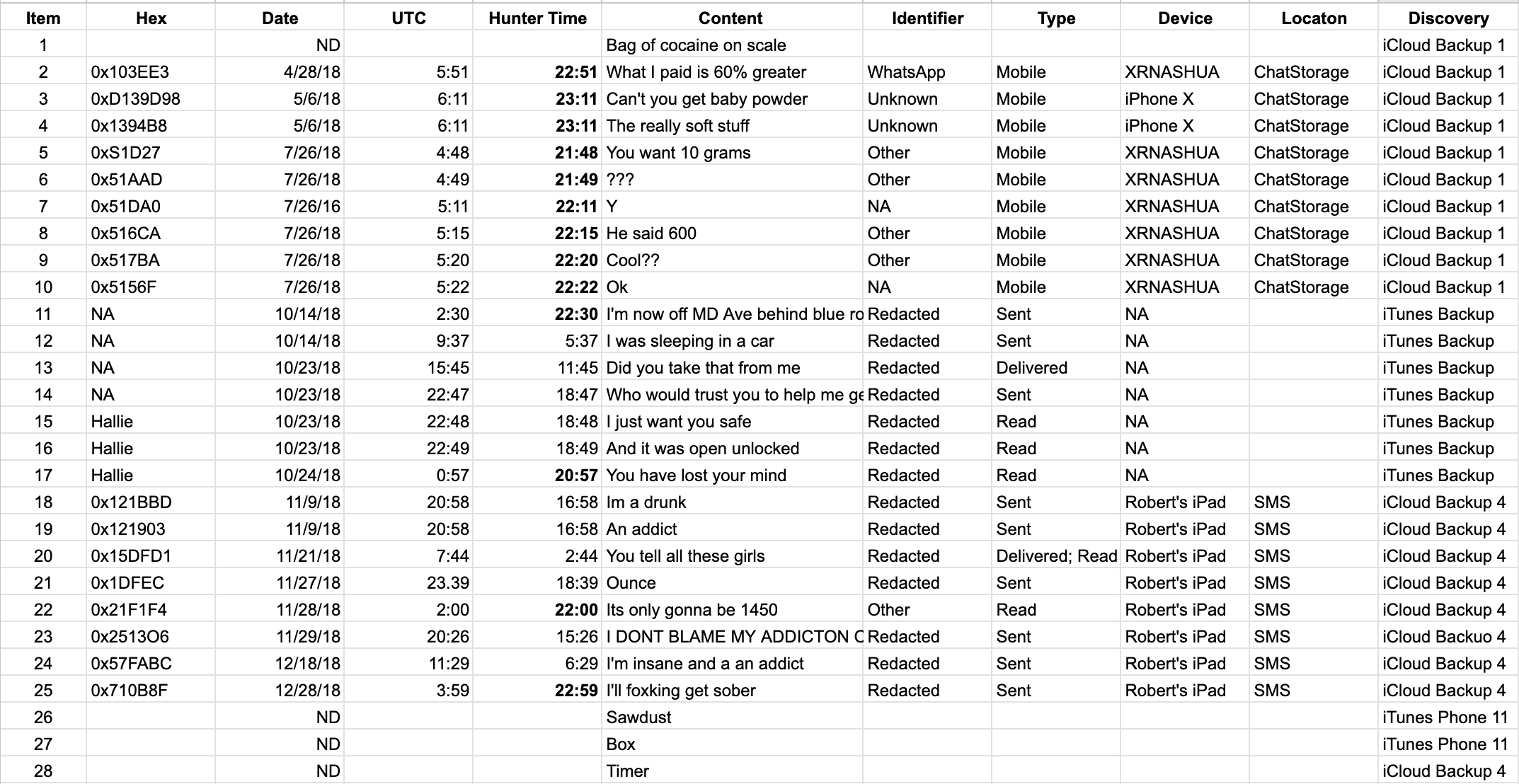
This table shows my rough transcription the 28 items included in Hines’ exhibit of gun-related evidence. Let me know of errors, particularly with my time conversations between UTC and “Hunter time,” which I’ve assumed was PT for the earlier texts and ET for the later ones. I’ve bolded those instances where “Hunter time” is the day before UTC time. My transcription of the hex identifiers, where Hines included them, are especially likely to have errors (and only include the first identified hex for each item).

These items include:

Items 1, 26-28: Four pictures, all of which he has presented without hex identifiers or EXIF metadata. Two come from iPhone backups obtained from Hunter’s iCloud (one being the iPad on which items 28-25 were found); two (including the sawdust picture) come from what is described as an iPhone 11 backed up to iTunes, apparently found on the laptop; I’m aware of no public record of Hunter owning an iPhone 11. Note: for the reason zscoreUSA notes below, Hines’ label of the sawdust picture as an iPhone 11 must be an error, as those were first released on September 20, 2019, too late to be on the laptop, and only possible to be included in the iCloud returns if Hunter got one the day they were released and backed up everything to an iPhone 11. So it may be a typo for iCloud backup 11, which would be an iPhone XR. 

Items 2-10: Nine texts, dated between May and July 2018, obtained from iCloud Backup 1, which the warrant return describes as an iPhone X. Six of those, items 5 through 10, appear to record a drug transaction arranged over the course of a half hour overnight on July 25-26. While this backup is associated with an iPhone X of uncertain vintage (Hunter went through at least three iPhone Xes in 2018), seven items were obtained from a device called XRNASHUA, an iPhone XR; Apple did not introduce the iPhone XR until October 2018 and Hunter is not known to have obtained his first one until spring 2019, in New Haven, not Nashua. The only two communications obtained from an iPhone X, Items 3 and 4, used an unknown phone number. Item 2 is a WhatsApp text.

Items 11-17: These texts, showing exchanges between Hunter and Hallie Biden on October 13, 14, and 23, derive from what Hines describes as an iTunes Backup. Hines doesn’t identify of which phone — not even the device type — nor does the metadata included identify which phone Hunter used. Just one of the texts Hunter sent, item 13, is described as “delivered” after it was “sent.” I’ll return to these below.

Items 18-25: These texts came from an iPad Pro called “Robert’s iPad” which, based on the serial number included in Gus Dimitrelos’ report, was purchased in November 2015.

iPad Pro 12.9-inch (1st generation) Wi-Fi
Purchase Date: November 2015

Serial Number: DLXQL4EUGMLD

Emails released on BidenLaptopEmails dot com show someone logging into Hunter’s iCloud, Facetime, and iMessage with an iPad Pro on November 11, 2015, the same day Gus Dimitrelos shows it — named as Roberts, no apostrophe, iPad — logging into Hunter’s iCloud account. The next day, a pricy iPad pencil was ordered from Apple, though it was on backorder until January 2016. On May 20, 2016, Find my iPad was used to play a sound on an iPad called “iPad 206” twice. The process of signing into iCloud, then Facetime and iMessage with an iPad Pro, was repeated on September 11, 2016, what Dimitrelos describes as the first access by iPad 206, the one already associated with Hunter’s account earlier that year. On October 26, 2016, Find my iPad was disabled on iPad Pro 206 and on November 13, 2016 the cards were removed and the device was deleted — presumably, given that Find my iPad had been disabled, in person. Those same publicly released emails show no other iPad Pros logging for the first time into Hunter’s account, though in August 2018, an iPad (not identified as a Pro) was deleted, with that process completing in September 2018. But Dimitrelos shows four other iPads named either “Robert’s” or “Roberts” iPad logging into Hunter’s account (February 19, 2013, August 24, 2017, October 21, 2017, January 21, 2018). Of the texts included in Hines’ exhibit, which were sent between November 8 and December 27, 2018, just one, item 20, was marked as delivered and read, and it wasn’t one of the ones sent to probable family members.

I’ll leave the technical discussion there, in case anyone understands how Apple tracks iMessage texts or the difference between texts saved in ChatStorage and SMS.

But several general conclusions stick out. First, it’s likely that two of the devices for which Hines got a new warrant for drug crimes in December 2018, iCloud Backup 2, a 6S, and iCloud Backup 3, seemingly a different XR, had no communications pertinent to the year in question, 2018 [update: unless the explanation for Hines’ error in labeling photos as iPhone 11 is a typo for iCloud backup 11]. That will be of interest if Abbe Lowell ever gets to file a suppression motion, since there could be no probable cause to obtain content from an unrelated period. Second, it’s not clear that any of these devices were the devices on which the communications in question were sent. Hines’ best evidence of a drug purchase — those texts from July 25-26, 2018 — would probably have been sent in an iPhone X and then synched onto an iPhone XR purchased quite a bit later. As with all the other digital evidence Hines seems not to have thought through, given how often Hunter lost devices with access to his iCloud account and how rarely he reset it, it’s not enough to show that texts saved through Hunter’s iCloud showed evidence of a drug purchase. You would have to show that the phone on which those texts were originally sent was in Hunter’s hand at the time the texts were sent.

And this problem is especially fraught for those October 13-14 texts sent between Hallie and Hunter in October 2018, by far the most important evidence for his case. Here’s how they fit in with the timeline I laid out here, showing how Hunter responded after realizing he had misplaced both his main phones on October 11. The two main texts (in bold below) appear to have been sent before Hunter first logged into his new replacement iPhone and before he changed his password, even while people were clearly trying to break into some of his accounts. So prosecutors would have to prove that those texts weren’t sent by whoever inherited the phones Hunter had just lost.

Timeline

October 12, 12:56PM: As you requested, your temporary [AT&T] password is: ****** Use your user ID and temporary password to sign in to your account.

October 12, 12:56PM: Looks like you recently updated the AT&T password.

October 12, 12:57PM: Critical security alert for your linked Google Account, Sign-in attempt was blocked for your linked [RosemontSeneca] Google Account [device not specified]

October 12, 3:25PM: Thanks for using your AT&T Device Protection Plan! Your claim [ending in 431] has been started

October 12, 3:32PM: Thanks for using your AT&T Device Protection Plan! Your claim [ending in 431] has been started

October 12, 3:38PM: Thanks for using your AT&T Device Protection Plan! Your claim [ending in 579] has been started

October 12, 3:40PM: Your [AT&T] insurance claim [phone ending in 96]

October 12, 3:44PM: Your [AT&T] insurance claim [phone ending in 13]

October 12, 3:49PM: Thanks for using your AT&T Device Protection Plan! Your claim [ending in 701] has been started

October 12, 3:55PM: Please complete and return your claim documents Wireless Number: **94

October 12, 3:57PM: Thanks for using your AT&T Device Protection Plan! Your claim [ending in 799] has been started

October 12, 4:03PM: Please complete and return your claim documents Wireless Number: **29

October 12, 5:35PM: Hello. Review your AT&T order

October 12, 6:22PM: Good news. Your replacement device [grey Apple iPhoneX] has shipped. [phone ending in 13]

October 12, 6:24PM: Phone [email from Joey]

Hey, You left your phone and other things. Tried to reach you at 202 and 302 all day but no luck. Let me know where to overnight.

October 12, 7:20PM: Good news. Your replacement device [iPhone 8] has shipped. [phone ending in 96]

October 12, 8:00PM: Verify your Samsung account [accessing Hunter’s iCloud]

October 12, 11:31PM: Someone Just Checked Your Background Report

October 13, 7:10AM: (Email) You left your phone. How do I get it to you?

joey

October 13, 7:26AM: (Email) You left your phone. How do I get it to you?

joey

October 13, 11:13AM: Let’s setup your AT&T replacement device [phone ending in 13]

October 13, 12:35AM: Someone Just Checked Your Background Report

October 13, 2:00PM: Hello, Review your AT&T order [changes to wireless]

October 13, 9:17PM: Your [RosemontSeneca] Google Account was just signed in to from a new Samsung Galaxy Note 9 device

October 13 10:30PM: I’m now off MD Ave behind blue rocks

October 13, 11:36PM: Wells Fargo Has Registered Your Mobile Device

October 14, 5:37AM: I was sleeping in a car

October 14, 2:24PM: Your Apple ID password has been reset

October 14, 2:24PM: Your Apple ID was used to sign in to iCloud on an iPhone X

October 14, 3:28PM: Wells Fargo card added to Apple Pay

October 14, 3:36PM: Verify your Samsung account [on iCloud]

October 14, 7:48PM: (Email from Joey) “Overcoming myself”

When you have a minute, read ….

Open my shared note:

Exp[o]rt Reports: When David Weiss Claimed Keith Ablow’s Sawdust Was Hunter Biden’s Cocaine

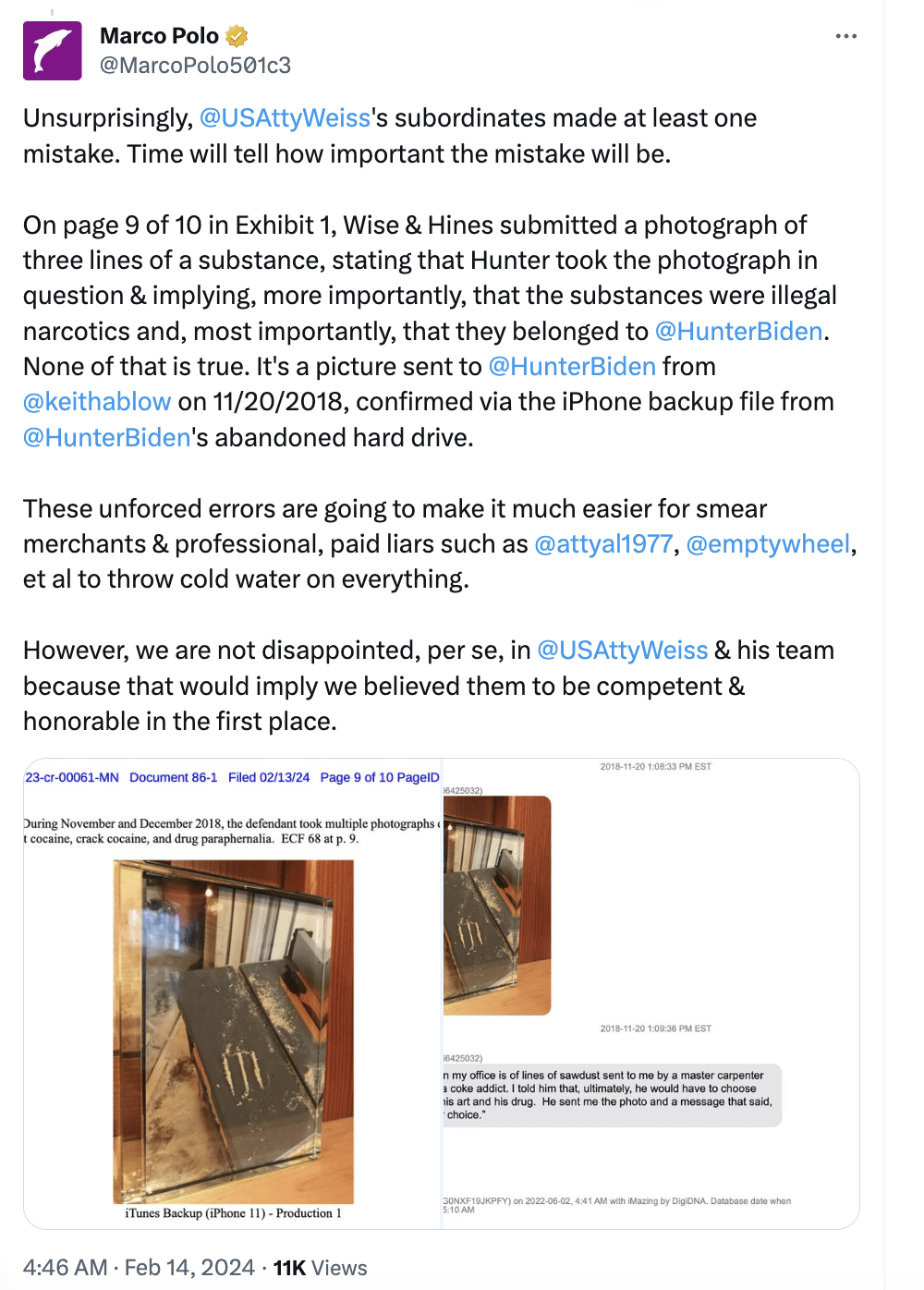
As Garrett Ziegler was confessing, again, to have accessed a password-protected phone backup (for which Hunter Biden is suing him), he described that this is a photo of a photo in the office of then-still licensed psychiatrist Keith Ablow, which Ablow sent Hunter Biden, explaining that the photo came from an expert carpenter who was trying to kick a coke habit.

Ziegler was even kind enough to include the June 2, 2022 extract date of the iPhone XS iTunes backup where he found the picture, even while bitching of the dishonor and incompetence of David Weiss and his team.

David Weiss says the picture isn’t one of sawdust passed on by Keith Ablow. He says it’s a picture that Hunter Biden took himself of “apparent cocaine” sometime in late 2018.

During November and December 2018, the defendant took multiple photographs of videos apparent cocaine, crack cocaine, and drug paraphernalia.

Weiss doesn’t provide a date for the photo. But he says it came from an iPhone 11 backup stored to iTunes, though he’s not telling whether he found it in an iTunes backup in Hunter’s iCloud account obtained in September 2019, or an iTunes backup found on a laptop attributed to Hunter Biden obtained in December 2019.

iTunes Backup (iPhone 11) – Production 1

Now, perhaps it’s a good thing that David Weiss didn’t know he was (at least per Ziegler, who — bizarrely — has more credibility than the people who have a stack of warrants and lots more metadata) falsely claiming that this picture depicted cocaine. Perhaps that means he didn’t breach Hunter’s privileged communications with Ablow and read what the then still-licensed psychiatrist had to say to his client.

But he has just made the competence of his team’s forensic analysis an issue, and done so in a filing in which Derek Hines appears to be claiming they don’t need any expert forensic reports.

In the motion to compel to which Hines was responding, Abbe Lowell had claimed that Weiss had not turned over any expert reports.

Mr. Biden requested the ongoing production of all materials subject to disclosure under FRCP 16(a)(1)(A), (B), and (D). (See DE 65.) Mr. Biden notes that his October 2023 Rule 16 requests also cover any expert reports that the prosecution intends to rely upon at trial; to date, however, no expert reports or materials have been identified or produced to defense counsel.

The prosecution produced a Delaware state police case file, which includes a summary of an interview Mr. Biden gave police in October 2018 and other information about the purchase, discard, and recovery of the firearm, as well as evidence photos from its case file. The prosecution also produced an ATF case file that has additional information about the firearm and statements about its purchase. Mr. Biden asks the Court to order the prosecution to either (1) confirm no further responsive documents or communications exists in its possession (which includes material in the possession of all relevant government agencies and officials), or (2) produce the requested documents (including any expert reports) and, if the prosecution believes any responsive documents are protected from disclosure, identify those documents and the reasons why the prosecution believes they need not be disclosed.

Not true!, responded Hines in the filing where he appears to have claimed a photo of sawdust taken by a Keith Ablow client was instead a photo of cocaine taken by Hunter Biden.

Hines described that the prosecution has provided two expert reports: that of the FBI chemist who — five years after the gun was seized — found cocaine residue in the pouch in which the gun was found, but didn’t look for fingerprints or try to date the cocaine.

The defendant does not allege any Rule 16 materials are missing from the productions other than one assertion that, “to date, however, no expert reports or materials have been identified or produced to defense counsel.” ECF 83 at p 6. He is incorrect. On November 7, 2023, the government produced to the defendant an expert report prepared by an FBI chemist who analyzed the cocaine discovered on the defendant’s brown leather pouch that had contained his gun.1 In this same production, the government also produced an expert report prepared by an agent related to the interstate nexus of the gun charged in the indictment.2 In addition to these reports, the government produced other materials for these two experts, including CVs, as well as a CV for an additional expert.3 By contrast, the defendant has failed to provide any discovery, including any expert discovery.

In addition, prosecutors provided the CV for the witness who’ll attest the gun had a nexus to interstate commerce and the CV for … Hines isn’t describing what kind of witness that is.

But there are at least four reports I expected to see that are missing:

  • The FBI agent John Paul Mac Isaac calls “Matt” who (at least per JPMI, who like Ziegler might be as reliable as Weiss at this point) described trying to boot up the laptop on December 9, 2019, four days before the known warrant to access the laptop
  • The FBI Computer Analysis and Response Team analyst named Mike Waski, from whom Josh Wilson claims to have obtained the laptop after he had already obtained the laptop four days earlier from JPMI
  • The FBI CART analyst, Eric Overly, who actually imaged the hard drive, which Gary Shapley notes happened after December 13; there may be a different CART analyst who imaged the laptop itself who would be on the hook for another expert report
  • A March 31, 2020 email about the completeness of the disk image that JPMI had done, which prosecutors were withholding from any agents who might testify at trial but which Shapley has kindly informed us exists
  • Any analysis “computer guy” did after October 22, 2020, which is when the FBI realized they had never bothered to check when files had been added to the laptop they had been using for ten months

Those kinds of expert reports are precisely what might have spared poor Senior Assistant Special Counsel Derek Hines from apparently claiming that a photo of a photo of sawdust taken by Keith Ablow is instead a photo of cocaine taken by Hunter Biden.

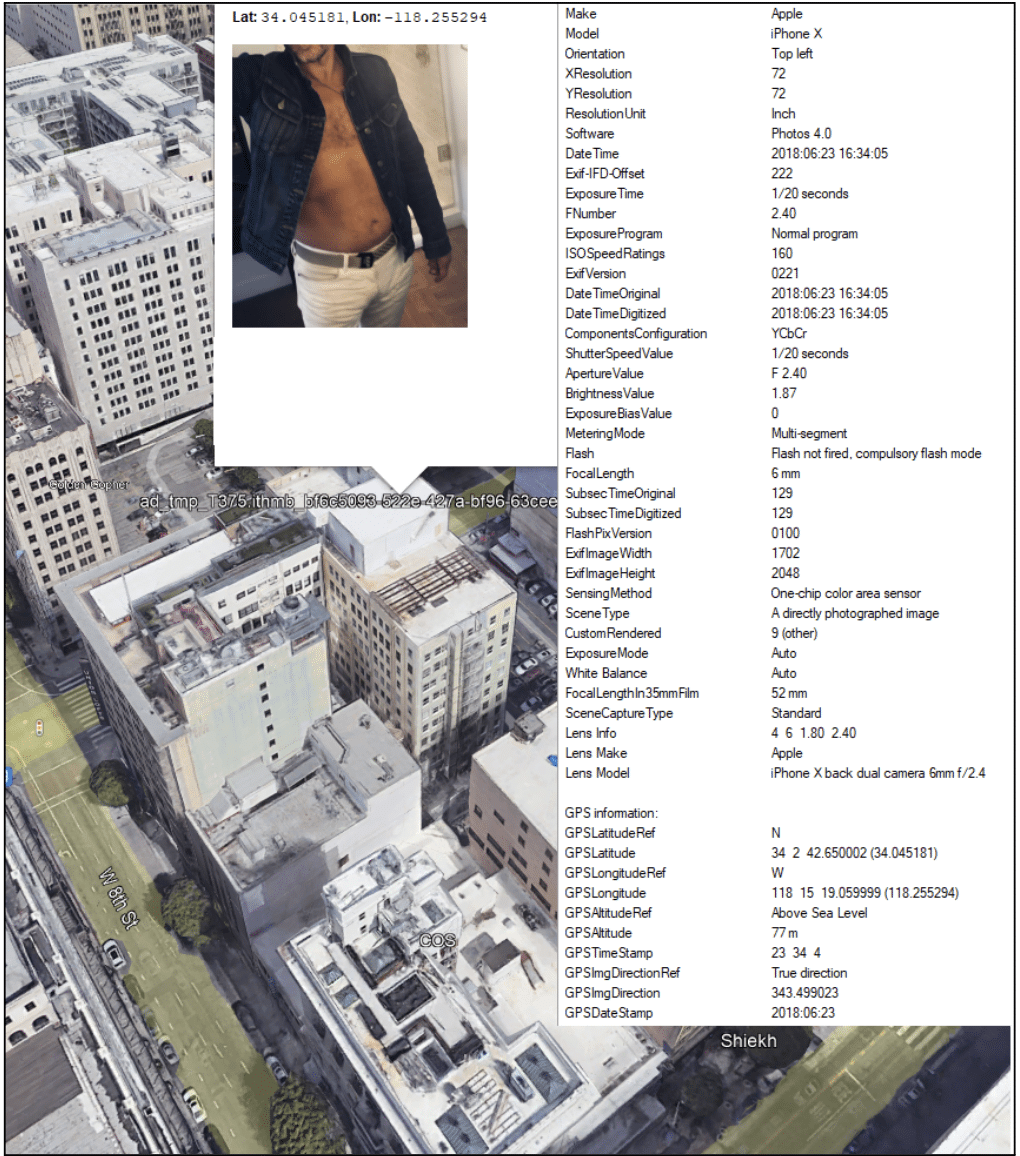
For example, here’s how Gus Dimitrelos used EXIF data — EXIF data he says he found on most or all of the photos Hunter took — to validate photos to Hunter on the laptop attributed to him.

In this case, Dimitrelos matched the photo to a known iPhone Hunter used and a known location he was at on a particular date and time.

To use photographs to attribute to Hunter Biden cocaine use, those photos are not only going to need to depict cocaine rather than sawdust, but they’re going to need to be accompanied by the kind of forensic data that could prove that a particular phone taking a picture was in Hunter’s hand at the time a picture was taken.

That’s particularly true in this case. Ziegler shows that Ablow texted this photo to Hunter on November 20, 2018.

That happens to be the day when someone first accessed Hunter’s droidhunter account — the one via which his digital life would be packaged up two months later — from a Mac device for the first time after the laptop ultimately shared with the FBI was first logged into Hunter Biden’s iCloud account.

But based on what is available on the public emails, after someone logged into Hunter’s iCloud account with a new laptop on October 21, 2018, it was weeks before a new Mac device logged into his Gmail accounts, starting with a November 16 attempt to log into Rosemont Seneca that was rejected by Google, followed by a reset of the droidhunter account and a login into that on November 20, followed by a login into Rosemont Seneca on November 24. Not only did those attempts come in the midst of a bunch of attempts to get into Hunter Biden’s Twitter account from a Mac. But on November 27, someone appears to have gotten into his iCloud account from Troutdale, OR.

That is, because this text was sent during a period when some crucially important anomalies were happening on Hunter Biden’s digital accounts, you’d need to ensure that whatever device with which Hunter seemingly engaged in this exchange with Ablow was actually in his hand in Newburyport, MA, and not in someone else’s hand in Troutdale, OR. That’s especially important with any conversation with Ablow, because in at least two known conversations — one in which he created the illusion for Hunter that he was speaking to some orthopedic surgeons, and another in which he entirely rewrote a Hunter comment subsequently published in Vanity FairAblow presented as Hunter.

And by claiming a photo of sawdust taken by an Ablow client is instead a photo of cocaine taken by Hunter Biden, Derek Hines may have spoiled his effort to sand-bag Abbe Lowell and avoid a suppression challenge to all this digital evidence. Sure, Hines is claiming that Lowell missed his window to file a motion to suppress by December 11, 2023. But he apparently just claimed that he hasn’t validated the data he’s submitting, as an officer of the court, in filings before Judge Maryellen Noreika. And with this apparent flub, Hines has definitely made the importance of expert forensic reports an issue.

It appears increasingly likely that before Jim Jordan demanded a prosecution of Hunter Biden and before David Weiss started to worry about threats to his family, Weiss or someone who knew better realized that any prosecution that would rely on this digital evidence would be rife with these kinds of embarrassments. But then Weiss decided he’d go forward anyway, he’d bring in experts in prosecutorial dickishness to try to sandbag their way through the difficulties posed by the laptop.

Don’t get me wrong: Hines and Leo Wise have well earned their reputation for prosecutorial dickishness. This effort to avoid any suppression challenge relating to the laptop might yet succeed!

But without the least little understanding of digital forensics, that may not be enough to sustain this case.

Update: According to someone familiar with Ablow’s office in this period, the photo does appear to match one that was in the office. That’s important because the FBI and DEA would have photos of Ablow’s office from the 2020 raid.

Update: We’ve literally come full circle. Fox News is in a tizzy because of these photos, though they appear more careful than DOJ to claim the sawdust is Hunter’s.


Joseph Ziegler[‘s Filter Documents] Say Derek Hines Is Lying

For years, there have been questions about whether, and if so how, Hunter Biden could ever be prosecuted using evidence from the laptop. As I noted here, David Weiss and Derek Hines revealed how they intend to do that yesterday. The answer is, by engaging in unbelievably dickish sandbagging of the President’s son.

The ploy involved two steps. First, prosecutors provided Hunter digital evidence in October, with warrants only for tax crimes. At that point, there was no reason to assess those warrants for suppression, because they did not permit searches for gun crimes.

Then, exactly seven days before the motions deadline in the case, they provided a new warrant, for the first time presenting a warrant covering gun crimes. They now claim that because Abbe Lowell did not move to suppress the laptop by that motions deadline seven days later, he has waived his opportunity.

I’m not saying that this kind of ethically problematic gimmick won’t work, nor am I saying it only happens to privileged white men like Hunter. But it is shocking that that is how they plan to bury legal and forensic problems with evidence from the laptop.

I think it likely Lowell may respond by saying there are a whole bunch of things — such as evidence the FBI conducted analysis long before they obtained the laptop and determined John Paul Mac Isaac had unlawfully accessed it and known forensic reports describing problems with the data — that he should have been provided. I expect Lowell will point to this gimmick and describe that it is proof these men are no longer entitled to the presumption of regularity, and therefore the gun charges should be reviewed for vindictive prosecution.

Lowell may also point out that evidence Joseph Ziegler made public shows that a key premise behind this gimmick is false.

Part of Hines’ gimmick is a claim that investigators could, and — the response suggests — did, find evidence pertaining to gun crimes while seeking evidence of Hunter’s state of mind pertaining to the tax crimes.

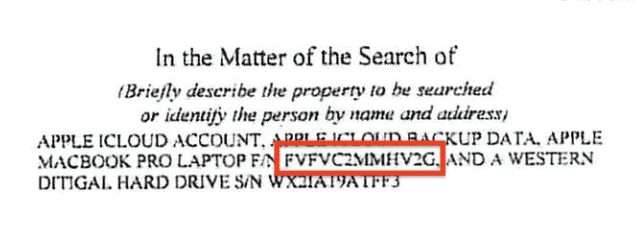
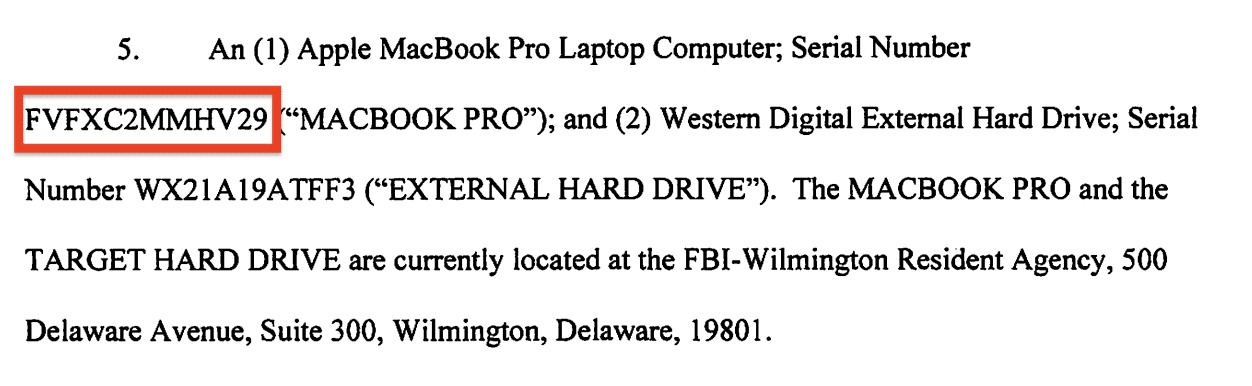
The warrant authorized investigators to search for the same violations referenced in the previous paragraph, that is, violations of 26 U.S.C. § 7201, Tax Evasion, 26 U.S.C. § 7203, Willful Failure to File Tax Returns or Pay Taxes, and 26 U.S.C. § 7206(1), False Tax Returns. Relevant to this case, this warrant also authorized investigators to seize “evidence indicating the state of mind of the owner and user of the TARGET MACBOOK PRO and TARGET EXTERNAL HARD DRIVE as it relates to the crimes under investigation.” Again, evidence that showed the defendant’s addiction to controlled substances indicates “the state of mind of the owner and user of the TARGET MACBOOK PRO and TARGET EXTERNAL HARD DRIVE as it relates” to the to the tax crimes enumerated in the warrant.

Except Joseph Ziegler helpfully told us what he looked for with that very same warrant when he provided the filter term document to Congress. While he included “halliebiden” (meaning a few of these texts might come in), porn, and girl, he did not include drugs, cocaine, crack, or any other drug-related term.

Cathay

Cathay Bank

CEFC

Cooper

debit

deduction

Dennis Louis

Devon

Dhabi

Dodge

draw

That is investigators wouldn’t find most of these communications as part of the tax investigation.

In fact, Garrett Ziegler has identified several that involve Hunter’s then still licensed psychiatrist, Keith Ablow, which would have been filtered, and aren’t drugs at all.

Again, to be clear, Hines intends to bypass all scrutiny of the laptop with his unethical sandbagging, and he might get away with it.

But in the process, he’s making claims refuted by public evidence.

Judge Mark Scarsi Refuses Accommodations That Trump’s Judges Have Granted

While the judges in former President Trump’s federal prosecutions have been issuing reasonable (in Tanya Chutkan’s case) and unreasonable (in Aileen Cannon’s case) extensions in pretrial deadlines, the judge in Hunter Biden’s Los Angeles case seems intent on keeping a politically damaging trial scheduled for the middle of campaign season, June 20.

Last week, Abbe Lowell requested two accommodations in the pretrial schedule in Los Angeles: first, that he be permitted to hold off filing the four (actually, three) filings fully briefed before Judge Maryellen Noreika that he will also file in Los Angeles: a motion to dismiss based on immunity under the diversion agreement, a selective and vindictive prosecution claim, and a claim that David Weiss was improperly appointed. Lowell also mentioned the constitutional challenge to the gun charge, but that won’t be filed in Los Angeles. At the initial appearance, Lowell said instead there would be one based on “the actions of the IRS agents that were involved.”

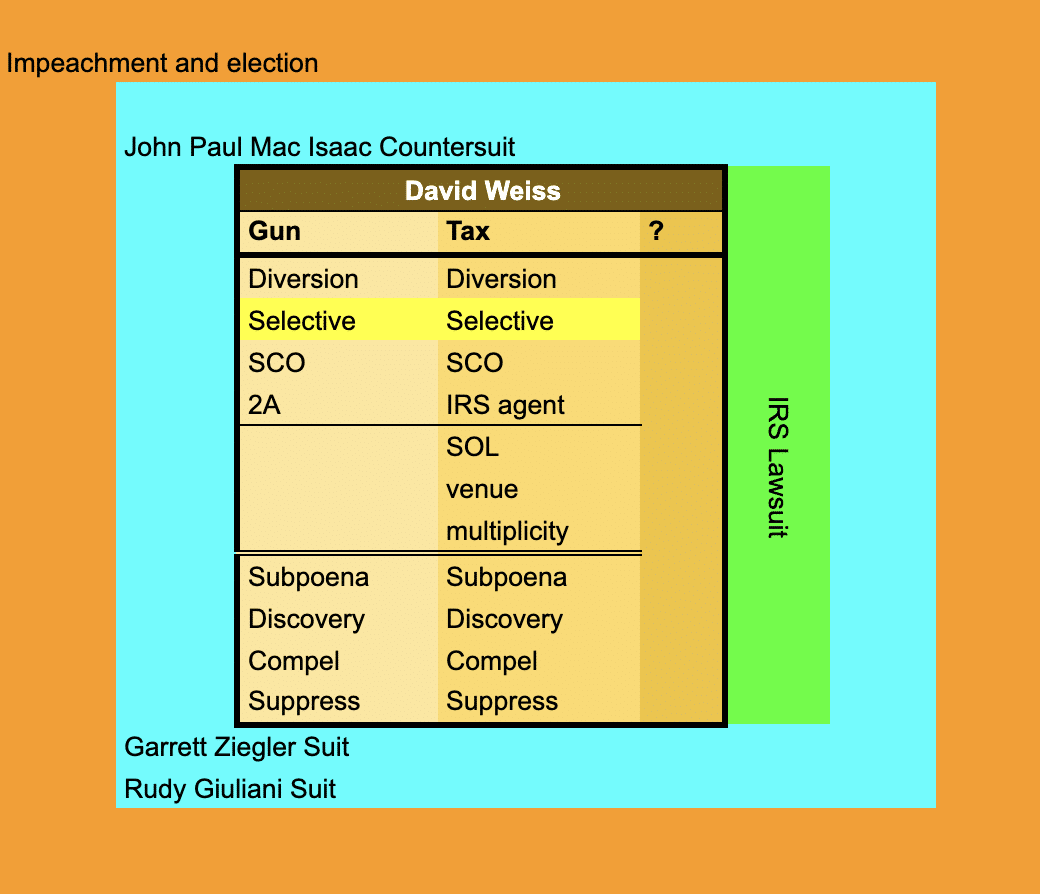
Here’s an updated version of my Howard Johnsons-colored table showing how all these cases interrelate, including the filings we should expect in both federal cases; I’ve put an updated version of the eight cases Lowell is juggling below (and have started tracking them here).
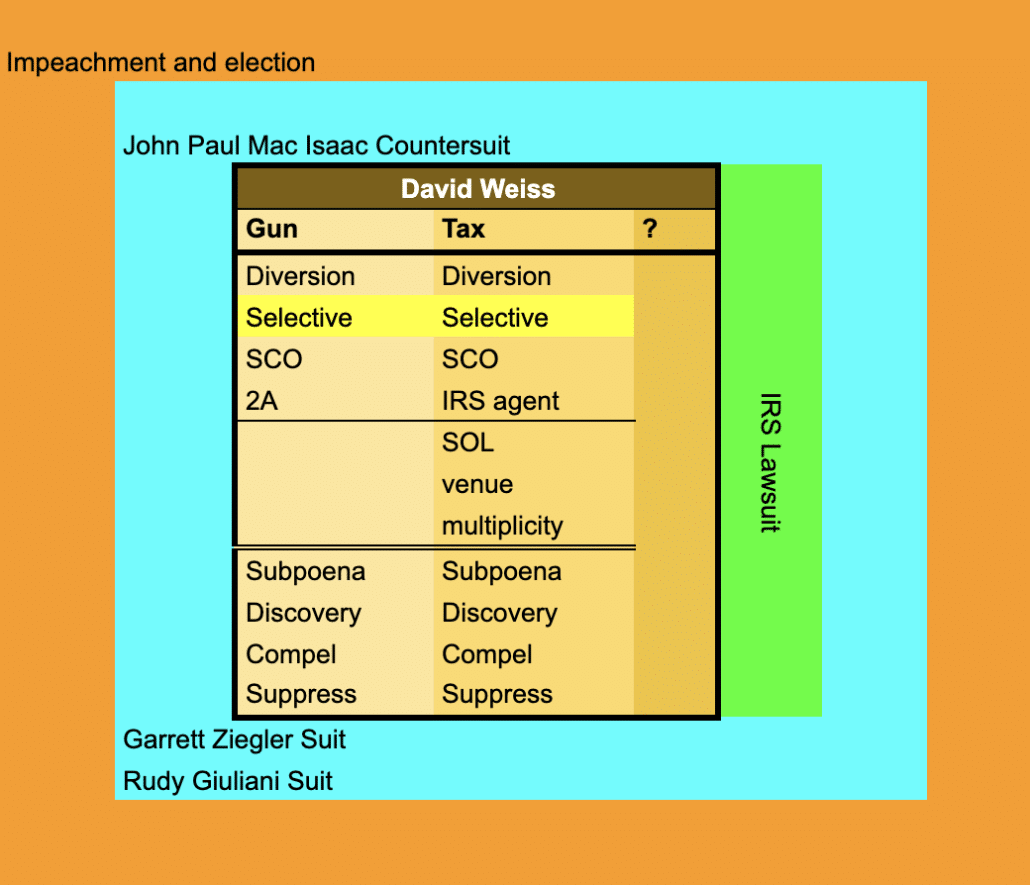
Lowell did not mention the as-yet unfiled motion to suppress the laptop he said he’d file in Delaware on January 30. I’ll come back to that.

In addition, Lowell requested a 3-week extension on the initial filing deadline, from February 20 to March 12, for the motions that will be unique to Los Angeles; he did not mention a filing about the IRS agents, but did mention motions on the Statute of Limitations (presumably affecting just the 2016 tax year), venue (possibly affecting both the 2016 and 2017 year), and multiplicity. To justify that, he cited a death in the family of one of the lawyers working on these filings, as well as several other deadlines pending:

  • Responses to motions to dismiss in the Garrett Ziegler and Rudy Giuliani lawsuits at the end of the month
  • A February 22 hearing in the John Paul Mac Isaac suit and Hunter’s countersuit
  • Hunter’s February 28 impeachment deposition in the House

Judge Scarsi denied the motion with no comment.
To be sure, I’m not remotely surprised Scarsi denied Lowell’s motion to hold off on the identical motions already filed in Delaware.

At the initial appearance on January 11, Scarsi raised those filings himself.

[T]he Court has gone through and actually read what’s been filed so far in Delaware. So the Court wanted to come up to speed on the issues [at] play here. And so, we’ve got — at least we’re up to speed in what’s been filed so far.

The parties have spent, it looks like, a lot of time, or will spend time briefing issues in Delaware. And I think that should help us expedite matters here, because it wouldn’t surprise me if some of the same issues raised in Delaware are raised in this Court. In fact, the Court anticipates that happening.

Scarsi even ordered the parties to cut the 70-page filings submitted before Judge Noreika down to something like 20, double his normal limit of 10 pages (the parties have yet to file a stipulation showing that’s what they’ve agreed on).

[T]he parties know from reading the Court’s standing order, the Court’s standing order in criminal contemplates that the page limitations on motions is 10 pages. Motions and oppositions, and replies not necessary.

Now the Court is willing to grant the parties a little leeway here, to exceed the page limits, you know, contemplating doubling them, at most.

Scarsi even recognized that the diversion filing might trigger an interlocutory appeal, because he warned Lowell that the precedent (which he named) governing interlocutory appeals in the Ninth Circuit is fairly limited and directed him to address that issue in his initial filing.

At the time, Lowell knew the briefing deadline before Judge Noreika, and so could have requested to hold those three identical motions at that point.

Plus, it’s not the case that the motions will be identical. The diversion filing in Los Angeles will and always would have been mostly a place-holder; if Noreika rules against Hunter regarding the diversion agreement, then there would be no basis to make the same claim in Los Angeles absent an interlocutory appeal in Delaware. It’s only if she rules for Hunter that Lowell’s claim that the immunity in the gun diversion extends to the tax case would come into play.

The selective and vindictive prosecution filing in Los Angeles will have to swap the comparators showing how no non-violent person in recovery from addiction has been charged with the same gun charges in Delaware with comparators showing that no one who has paid their taxes, much less someone who — Abbe Lowell claims but has not yet shown proof — overstated their income has been criminally charged, with a mention of Roger Stone’s more lenient treatment as well. Lowell mentioned the two tax laws criminally prohibiting the kind of pressure that Trump exercised in Hunter’s case only in passing; they would seem to be far more central here. And given the fact that the US Attorney for Los Angeles, Martin Estrada, was among those threatened as a result of the political pressure on this case, it would seem useful for Lowell to raise the threats elicited by those demanding this prosecution.

Even the Special Counsel challenge could be tweaked given Weiss’ admission to Congress that he has never been subject to the kind of oversight from political appointees that Morrison v. Olson requires. Weiss was already functioning as a Special Counsel before demanding appointment as such, presumably to get the opportunity to write another political hit piece targeting a Biden man (or men).

I’m not even that surprised that Scarsi refused to budge on the schedule. At the initial appearance he not only warned that he likes to move quickly,

Again, if we’re going to move this case either forward or expeditiously, and efficiently — and that’s what this Court likes to do. We like to move things along, because I think it’s better for all the parties and we don’t have things linger.

But Scarsi also suggested that because he set a schedule first, Judge Noreika should now have to accommodate his schedule.

So what I’m going to do is, I’ll go ahead and issue an order with those dates. That will hopefully prevent conflict with Delaware, because this order will be in place and the Court in Delaware will likely be aware of it.

So Lowell was on notice of all of that.

There’s one thing Lowell wasn’t on notice of on January 11, and his request for a delay may be about something other than the motions to dismiss.

Delaware Superior Court Judge Robert Robinson only set the February 22 hearing in the John Paul Mac Isaac lawsuit and Hunter’s counterclaim on February 1 at 8:52 AM. Per Lowell’s declaration and email record, 38 minutes after Robinson set that hearing, Lowell first reached out to prosecutors about this delay (in their dickish fashion, they blew him off for six days).

If Robinson were to rule in Hunter’s favor — if he were to rule that, under Delaware law, JPMI didn’t own Hunter’s laptop when he first offered it up to the FBI on either October 9 (JPMI’s version) or October 16, 2019 (FBI’s), less than a year after someone who may or may not be Hunter Biden dropped it off, if he were to rule that JPMI violated his own promise to protect Hunter Biden’s data, not least by snooping through Hunter’s data well before even he, JPMI, claimed his intake form gave him ownership of the laptop — then it might have fairly dramatic impact on any motion to suppress the laptop.

That’s true, not least, because (if you can believe JPMI and it’s not clear you can), after JPMI sent a hard drive with the data across state lines to his father, the FBI told his father that, “You may be in possession of something that you don’t own.” After which JPMI and his father sent that same data across even more state lines, including to Congress and Rudy Giuliani. And yet rather than opening a criminal investigation into JPMI for interstate trafficking of the potentially stolen data of the former Vice President’s son, David Weiss instead decided to build an entire case around that data.

Worse still, JPMI’s public claims about what he saw in the data are obviously false: of particular note, there are no known emails substantiating his claims that the laptop showed, “information about Ihor Kolomoyskyi and Mykola Zlochevsky, and their involvement in using Hunter and Devon to protect the billions they embezzled from the IMF.” The crime of which JPMI told the FBI they’d find evidence on the laptop was entirely made up — and made up to create a video that might serve Trump’s impeachment defense.

Lowell’s motion to compel — submitted in Delaware two days before that hearing was set — describes receiving “The Mac Shop files.” It doesn’t describe receiving the initial FBI legal review that concluded JPMI and his father likely didn’t own that laptop or data. It doesn’t describe receiving the 302s documenting the FBI’s interactions with JPMI (302s that were also not shown to case agents who might have to testify at trial). If warnings that JPMI didn’t own this data really exist, and if prosecutors are withholding it to cover up real problems with their reliance on the laptop, it would be fairly important evidence.

A favorable Delaware ruling would likely have more impact on the Los Angeles case than anything but a ruling in favor of Hunter’s diversion argument in Delaware, because it would show that David Weiss chose to use poison fruit to investigate Hunter Biden rather than pursue a case of interstate data theft. The SDNY case against those who stole Ashley Biden’s diary and a thumb drive with tax records and photographs on it and trafficked them across state lines shows that such things can be prosecuted.

At the initial hearing, Scarsi told Lowell that the, “February 20th date is for motions that you know now that you intend to bring.” When Lowell said he’d file a motion to suppress the laptop and everything else in Delaware, he pointed to several other things — such as reliance on witness testimony from a Los Angeles grand jury post-indictment and the filing for the warrant itself post-indictment — to get as a basis to suppress. Lowell still hasn’t mentioned a motion to suppress the laptop to Scarsi. He’s likely now trying to determine whether he can and should wait on a ruling from Robinson before he files such a suppression motion to Scarsi, who has promised to rule expeditiously.

It’s not surprising that Scarsi denied Lowell’s request (though it is a telling contrast to the treatment Trump is getting).

But it is also the case that these moving parts really may affect the case before him.

Update: Abbe Lowell has filed a status report in the Delaware case in case Judge Noreika decides she doesn’t want Scarsi to preempt her.


1) Delaware Gun Case (Maryellen Noreika)

[RECAP docket]

September 14: Indictment

October 3: Arraignment

October 12: First Discovery Production (350 pages focused on gun case), including iCloud data and “a copy of data from the defendant’s laptop”

October 13: Motion to Continue

October 19: Order resetting deadlines

November 1: Second Discovery Production (700,000 pages on tax charges — no mention of FARA investigations)

November 15: Hunter subpoena request

December 4: Weiss subpoena response

December 11: Motions due

December 12: Hunter subpoena reply

January 9: Third Discovery Production (500,000 pages focused on tax case)

January 16: Responses due

January 30: Replies due

January 30: Motion to compel

2) Los Angeles Tax Case (Mark Scarsi)

[RECAP docket]

Hunter was indicted on December 7 and made a combined arraignment/first appearance on January 11. At that hearing, Judge Mark Scarsi set an aggressive (and, from the sounds of things, strict) schedule as follows:

February 20, 2024: Motions due

March 11: Response due

March 18: Replies due

March 27 at 1:00 p.m.: Pretrial motion hearing

April 17: Orders resolving pretrial motions.

June 3 at 1:00 p.m.: Status conference

June 20: Trial

3) House Dick Pic Sniffing (James Comer and Jim Jordan)

November 8: James Comer sends a pre-impeachment vote subpoena

November 28: Lowell accepts Comer’s offer for Hunter to testify publicly

December 6: Comer and Jordan threaten contempt

December 13: Pre-impeachment deposition scheduled; Hunter gives a press conference and states his data has been “stolen” from him

December 13: Impeachment vote authorizing subpoena

January 10: Oversight and Judiciary refer Hunter for contempt

January 12: Lowell invites Comer and Jordan to send another subpoena, now that they have the authority to enforce it

January 14: Jordan and Comer take Lowell up on his invitation

February 28: Deposition

4) IRS Lawsuit (Tim Kelly)

[RECAP docket]

September 18: Privacy Act lawsuit

November 13: DOJ asks for extension to January 16

January 16: DOJ files motion for partial dismissal

January 23: Joint motion to continue

January 30: Original deadline for Hunter response

February 5: Amended complaint

February 9: DOJ asks for delay for response from February 20 to February 27

5) John Paul Mac Isaac’s Suit and Hunter’s Countersuit (Robert Robinson)

Last summer, John Paul Mac Isaac and Hunter both sat for depositions, on May 31 and June 29, respectively.

Last fall, Hunter Biden subpoenaed people like Rudy Giuliani, Robert Costello, Steve Bannon, Yaacov Apelbaum (who made a copy of the contents of the laptop), Tore Maras (who has described adding things to the laptop). In November, Hunter also served a subpoena on Apple.

On January 4, the parties to John Paul Mac Isaac’s suit and countersuit filed to have their pending motions decided by a judge. The media defendants — CNN and Politico — are filing to dismiss. Hunter and JPMI filed competing motions for summary judgment.

And Hunter is filing to quash a bunch of subpoenas, initially 14, to Hunter’s parents, uncle, ex-wife, former business partners, and several people with his father, like Ron Klain and Mike Morell. Though after that, JPMI attempted to subpoena Hunter’s daughters.

Since then, Judge Robinson stayed John Paul Mac Isaac’s subpoenas and scheduled hearings in the Motions to Dismiss (from CNN and Politico) and Motions for Summary Judgement (from Hunter and JPMI) for February 22.

6 AND 7) Hacking lawsuits against Garrett Ziegler and Rudy Giuliani (Hernan Vera)

[RECAP Ziegler docketRECAP Rudy docket]

September 13: Complaint against Ziegler

September 26: Complaint against Rudy and Costellonoticing Ziegler suit as related case

November 15: Ziegler gets 30 day extension

December 1: Costello gets 30 day extension

December 7: After swapping attorneys, Ziegler gets extension to December 21

December 21: Ziegler motion to dismiss and request for judicial notice (heavily reliant on JPMI suit)

January 17: Costello motion to dismiss with Rudy declaration that makes no notice of his fruit and nuts payments relating to Hunter Biden

January 22: Lowell successfully requests to harmonize MTD hearing for both hacking lawsuits

February 8: Rescheduled date for hearing on motion to dismiss

February 22: Rescheduled date for hearing on motion to dismiss

End of February: Response to motions to dismiss due

March 21: Joined date for hearing on motion to dismiss

8) Defamation against Patrick Byrne (Stephen Wilson)

November 8: Complaint

January 16: After swapping attorneys, Byrne asks for 30 day extension

February 6: Rescheduled response date

Hunter Biden’s Delayed Email Access on the JPMI Laptop

In both a footnote of his reply motion for discovery

1 The prosecution’s opposition briefs reveal some new evidentiary issues (e.g., seizing electronic evidence for the gun charges for the first time pursuant to a December 4, 2023 warrant; using a grand jury in California in connection with the tax case to elicit evidence for already-indicted gun charges in Delaware; seeking a search warrant in December 2023 to search for evidence in support of its charges three months after having charged; testing a leather pouch for cocaine residue in October 2023 that it had in its possession for five years; denying there was Probation’s approval for the diversion agreement) in addition to those raised in Mr. Biden’s motions to dismiss themselves (e.g., how a Delaware agreement for a diverted gun charge and two tax misdemeanors turned into multiple felonies in two jurisdictions following massive political pressure to do just that). Based on the prosecution’s admissions made only recently in its filings, Mr. Biden will expeditiously file a motion to suppress improperly gathered evidence. [my emphasis]

And two footnotes in his motion to compel

3 The search warrant on December 4, 2023, which post-dates the firearm indictment by almost three months, is the first time in the course of this five-year investigation that DOJ obtained a warrant to search the alleged laptop (and iCloud account and backup data) for evidence of federal firearms violations. The prosecution then used that warrant to purportedly review and seize, for the first time, text messages, photos, and other evidence in support of its felony charges, several of which the prosecution cited in its pleadings on January 16, 2024. (See DE 68 at 8–9.) Moreover, that warrant contained testimony (in support of finding probable cause) about the firearm obtained from a witness in a grand jury empaneled in the Central District of California in November 2023 after this indictment had already been brought. Accordingly, the issue raised—as a result of the prosecution’s recent filings—is one to explore at the evidentiary hearing Mr. Biden requested (DE 64) and a motion to suppress which will be filed promptly.

[snip]

18 Citing District of Delaware Search Warrant No. 23-507M. Unlike the Office’s prior search warrants during the five-year investigation that were for tax, financial, or foreign-business related offenses, this warrant was specifically for offenses pertaining to 18 U.S.C. §§ 922, 924 (firearms offenses). See supra n.3, and a further motion to suppress concerning this December 4, 2023 search will be forthcoming. [my emphasis]

Hunter Biden attorney Abbe Lowell said he would soon be filing a motion to suppress “improperly gathered evidence.”

Part of this will likely be a challenge to the belated pretextual testing of the gun for cocaine residue without also testing for fingerprints and dating of the residue to the time period immediately after Hunter purchased a gun.

But in all three footnotes, he promises to challenge the December 4, 2023 warrant, which would implicate the original search warrant to Apple, the exploitation of the laptop, and follow-on searches for four devices backed up to his iCloud:

  • iPhone X (Apple Backup 1)
  • iPhone 6S (Apple Backup 3)
  • iPad Pro (Apple Backup 4)
  • iPhone XR (Apple Backup 11)

After over three years of controversy about the laptop attributed to Hunter Biden, this challenge may finally unpack the reliability of the device that has driven right wing frothers nuts ever since.

Game on!

There’s a variety of things that Lowell might rely on to challenge the use of the laptop — and possibly, the four backed up devices, as fruits of the laptop — some sound and some less so. They include:

  • A complaint that David Weiss used testimony obtained from a Los Angeles grand jury focused on tax crimes to obtain the December 2023 warrant, which will almost certainly be dismissed as normal prosecutorial dickishness.
  • If any of the devices entirely predate 2018, there should be no probable cause to search them for the 2018 charges. Based on emails available at BidenLaptopEmails dot com, Hunter Biden started using at least three different iPhone Xes in 2018 (but at least one of those was likely lost to hostile people). He had an iPhone 6S with the droidhunter account he used to access adult entertainment in early 2019, though the only known iPhone XR may have been tied to that account, rather than his Rosemont Seneca account (or there could be a later one). Otherwise, his iPhone 6S use appears to have significantly predated 2018. An iPad backed up to the laptop is an iPad Pro, which itself dates to 2016, and much of Hunter Biden’s known iPad Pro use was also in 2016 and earlier, which is the time frame investigators were most interested when they obtained those warrants.
  • The fact that, per Gary Shapley’s notes, the FBI never validated when the files loaded onto the laptop were added to it in the first 10 months they used it (which also means they did not do so before obtaining four backup devices partly relying on it).
  • John Paul Mac Isaac’s acknowledgment that when his father first went to the FBI, the FBI agent with whom he spoke advised, “you should get a lawyer [because] You may be in possession of something you don’t own.”
  • JPMI’s description that the FBI was trying to boot up the laptop on December 9, 2019, before the FBI had the December 13, 2019 warrant.
  • The fact that the Attorney General’s Chief of Staff texted the Attorney General that he was sending him a laptop the day after the FBI obtained the known December 13, 2019 warrant, suggesting the laptop may have been used for something else, like potential impeachment defense.
  • Also per Shapley’s notes, that some of the means FBI used to determine the laptop was once associated with Hunter’s iCloud account — including call and email traffic with John Paul Mac Isaac and a cigar purchase made locally the day of the drop-off — could easily be spoofed by anyone in possession of the laptop.
  • The fact that, for two and a half months by the time the FBI claimed to have validated that the laptop was Hunter Biden’s, they had had full access for Hunter’s iCloud (and almost certainly had access to Hunter Biden’s Rosemont Seneca Google account for at least that long), which would have given them full access to a bunch of metadata that very much should have raised concerns about who had control of Hunter’s devices at any given time.

Those are just some of the potential bases for a Fourth Amendment challenge to using the laptop as evidence. There may be more.

It’s the last bullet that I want to focus on here. Shapley’s notes show that on November 6, 2019 — over a month after obtaining Hunter’s full iCloud account on September 25, 2019 — Josh Wilson used the serial number provided by JPMI and “determined that device was registered to [Hunter Biden] via apple ID account/iCloud account.”

It is absolutely the case that at 8:50AM Delaware time on October 21, 2018 — nine days after Hunter bought a gun and two days before he no longer possessed it — the laptop that would eventually end up at the FBI logged into Hunter’s iCloud account, though unlike some devices before and after, there’s no public confirmation of a tie to Apple directly, such as Apple welcoming him to a new computer or a receipt.

But there’s something unusual about what came next.

Normally, when Hunter Biden started using one of the new devices that can be clearly tied to his account, he would log into iCloud, then shortly thereafter log into one or another of his two Google accounts, Rosemont Seneca and/or droidhunter. As a result, Google would send security alerts to both the Gmail account and a whichever of the iCloud emails were set as backup.

For example, after Hunter bought a new laptop (possibly the laptop found at Keith Ablow’s in March 2019) on August 31, 2018, he signed into his iCloud account the next day, then, also on September 1, signed into his droidhunter Gmail account, then into his Rosemont Seneca account on September 2.

Someone signed into one of his new replacement iPhones, ordered through Asurion, on October 14 and then, on October 17, signed into his Rosemont Seneca Gmail account.

Someone signed into a new iPhone 8 Plus on October 23, 2018 — possibly the other replacement phone from Asurion — and then signed into his Rosemont Seneca Gmail account that same day.

Things are a bit fuzzier with some phones replaced through Apple the next spring, after his life was packed up on a laptop for delivery to John Paul Mac Isaac.

On February 21, 2019, he got a new iPhone, associated with his droidhunter account, and signed in on his droidhunter Gmail right away.

On March 1, 2019, he got a new iPhone XR — possibly the one obtained with the 2020 warrant. Then bought an adult themed App on March 7, then signed into his droidhunter email on March 9.

There are an astounding number of other devices used to log into one or another account associated with Hunter Biden’s digital life. But for recognizable device replacements, the pattern generally holds: Sign into Apple, then sign into Google.

But based on what is available on the public emails, after someone logged into Hunter’s iCloud account with a new laptop on October 21, 2018, it was weeks before a new Mac device logged into his Gmail accounts, starting with a November 16 attempt to log into Rosemont Seneca that was rejected by Google, followed by a reset of the droidhunter account and a login into that on November 20, followed by a login into Rosemont Seneca on November 24. Not only did those attempts come in the midst of a bunch of attempts to get into Hunter Biden’s Twitter account from a Mac. But on November 27, someone appears to have gotten into his iCloud account from Troutdale, OR.

New Mac devices also accessed Hunter’s Rosemont Seneca account on February 9 and February 20, 2019.

As I’ve already described, a great deal of Hunter Biden’s “normal” activity on his devices in this period looked like he was hacking himself. For example, on at least 36 occasions in 2017 and 2018, Wells Fargo shut down Hunter’s online access because of activity that looked, to it, like a hack. Many if not most of that was probably, instead, just Hunter Biden doing erratic things. In other cases, it’s impossible without more data to show whether a particular access or expenditure was Hunter himself, someone who had acquired one of his devices, or someone more malicious.

But there is a pattern, and the laptop ultimately shared with the FBI, he deviated from that pattern.

Certainly, David Weiss might argue that the FBI just hadn’t looked at Hunter Biden’s digital fingerprints that closely when they got a warrant on December 13, 2019.

But they’ve had five years to look at it in the interim period, and might have a harder time arguing that this pattern was normal.

Update: Just catching up to the Delaware docket (JPMI’s suit and Hunter’s countersuit). Judge Robert Robinson will hold hearings in everyone’s motions on February 22.

Update: Abbe Lowell has amended his lawsuit against the IRS, tweaking it to make statements that lawyers for Joseph Ziegler and Gary Shapley made. He told Mark Scarsi had had some motion regarding the disgruntled agents, so I expect this filing will be cited in that motion.

Abbe Lowell Already Accused David Weiss of a Brady Violation

There was something subtle but potentially important in Abbe Lowell’s motion to compel discovery in Hunter Biden’s gun case.

First, after discussing the discovery requests he sent in October and November, he described reminding prosecutors (this is actually in the October letter) that Leo Wise had assured Judge Maryellen Noreika on July 26 that prosecutors had provided all Brady materials.

Mr. Biden reminded the prosecution that this Court ordered the production of Brady materials on July 26 and October 3 and asked the prosecution to confirm whether further productions were forthcoming, or Mr. Biden would need to move to compel. Id. As the Court may recall, the prosecution told the Court at the July 26 hearing that it had already produced all Brady material. (7/26/23 Tr. at 7 (“THE COURT: Has all Brady material been produced? MR. WISE: Yes, Your Honor”.).) Yet, the prosecution did not send the first production for almost three months, until October 12, 2023, with a cover letter noting its production was “in response” to Mr. Biden’s October 8 letter requesting discovery. [emphasis original]

Then, later in the motion, Lowell described that the Delaware case file prosecutors didn’t provide until October 12 — in response to the October 8 letter — included a declination decision.

Despite assuring the Court all Brady material had been produced on July 26, 2023, since then, the prosecution has produced an October 2018 state police case file of the firearm incident that includes interview memoranda and deliberations among Delaware state prosecutors regarding whether to file charges—per the file, on October 30, 2018, after reviewing the facts, New Castle County prosecutors decided not to prosecute and closed the case. [emphasis original]

A decision not to charge for state crimes would be helpful but not definitive at a trial on federal charges. But it pretty clearly is helpful to Hunter Biden’s defense.

And yet, prosecutors hadn’t provided it to Chris Clark before, on July 26, Leo Wise assured Judge Noreika that prosecutors had provided all Brady.

I suspect the motion to compel is designed as much as a challenge — “is this your final answer?” — before Lowell makes further allegations that prosecutors withheld material helpful to Hunter’s defense. That is, I suspect Lowell knows of certain things, perhaps the memos that Joseph Ziegler’s original supervisor, Matthew Kutz, included in the case file documenting improper political influence, that also clearly count as Brady that he hasn’t received yet.

That said, I suspect there was a pretty good reason prosecutors didn’t bother to give Clark that Delaware case file before the hearing on July 26: because there was never any consideration of actually charging Hunter on the gun crimes. That is, whatever Brady they provided was likely focused on the tax case, not the gun one, because the gun charge was never going to be charged.

Until Leo Wise, who assured Judge Noreika that prosecutors had complied with Brady, decided that he was going to charge those gun crimes.

Particularly given DOJ’s increased focus on such things in recent years after some really big Brady violations, a serious Brady violation is one of the few things that would actually give Merrick Garland cause to shut down David Weiss as Special Counsel.

The declination decision, turned over a month after the indictment, isn’t that, yet. For Leo Wise, who assured the judge in this case that all Brady had been turned over, however, it’s a detail that might be more convenient if treated as proof they weren’t going to charge gun crimes before they did.

The Hunter Biden Laptop: Two CARTs before the Horse

According to the property receipt that has been posted publicly (but not, as far as I know, been made available as separate PDF), FBI Special Agent Josh Wilson signed the receipt for a hard drive and laptop obtained from John Paul Mac Isaac. The date is obscure, but consistent with receipt on December 9, 2019.

The admittedly inconsistently dark case file on that form, as right wing frothers never tire of pointing out, is a money laundering case file, 272D-BA-3065729.

According to the warrant return I liberated this week, on December 13, 2019, Josh Wilson received the hard drive and laptop again. He received the laptop not from an evidence locker, where it might normally go while an agent gets Office of Enforcement Operations approval and then gets a warrant from a magistrate judge, but from a Computer Analysis Response Team (CART) Computer Analyst named Mike Waski.

The warrant I liberated is not for money laundering. The only crimes listed on Attachment B are tax crimes: 26 USC 7201, 26 USC 7203, and 26 USC 7206(1).

According to the notes Gary Shapley took after it became clear that, after sharing the laptop with the FBI, John Paul Mac Isaac shared a copy with Rudy Giuliani, after Josh Wilson took possession of the hard drive and laptop (a second time), the hard drive, at least, went back to CART — this time, a CART Agent named Eric Overly.

In spite of the fact that Shapley made these notes in order to explain precisely what happened with the laptop, Shapley doesn’t mention where the laptop was between December 9, 2019, when Josh Wilson took possession from JPMI and December 13, 2019, when Josh Wilson took possession again.

Joseph Ziegler returned the warrant on January 30, 2020. But it wasn’t until March before the FBI got an image of the laptop (though this may have been after a filter team review). Josh Wilson got that personally, too.

Putting two carts before the horse is not normal, here. When the FBI accepts a laptop, even if it is being used in multiple investigations, they image it once and then — as ultimately happened here, probably multiple times — they obtain new warrants for the same device, first for the tax investigation, then for a FARA investigation, and finally, 81 days after indicting the President’s son for gun crimes, for a gun investigation.

But this laptop, Hunter Biden’s laptop, went from the blind computer repairman to Josh Wilson to CART to Josh Wilson and then back to CART.

I currently have theories why that happened. But no answers.

I’ve asked David Weiss’ spox for clarification about zscoreUSA’s observation: why the caption for the warrant obtained last month lists a different device serial number for the laptop:

Then the laptop for the actual laptop obtained from JPMI, which is what appears in the Attachments that were only released pursuant to Judge Maryellen Noreika’s orders after I made some follow-up calls.

The serial numbers are just off by two characters:

  • FVFVC2MMHV2G
  • FVFXC2MMHV29

David Weiss’ spox hasn’t acknowledged that inquiry. This could be a typo or, as was suggested, FBI Agent Boyd Pritchard may have used the serial number for a laptop into which (as Shapley described) FBI dropped the removable hard drive from the laptop obtained from JPMI. In that case, it would normally note that the laptop contained the hard drive liberated from a prior laptop.

Perhaps all this will get sorted if and when Abbe Lowell makes good on his promised suppression motion. But until then, I only have theories, not answers.