Again on the al-Haramain Stuff

The WaPo has a front page article blaring about Obama’s horrible record on state secrets.

I agree with the article that Obama’s record on state secrets has been disappointing. But I’m really tired of reporting that misses key facts about the case.  Here’s the theme of the WaPo article.

The first signs [that Obama is "forsaking" campaign rhetoric about openness] have come just weeks into the new administration, in a case filed by an Oregon charity suspected of funding terrorism. President Obama’s Justice Department not only sought to dismiss the lawsuit by arguing that it implicated "state secrets," but also escalated the standoff — proposing that government lawyers might take classified documents from the court’s custody to keep the charity’s representatives from reviewing them. 

The article says that there is a "standoff" that Obama’s DOJ has "escalated" that pertains to state secrets.

No.

As a reminder, the question that Vaughn Walker answered on January 5 was whether or not FISA pre-empted state secrets. Ultimately, Walker said it did, and he ruled that he would review the documents submitted in the case to determine whether al-Haramain was an aggrieved party that could sue the government for violating FISA. The Bush Administration appealed that decision–basically arguing that state secrets trumps FISA–and the Obama Administration supported that appeal.

They lost that appeal.

Now, if it were true that Obama were "escalating" a "standoff" about state secrets, then he would have appealed the 9th Circuit decision–I’m not a lawyer, but unless I’m wildly mistaken, that’s how one "escalates" a legal matter. But Obama did not appeal that decision, meaning that Walker’s decision that FISA trumps state secrets stands. With the 9th Circuit decision, this case moved onto the next stage of the proceedings, where Walker would look at the classified filings and made a decision about al-Haramain’s standing. And, as far as the unclassified record in the case shows, that’s where the case stands now (it’s possible Walker has ruled and is allowing the Administration to do a classification review of his ruling, but my gut feel is that Walker hasn’t decided yet).

And there’s another hint that Obama is not "escalating" this "standoff"–one that we here at emptywheel appear to be the only people in creation that are remotely interested in. First, Obama admitted that some of the information submitted earlier in this suit was "inaccurate." And Obama’s DOJ submitted four new filings that corrected this inaccuracy.

The Government’s ex parte, in camera classified submissions also address an inaccuracy contained in a prior submission by the Government, the details of which involve classified information that cannot be set forth on the public record.

Read more

Share this entry

Obama Becomes Bush As We Wait For Walker’s Ruling

As you may recall, since February 27, we have been waiting for a decision, of some sort, from Vaughn Walker in the al-Haramain and Consolidated Cases litigation in NDCA. The decision is not in yet; however, there is a new filing in the Consolidated Cases further ingraining the oneness of Obama with Bush in the litigation.

There really wasn’t much doubt about the oneness with the exception of the nuance Marcy noted as to Obama shifting slightly away from privilege in favor of the merits. Slightly is the key word there; the overall tenor of the Obama position in the consolidated wiretapping cases is disgustingly identical to the duplicitous and wrongheaded state secrets policy of Bush/Cheney.

The new filing is by the government, by and through the Obama DOJ, and is a motion to dismiss in a recently consolidated case, McMurray v. Verizon Communications. Interestingly, McMurray was already a plaintiff from the start in the Consolidated Cases, but attempted to file a separate action in July of 2008 in the Southern District of New York challenging the application of Section 802 to their original action that had already been consolidated. Section 802 of the Foreign Intelligence Surveillance Act of 1978 (“FISA”), 50 U.S.C.§ 1885a(a) provides that a civil action “may not lie or be maintained” against electronic communication services providers alleged to have provided assistance to an element of the intelligence community, and “shall be promptly dismissed” if the Attorney General of the United States certifies that one of several circumstances exist with respect to the alleged assistance.

Now you may ask yourself why did McMurray file this challenge in SDNY instead of in Vaughn Walker’s court where his case, and all the others, already was lodged? Excellent question, and one I have no answer for since it was bound to be transferred out to Walker’s court with the rest of the Consolidated Cases including, notably, McMurray’s. Of course, the better question is how did all the cases ever get consolidated in the 9th to start with, and I will get back to that later.

Now, with respect to the motion to dismiss filed Friday the 13th, there is one new wrinkle regarding a takings clause claim, mostly, however, it is notable for the fact that it continues the same crappy and duplicitous pleading style that was so prevalent under Bush. It is yet one more (as if more was needed at this point) indication that Barack Obama has completely morphed into George Bush and Dick Cheney in terms of craven support for government intrusion into the privacy of the citizenry, and the ability to conceal the Constitutionally infirm activity through the unitary and unreviewable imposition of state secrets doctrine.

These counts largely repeat claims plaintiffs, including the McMurray plaintiffs, made in response to the Government’s prior dispositive motion, and fail for the reasons set forth at length in the Government’s brief, which are incorporated in full by reference herein.

Same old song, same old dance. Barack Obama avowed he was a man that believed in the sanctity of the Constitution, the rights of citizens and in transparency of the Executive. Obama would be the agent of change from Bush/Cheney. Except, now that he has taken office, that is all no longer operative. As Glenn Geenwald has noted, the Obama Administration has proven itself just as cravenly addicted to secrecy, imperial executive power and willingness to strip its citizens of their rights under the Constitution, and its Bill of Rights, as Bush and Cheney.

As to the Takings Clause violation allegation that the government claims is newfangled, I believe that is new only to McMurray, other plaintiffs in the Consolidated Cases have at least noticed the claim in their pleadings to the best of my knowledge, but this is a decent opportunity to discuss it a little. I first mentioned the theory well over a year ago in the indemnification post:

In addition to the foregoing, there is an extremely good case to be made that the granting of retroactive immunity to the telcos would comprise an improper and unjust taking of the existing plaintiffs’ right to compensation under the Fifth Amendment and would, therefore, be in direct violation of the Constitution. I don’t want to belabor this thought; just put it out there so that it is considered in the mix. Hey, "Teh Google" is a most marvelous thing; here is an absolutely outstanding discussion of this issue by Professor Anthony J. Sebok of the Cardozo School of Law.

In a nutshell, the takings clause is contained in the Fifth Amendment

…nor be deprived of life, liberty, or property, without due process of law; nor shall private property be taken for public use, without just compensation.

and is what protects citizens from having their property interests seized by the government without due process and just compensation. It is what lies at the root of eminent domain cases like the notorious Kelo v. City of New London decision. There is some intellectual merit to the Takings Clause argument, but not a lot of practical hope for success on it. There are far too many ways around the Constitutional provision, several of which the government picked up on in their motion to dismiss. If you are interested in a general primer in how the Takings Clause could theoretically apply to the FISA situation, see the Sebok article referenced in the quote above.

What I find interesting (with a little prodding by Marcy) is that John Yoo and the Bush/Cheney regime planned on being confronted with Takings Clause complaints by citizens when they declared war on the Constitution. Yoo blithely dispensed with the applicability of the takings clause, indeed the entire Bill of Rights effectively, to the President’s military program (and remember the wiretapping was run militarily through the NSA) via a footnote in his infamous March 2003 Torture Memo. As Greenwald described Yoo’s execrable arguments:

The President’s power to use military force domestically in violation of the Bill of Rights applies equally even if the actions are ordered against American citizens on U.S. soil ….. The President, when using military force against American citizens on U.S. soil, is "free from the constraints" not only of the Fourth Amendment, but also of other core guarantees of the Bill of Rights — including First Amendment liberties, Due Process rights, and the takings clause ….. If this isn’t the unadorned face of warped authoritarian extremism, what is?

No kidding. The galling part is to compare and contrast what Yoo tried to do in his sweeping blithe evisceration of the Constitution and Bill of Rights, substantially via a freaking footnote, with a detailed lawyerly dissertation on specific case precedence and statutory history; the merits if you will. See, the Takings Clause can be worked around through proper legal argument, or at least a proper argument therefore made; that is proved by the government’s response in the March 13, 2009 motion to dismiss. But Yoo, Bush and Cheney wanted none of the legal niceties, they wanted to seize supreme unadulterated power and went about doing so in blanket fashion. Now they are using the bludgeon of state secrets to cover the power grab, even under the supposedly enlightened Obama. Different name, but the same totalitarian bludgeon for the same unitary executive power grab.

Oh yes, back to the interesting point about why the cases may have been consolidated in the 9th Circuit in the first place. It always has perplexed me as to how, and why, in the world the government ever allowed all these critical FISA/Fourth Amendment cases to be consolidated in the 9th, the most liberal and rebel appellate circuit of all. If there is any circuit you would think the government would not want to be stuck in, it is the 9th. Yet there they all are, consolidated in Vaughn Walker’s San Francisco courtroom and subject to appeals to panels of the notorious Ninth.

Marcy previously discussed the September Read more

Share this entry

The Statute of Limitations on Bush’s March 11, 2004 Illegal Wiretapping Expires Today

Five years ago today, Andy Card and Alberto Gonzales rushed to John Ashcroft’s ICU room to try to trick him into signing the re-authorization for George Bush’s illegal wiretap program over Jim Comey’s objections. Jim Comey arrived at the hospital in time to prevent Card and Gonzales from succeeding.

Five years ago tomorrow, George Bush re-authorized his illegal wiretap program with only the signature of Alberto Gonzales–then White House Counsel–to give it legal sanction.

Five years ago today and tomorrow, attorney Wendell Belew spoke to al-Haramain Director Soliman al-Buthi by telephone. Belew has reason to believe–and once had clear evidence that may have proved–those calls were wiretapped under Bush’s illegal wiretap program.

As bmaz explained last year, in March 2004, FISA had a standard 5-year statute of limitation.

The first question any criminal defense attorney is going to ask is "Gee, is this crime within the statute of limitations"? FISA is subject to the Federal general statute of limitation contained in 18 USC 3282, which is five years. And, remember, the statute starts to run when the crime is committed and/or when the government becomes aware of the conduct; in this case the Department of Justice knew about the conduct as, or before, it was being committed. When we, as citizens learned about it is not the relevant test.

That means that the statute of limitations on the potentially criminal March 11 wiretaps of Belew expire today. By all appearances, that means the statute will expire without George Bush being punished for illegally wiretapping an American citizen, even though clear evidence of that criminal wiretapping almost certainly exists.

Now, as it happens, a District Court Judge may have or may be about to judge whether or not that wiretapping was illegal. I’m referring, of course, to the al-Haramain suit currently before Vaughn Walker. The last known development in that suit came eleven days ago, when the 9th Circuit ruled that Walker should review the wiretap log to determine whether it shows that al-Haramain is an aggrieved party (meaning they were wiretapped illegally), and when the Obama Administration corrected "inaccurate" information on the wiretap program probably submitted three years ago. Since then, nothing has appeared in the docket for the case.

The absence of any activity in the docket could mean one of two things. Read more

Share this entry

Not Seeing Storm Troopers, Not Scratching My Head

David Kravets suggests that everyone talking about the Cheneyesque brief DOJ submitted in the al-Haramain suit last Friday has been scratching their heads.

Legal scholars, the blogopshere and the twitterati have been scratching their heads for a week following the Obama administration’s assertion that it might "withdraw" (.pdf) classified documents at the center of a closely watched spy case.

Some are wondering whether the feds will use storm-trooper-like tactics to remove the data from the case. 

Just for the record, I am not scratching my head. Nor am I, for that matter, seeing storm troopers.

As a reminder (I’ve already laid this out here for the head scratchers), here is what happened.

  1. The Ninth Circuit refused the Administration appeal of Judge Walker’s ruling that he should review the wiretap log to see if it shows al-Haramain has standing (meaning that Bush broke the law). This set up the next step, which is that Walker would review the document, which is where we’re at now.
  2. Faced with the prospect of a judge looking at the representations the Bush Administration made about the program three years ago, DOJ first said, "please don’t disclose anything without checking with us first." (Okay, admittedly they said this using Cheneyesque language.)
  3. Then, they confessed that Bush had lied submitted inaccurate information  and presumably (in the form of four declarations, three of them from the people who first described this program to the Court) corrected that inaccuracy.

Now, keep a  few things in mind. First, with the declarations submitted on Friday, there is presumably a somewhat detailed and maybe even accurate description of the warrantless wiretap program (as well as a description of how Bush lied submitted inaccurate information) in the hands of Judge Walker.

Second, DOJ has claimed (though not proven the case) that al-Haramain has ties to terrorist organizations. I don’t know whether this is true or not, whether they believe this or not, or whether this is just residual fear-mongering left over from the Bush Administration, but for the sake of argument, let’s pretend that at least some of the people involved believe that al-Haramain has ties to al Qaeda.

DOJ is now faced with the prospect that because someone fucked up by handing al-Haramain something they didn’t mean it to have, they are about to enter into legal proceedings that might result in al-Haramain’s lawyers, almost alone of anyone in the US, seeing the details of the warrentless wiretap program. Read more

Share this entry

The Secret State Continues to Crumble

In yet another sign that the counter-terrorist state built on executive secrets continues to crumble, the DC Circuit Court just ruled that judges–and not the government–will get to determine whether classified information would be helpful to detainee habeas corpus petitions. (h/t scribe) And if that information is helpful, then the detainee lawyers will get that information.

In a ruling that may give lawyers for Guantanamo Bay detainees expanded opportunities to challenge the government’s reasons for keeping them confined, the D.C. Circuit Court on Friday spelled out new rules on when the prisoners’ lawyers get to see secret information in government files.   The ruling in Al Odah v. U.S. (05-5117) and consolidated cases can be found here.

Of particular importance, the Circuit Court said that merely because the government contends that secret data will not bolster the detainees’ challenges does not control when a federal judge must provide access to that information for the detainees’ lawyers.  Those lawyers, the Court indicated, may be allowed by a judge to get the withheld information itself — or a substitute that reveals the substance without showing how the government collected it — if the judge finds it would be helpful to the detainees’ challenge.  That is the judge’s job, not the government’s, the panel ruled.

While the Court has given the Administration an opportunity to ask for a review from the full Court, this is yet another example of an Article III Court telling Article II that the Executive cannot deprive litigants access to the Courts simply by saying the material at issue is too secret for the Courts.

As scribe pointed out in email, this ruling is no doubt going to be of interest to Judge Walker, if he does end up ruling that al-Haramain is an aggrieved party. As I reported last week, the Obama Administration has threatened to take its secrets and go home if Walker rules that al-Haramain’s lawyers get to see some of the material in the case. 

Because, for the moment at least, the DC Appeals Court says the Obama Administration can’t take its secrets and go home.

Share this entry

The FISA Dance in the Wake of 9/11

Looseheadprop asks some good questions about the September 25, 2001 opinion on FISA David Kris requested from OLC.

Now that the Obama Administration has released this opinion (as well as others–see more FDL coverage from Christy and emptywheel), the first thing that strikes me is: How did he get this researched and written so fast (especially during a period when many people where spending lots of work hours reconnecting with friends and family and chewing over every scrap of information coming out of the attack sites)? Or had he started work on it earlier? And if so, why?

The question Kris asked, 

You have asked for our opinion on the constitutionality of amending the Foreign Intelligence Surveillance Act. . . so a search may be approved when the collection of foreign intelligence is "a purpose" of the search. In its current form, FISA requires that "the purpose" of the search be the collection of foreign intelligence.

… presents a ready answer for the timing. After all, Congress made almost precisely this change when it amended FISA as part of the PATRIOT Act, which got rushed through Congress from October 23 to October 26, 2001 ("the purpose" became "a significant purpose").

Change in certification requirement for electronic surveillance and physical searches under FISA from “the purpose” being gathering of foreign intelligence information to “a significant purpose” being gathering of foreign intelligence information.

Under Section 218, Sec. 104(a)(7)(B) and Sec. 303(a)(7)(B) of FISA, 50 U.S.C. §§ 1804(a)(7)(B) and 1823(a)(7)(B) respectively, are amended to strike “the purpose” and to replace it with “a significant purpose.” As amended, under Sec. 104(a)(7)(B), in an application for a FISA court order authorizing electronic surveillance, a national security official must certify that “a significant purpose” of the surveillance is to gather foreign intelligence information. Similarly, in an application for an order authorizing a physical search under FISA, a national security official must certify, under the amended Sec. 303(a)(7)(B), that “a significant purpose” of the search is to gather foreign intelligence information. This has been interpreted to mean that the primary purpose of the electronic surveillance or physical search may be criminal investigation, as long as a significant purpose of the surveillance or search is to gather foreign intelligence information.

And the admission in the memo that "most courts have adopted the test that the ‘primary purpose’ of a FISA search is to gather foreign intelligence" may be the reason the PATRIOT Act ultimately included the modifer "significant" on "purpose." Thus, it seems that Kris was using this memo to prepare more general changes to FISA to make it easier to use intelligence information in criminal prosecutions (as LHP points out).

Read more

Share this entry

Spanking Spak and Spec

Arlen "Scottish Haggis" Specter–whose political obituary was written yesterday in the form of a dismal poll result and a renewed threat from Pat Toomeysays we don’t need a truth commission because all the details on Bush era crimes are contained in some file cabinets that we need only waltz up to and empty out.

And in case you were wondering, Lee Harvey Oswald acted alone.

Presumably because he believes we need only waltz up to those file cabinets and take out the Cheney indictment, the sole contribution Scottish Haggis made in today’s Truth Commission Hearing was to enter this Hans von Spakovsky column into the record. Given that Hans von Spak accused Leahy of pitching a House Un-American Activities Commission, I can only interpret Haggis’ action as a profoundly cowardly attempt to get back in the good graces of the Club for Growth. 

The column itself shows the depths to which the Heritage Foundation has stooped in these, the declining years of the Conservative Movement. Even setting aside the horrible optics of having someone under investigation for abridging minority civil rights for political gain squawking about "political prosecutions," the column is just of pathetically bad quality.

Hans von Spak begins by exactly repeating (the Heritage Foundation, defender of private property, apparently doesn’t even require original work anymore) an error the WSJ made in January, claiming that nothing resulted from Carl Levin’s 18 month investigation into torture in DOD.

Moreover, Sen. Carl Levin (D-Mich.) held hearings, under oath, over a 2½- year period looking into many of the same issues. His report, though predictably partisan, found no criminal violations.

Aside from this apparent inability to even count (18? 30? no difference to today’s conservative), Hans von Spak apparently believes that the Committee’s findings–that Bush’s dismissal of Article Three and Rummy’s approval of aggressive technique were the "direct cause of detainee abuse" in Gitmo–doesn’t amount to a criminal violation.

And of course, Hans von Spak, like the WSJ, basically endorsed Levin’s approach while ignoring his call for "an outside commission appointed to take this out of politics, that … would have the clear subpoena authority to get to the parts of this which are not yet clear, and that is the role of the CIA." Hans von Spak and WSJ try to fight the idea of a Truth Commission by pointing to the good work of someone effectively supporting a Truth Commission.

Read more

Share this entry

Sheldon Whitehouse Destroys David Rivkin’s “Gallery of Horribles”

As I liveblogged here, the Republican response to Pat Leahy’s proposal to have a Truth Commission on Bush era crimes is to establish a set of straw men and then shoot them down, without ever addressing the problem that a number of high level Administration officials broke the law.

This exchange between Sheldon Whitehouse and designated Republican shill David Rivkin gets to the key aspects of tactic. Rivkin repeatedly introduced his own assumptions into what the Commission would do, all so he point to the constitutional challenges that only his imagined committee would have. And repeatedly during the hearing, Rivkin claimed the whole point of the commission was to select 12 to 13 high level officials and lay out the evidence of their criminal culpability.

I’m curious, though. If Rivkin has such an exact number of Bush Administration officials who broke the law, why hasn’t he called them out himself as prosecution targets? Or has he simply put his Republican affiliation before our Constitution? 

And isn’t it charming that Rivkin is so concerned about the civil liberties of those who in 37 pages claimed to eliminate both the First and Fourth Amendment?

Here’s my liveblogged transcript (with all the errors that implies):

Whitehouse: Rivkin. You raise the gallery of horribles that might go wrong. If you assume that the purpose is advisory in policy only. If you assume that criminal law enforcement is properly cabined in Exec as it should be. If you assume coordination on issues like immunity. And if it is set up not as private entity but as delegated Congressional oversight authority. Still oppose, even in the absence of parade of horribles.

Rivkin: This assumes too much. To me law enforcement function has variety of aspects. Ultimate decision to proceed with prosecution. 

Whitehouse: no one is suggesting otherwise. 

Rivkin: Deciding as threshold determination whom to investigate.

Whitehouse: We do that in COngress every moment.

Rivkin: RIght in Congress.

Whitehouse: Right to delegate.

Rivkin: I do not beleve it is readily delegable.

Whitehouse: Now you use another hedge word. Properly appointed commission.

Rivkin: Appointments clause? If you could configure commission that makes it an extension of Article I branch. I don’t see how you can delegate oversight responsibility. If it walks like a duck and talks like a duck. WE’ve heard today about criminal investigation, PIN does, on 12 or 14 people, then passes the buck to PIN in public spotlight. If this were contemplated in different context, every law professor would be screaming about it.

Read more

Share this entry

Senate Judiciary Hearing on Truth Commission Liveblog

Will be on CSPAN3 and the Committee stream.

Meteor Blades has a great roundup of today’s witnesses (actually, his entire post is worth a read, as always with him).

They are:

Thomas-Pickering-140_23908t.jpgThomas Pickering is a career diplomat who served as U.S. ambassador to Jordan (1974–1978), Nigeria (1981–1983), El Salvador (1983–1985), Israel (1985–1988), the United Nations (1989-1992), India (1992–1993) and Russia (1993–1996). He is now vice chairman of Hills & Company, and is co-chair of the 14-year-old International Crisis Group. Three weeks ago Pickering signed a letter  to President Obama seeking a commission to look into the detention, treatment, and transfer of captives after September 11.

gunn.jpgVice Admiral Lee Gunn (Ret.), who served in the final three years of his 35-year military career as Inspector General of the Department of the Navy, is now president of the Institute of Public Research at the CNA Corporation, and president of the 2-year-old American Security Project, which sees its mission as "promoting debate about the appropriate use of American power, and cultivating strategic responses to 21st century challenges."

Farmer.jpgJohn J. Farmer Jr., the former attorney general of New Jersey was Senior Counsel to the 9/11 Commission. He is a partner at Arsenault, Whipple, Farmer, Fasset and Azzarello, L.L.P. and an adjunct professor at Rutgers School of Law-Newark. He wrote "The Rule of Law in an Age of Terror" for the Rutgers University Law Review (2005).

schwarz.jpgFrederick A. O. Schwarz, Jr. Chief Counsel at the Brennan Center for Justice and chief counsel for  Senate Select Committee to Study Governmental Operations with Respect to Intelligence Activity (1975-1976), widely known as the Church Committee for its chairman, Idaho Senator Frank Church. His latest book, written with Aziz Z. Huq, is Unchecked and Unbalanced: Presidential Power in a Time of Terror
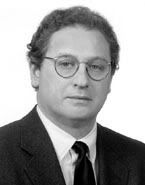
Photo_06c45eaa5e2d481dbf2a4cf3513a6.jpgDavid B. Rivkin, Jr. is a partner with Baker & Hostetler, L.L.P. He was chief counsel of the President’s Council on Competitiveness at the White House under George H.W. Bush, where he was in charge of a review of government regulations. He later coordinated the development and implementation of the first Bush’s deregulation efforts. He has argued that the United States has not violated the Geneva Conventions with its captured prisoner policy and that it was a few "bad apples" and not policy that was responsible for what happened at Abu Ghraib and elsewhere, and opposed appointment of a special prosecutor in the Lewis "Scooter" Libby affair.

rabkin.jpgJeremy Rabkin, a renowned scholar of internationalaw, is a professor at George Mason University School of Law in Arlington, Va. A member of the board of directors of the United States Institute of Peace and author, most recently, of the Law without Nations?: Why Constitutional Government Requires Sovereign States. He has argued that all Presidents stretch the law in times of war, but that the U.S. always regains its balance afterward.

Read more

Share this entry

Correcting the Confused al-Haramain Reporting

I’ve gotten so many links to really confused reporting on what happened in the al-Haramain case on Friday (see here, here, and here, for starters), that I’m going to take the trouble of trying to correct it.

But before I do that, to those perpetuating these confused reports, let me say this:

You guys have all totally missed the plot!!

You have gotten completely distracted by utterly predictable squabbling about how this will move forward.

You have missed the fact that DOJ just admitted that Bush lied provided “inaccurate” information to the Courts, and that DOJ has just submitted new material that presumably corrects that lie “inaccurate” information.

Shew. Sorry about that.

Now the confusion in question stems from the way Judge Walker wrote his January 5 order, which basically said two things. It:

  1. Ruled that he–Judge Walker–would read the secret material in question and decide whether al-Haramain was an aggrieved party (and therefore whether Bush broke the law).
  2. Ruled that the government should take the first steps (doing a classification review and getting al-Haramain’s lawyers a security clearance) of addressing how to move forward with this case given the classified nature of the information involved.

I wish Walker hadn’t written his ruling like that, because it caused the opportunity for this confusion, but since I’m not a federal judge, I can’t do much about that.

But note: Walker did not rule that the government had to give al-Haramain any classified information.

Unfortunately, the two sides focused their briefing on the confusing, second, aspect of Walker’s ruling. Al-Haramain, for some very good tactical reasons, said,

Judge Walker can order you to give us this classified information.

Judge Walker can decide we have the “need to know” and as a result grant us security clearances.

And DOJ, for some very good tactical but ethically suspect reasons, then pretended that Judge Walker had said what, in fact, only al-Haramain had said.

Judge Walker did order us to give al-Haramain this classified information.

Judge Walker did order that he can decide that al-Haramain has the “need to know.”

Now, as it turns out, DOJ had a secret.

Back on (probably) May 12, 2006, when the government told Garr King (the judge who had this before Walker) what they had been doing with al-Haramain, they provided “inaccurate” information. I suspect they only told King about part of what they were doing to al-Haramain, probably leaving out details about data mining and earlier wiretapping and laundering poison fruit to get warrants. And during this whole back-and-forth in the last two months, DOJ knew that. Read more

Share this entry