The Mixed Emotions of November 9th

h/t rocksunderwater (public domain)

In Germany, November 9th is a day of very mixed emotions.

In 1923, this was the date on which the “Beer Hall Putsch” took place, a failed violent coup led by Hitler and the Nazis to overthrown the Weimar government. The following April, Hitler was convicted of high treason and sentenced to five years in prison (the bare minimum sentence). While in prison, Hitler was given various privileges, and he wrote the first volume of Mein Kampf. By the end of the year, Hitler was released, and he pivoted the Nazi party to seek power via legitimate means. Ten years later, Hitler had become the Chancellor of Germany.

Fifteen years to the day after the Beer Hall Putsch, in 1938, came Kristallnacht, the Night of Broken Glass. On that night, the German authorities stood by as Hitler’s Storm Troopers and members of the Hitler Youth stormed Jewish businesses and buildings, synagogues and schools, hospitals and homes, breaking their windows and ransacking the property. While the Nazis claimed the violence was a spontaneous reaction to the murder of a Nazi official, it was instead a well-planned attack, thousands of Jews were rounded up and sent to concentration camps, and the Nazis demanded the Jewish community pay a huge “Atonement Tax” of 1 billion Reichsmarks, and any insurance payouts to Jews were seized by the government.

As bad as those memories are for Germany, an entirely different memory of November 9th was created in 1989, when after a tumultuous summer, the Berlin Wall came down. JD Bindenagel was the career State Department officer serving as the deputy chief of mission at the US mission in East Germany’s capital of Berlin, and he described it like this in 2019:

On Nov. 9, 1989, there was no sign of revolution. Sure, change was coming—but slowly, we thought. After all, the Solidarity movement in Poland began in the early 1980s. I spent the afternoon at an Aspen Institute reception hosted by David Anderson for his new deputy director, Hildegard Boucsein, with leaders from East and West Berlin, absorbed in our day-to-day business. In the early evening, I attended a reception along with the mayors and many political leaders of East and West Berlin, Allied military commanders and East German lawyer Wolfgang Vogel. Not one of us had any inkling of the events that were about to turn the world upside down.

As the event was ending, Wolfgang Vogel asked me for a ride. I was happy to oblige and hoped to discuss changes to the GDR travel law, the target of the countrywide demonstrations for freedom. On the way, he told me that the Politburo planned to reform the travel law and that the communist leadership had met that day to adopt new rules to satisfy East Germans’ demand for more freedom of travel. I dropped Vogel off at his golden-colored Mercedes near West Berlin’s shopping boulevard, Ku’Damm. Happy about my scoop on the Politburo deliberations, I headed to the embassy. Vogel’s comments would surely make for an exciting report back to the State Department in Washington.

I arrived at the embassy at 7:30 p.m. and went directly to our political section, where I found an animated team of diplomats. At a televised press conference, government spokesman Guenter Schabowski had just announced the Politburo decision to lift travel restrictions, leaving everyone at the embassy stunned. East Germans could now get visitor visas from their local “People’s Police” station, and the East German government would open a new processing center for emigration cases. When an Italian journalist asked the spokesman when the new rules would go into effect, Schabowski fumbled with his papers, unsure—and then mumbled: “Unverzueglich” (immediately). With that, my Vogel scoop evaporated.

At this point, excitement filled the embassy. None of us had the official text of the statement or knew how East Germans planned to implement the new rules. Although Schabowski’s declaration was astounding, it was open to widely varying interpretations. Still dazed by the announcement, we anticipated the rebroadcast an hour later.

At 8 p.m., Political Counselor Jon Greenwald and I watched as West Germany’s news program “Tagesschau” led with the story. By then, political officer Imre Lipping had picked up the official statement and returned to the embassy to report to Washington. Heather Troutman, another political officer, wrote an on-the-ground report that the guards at Checkpoint Charlie were telling East Germans to get visas. Greenwald cabled the text of Schabowski’s announcement to Washington: East Germans had won the freedom to travel and emigrate.

As the cable arrived in Washington, I called the White House Situation Room and State Department Operations Center to discuss the report and alert them to the latest developments. I then called Harry Gilmore, the American minister in West Berlin.

“Harry,” I said, “it looks like you’re going to have a lot of visitors soon. We’re just not sure yet what that rush of visitors will look like.”

We assumed that, at best, East Germans would start crossing into West Berlin the next day. In those first moments, the wall remained impassable. After all, these were Germans; they were known for following the rules. Schabowski had announced the visa rules, and we believed there would be an orderly process. East Germans, however, were following West German television coverage, as well. And, as it turned out, they decided to hold their government to its word immediately.

I headed home around 10 p.m. to watch events unfold on West German television. On my way to Pankow, I was surprised by the unusual amount of traffic. The “Trabi,” with its two-cycle engine and a body made of plasticized pressed-wood, spewing gas and oil smoke, was always in short supply. Perhaps one of the most striking symbols of East Germany’s economy, those iconic cars now filled the streets despite the late hour—and they were headed to the Bornholmer Strasse checkpoint. Near the checkpoint, drivers were abandoning them left and right.

Ahead of me, the blazing lights of a West German television crew led by Der Spiegel reporter Georg Mascolo illuminated the checkpoint. The TV crew, safely ensconced in the West, was preparing for a live broadcast. Despite the bright lights, all I could make out was a steadily growing number of demonstrators gathering at the checkpoint. From the tumult, I could faintly hear yells of “Tor auf!” (Open the gate!) Anxious East Germans had started confronting the East German border guards. Inside the crossing, armed border police waited for instructions.

Amid a massive movement of people, fed by live TV, the revolution that had started so slowly was rapidly spinning out of control. The question running through my mind was whether the Soviet Army would stay in its barracks. There were 380,000 Soviet soldiers in East Germany. In diplomatic circles, we expected that the Soviet Union, the military superpower, would not give up East Germany without a fight. Our role was to worry—the constant modus operandi of a diplomat. But this time, our concern didn’t last long.

When I arrived home around 10:15 p.m., I turned on the TV, called the State Department with the latest developments, and called Ambassador Richard Barkley and then Harry Gilmore again: “Remember I told you that you’d be seeing lots of visitors?” I said. “Well, that might be tonight.”

Just minutes later, I witnessed on live television as a wave of East Berliners broke through the checkpoint at Bornholmer Strasse, where I had been just minutes earlier. My wife, Jean, joined me, and we watched a stream of people crossing the bridge while TV cameras transmitted their pictures around the world. Lights came on in the neighborhood. I was elated. East Germans had made their point clear. After 40 years of Cold War, East Berliners were determined to have freedom.

Bindenagel was elated, the German people were elated (Bindenagel gave more detail in a video interview here, and Deutsche Welle has a host of anniversary articles and interviews here), and the West (broadly speaking) was elated.

A certain KGB agent stationed in East Germany and assigned to work with the Stasi (the East German Secret Police) was most certainly not elated, and grew increasingly frustrated in the weeks that followed. The BBC described the agent’s reaction like this:

It is 5 December 1989 in Dresden, a few weeks after the Berlin Wall has fallen. East German communism is dying on its feet, people power seems irresistible.

Crowds storm the Dresden headquarters of the Stasi, the East German secret police, who suddenly seem helpless.

Then a small group of demonstrators decides to head across the road, to a large house that is the local headquarters of the Soviet secret service, the KGB.

“The guard on the gate immediately rushed back into the house,” recalls one of the group, Siegfried Dannath. But shortly afterwards “an officer emerged – quite small, agitated”.

“He said to our group, ‘Don’t try to force your way into this property. My comrades are armed, and they’re authorised to use their weapons in an emergency.'”

That persuaded the group to withdraw.

But the KGB officer knew how dangerous the situation remained. He described later how he rang the headquarters of a Red Army tank unit to ask for protection.

The answer he received was a devastating, life-changing shock.

“We cannot do anything without orders from Moscow,” the voice at the other end replied. “And Moscow is silent.”

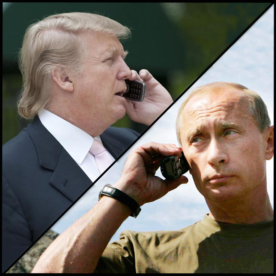
That phrase, “Moscow is silent” has haunted this man ever since. Defiant yet helpless as the 1989 revolution swept over him, he has now himself become “Moscow” – the President of Russia, Vladimir Putin.

For Putin, this was the beginning of the fall of the great Russian empire, and everything Putin has done since was been an effort to restore the greatness of Great Mother Russia, with himself as her leader and savior.

On this November 9th, it is the Germans and West who are worried and Putin who is elated, as Donald Trump prepares to take office. Putin dreams of an end to US military support for Ukraine, a diminished US role in NATO (if not a complete withdrawal from the alliance), and a weakening of the Five Eyes intelligence sharing agreement between the US and the UK, Canada, Australia, and New Zealand.

On this November 9th, Putin’s dreams are looking closer to becoming a reality.

On this November 9th, Moscow is no longer silent.

Share this entry

Jack Smith Asks for Three Weeks

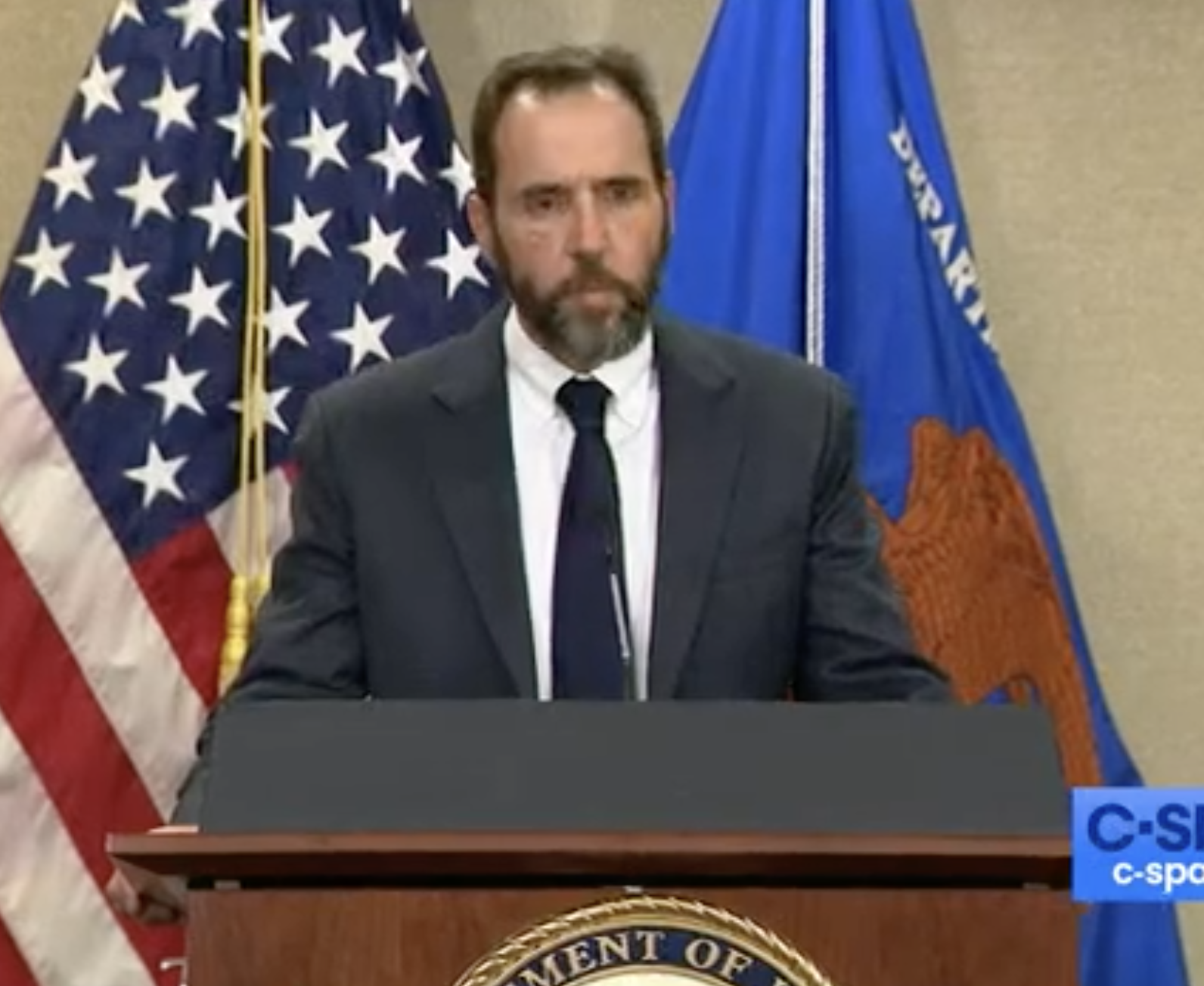
Jack Smith just requested and got a consent motion to file a status report “or otherwise inform” Judge Tanya Chutkan of what they’re going to do with the January 6 case.

As a result of the election held on November 5, 2024, the defendant is expected to be certified as President-elect on January 6, 2025, and inaugurated on January 20, 2025. The Government respectfully requests that the Court vacate the remaining deadlines in the pretrial schedule to afford the Government time to assess this unprecedented circumstance and determine the appropriate course going forward consistent with Department of Justice policy. By December 2, 2024, the Government will file a status report or otherwise inform the Court of the result of its deliberations. The Government has consulted with defense counsel, who do not object to this request.

If that “otherwise inform” is a report, it would be done in plenty of time for Dick Durbin to hold a hearing.

Share this entry

The Legal Cases Implicating Donald Trump’s Conduct That Won’t Go Away [Because of His Election]

There’s been a lot of chatter since Tuesday about how the criminal cases against Donald Trump will go away because of his election (CNN has one of the most comprehensive discussions of what will happen to Trump’s guilty verdict in New York, for which he is due to be sentenced this month).

But there’s been less discussion of the legal cases implicating Donald Trump’s conduct that won’t go away solely because of his election (which is to say, they may go away for other reasons). These implicate Trump, but because his biological person is not the defendant, should not be implicated by his election.

Consider AJ Delgado’s lawsuit against Trump’s first campaign and his campaign managers. She sued five years ago for sex, gender, and pregnancy discrimination after Trump’s people allegedly retaliated when she filed a discrimination case when she was sidelined after Jason Miller got her pregnant. Of late, she’s been slogging along pro se, seeking evidence of other women who were discriminated against by either of his then two campaigns and getting depositions of people who were involved in the effort to silence her. In September, Trump filed his motion for summary judgment. But Delgado just got a continuance on hers until the end of December because she had to depose Michael Glassner and because Miller continues to waste her time dicking around on paternity issues in Florida.

More interesting still, there’s Peter Strzok. In July, DOJ settled the Privacy Act lawsuits Strzok and Lisa Page filed for having their texts shared with the press. But his claim that he had been fired for his First Amendment protected speech and denied due process continued. In September, DOJ filed its motion for summary judgement. While the filing and exhibits are significantly redacted, the motion seems to dirty Strzok up based on claims about his actions in the cases related to 2016 and argue standard Human Resources claims about the process by which he was fired. Last week, Strzok filed his own motion for summary judgment. Again, it’s heavily redacted, but he notes that the FBI changed their firing guidelines after he and Andrew McCabe were fired. He lays out evidence that others who sent inappropriate content on their FBI devices, including racist language and language attacking Hillary Clinton, were not fired.

But the case is most likely to come down to David Bowdich’s credibility. Bowdich’s deposition appears to say that he fired Strzok because of the damage his texts did to the FBI. Strzok will attempt to discredit Bowdich’s claims, firstly, with a statement from Andy McCabe that when the texts were first discovered, Bowdich said nothing to disagree with McCabe’s stance that Strzok would not be fired. There’s something else, which is completely redacted, that the FBI only disclosed when they settled the Privacy Act suit, but it’s not clear what that is. If it ever goes to trial, then Trump’s claims that he was responsible for the firing will be at issue (and anything else interesting he said in the hard-won deposition Strzok got, as well as Trump’s requests for retaliation.

All that said, the judges in these two cases — Magistrate Judge Katharine Parker (and if it survives, Analisa Torres) for Delgado, and Amy Berman Jackson for Strzok — seem pretty skeptical of these two cases, so they may get dismissed on summary judgment. If not, you might see trials on Trump’s discrimination and retaliation against his perceived enemies next year. But if ABJ doesn’t throw out this case, DOJ is likely to appeal before trial in a bid to expand their authority to fire people without due process.

But I see no reason they’ll get dismissed because Trump will be President. His campaign is the defendant in the first case, FBI is the defendant in the second.

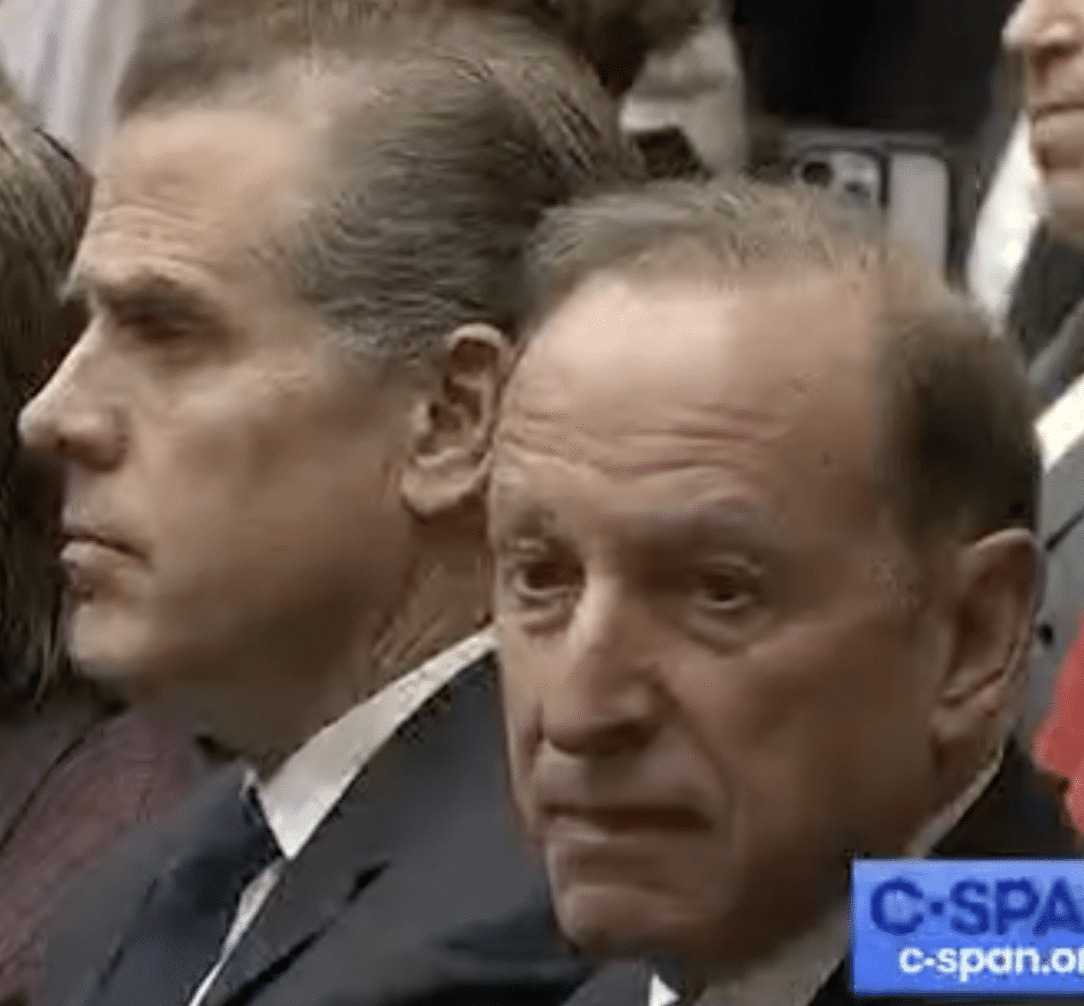
An even more interesting example is Hunter Biden.

A lot of people are rightly saying that Biden should protect his son (and brother) by simply pardoning them on the way out — and I get that instinct. All the more so because, yesterday, James Comer suggested he — or Trump’s DOJ — would renew his pursuit of Hunter Biden in the next Congress. But even after that, Karine Jean-Pierre reiterated the answer she’s always given: President Biden will not pardon his son.

President Biden still has no plans to pardon his son, Hunter Biden, in the final months of his presidency, the White House press secretary reiterated on Thursday.

“We’ve been asked that question multiple times and our answer stands — which is no,” White House press secretary Karine Jean-Pierre said at Thursday’s press briefing.

I had already been thinking that Hunter may not want a full pardon, because he still has appeals that might succeed.

And amid discussions of DOJ’s hopes to defeat the Aileen Cannon precedent on Special Counsels, rather than just dismiss the stolen documents case against Trump and the two aides who protected him, it makes more sense.

Here’s a (dated) summary of all the legal proceedings in Hunter’s life (the two disgruntled IRS agents have since added several suits, one targeting Abbe Lowell for defamation).

The basis for appeal that most dick pic sniffing journalists are focused on is Hunter’s Second Amendment challenge to his conviction in Delaware. In the wake of Bruen, other defendants have had some (mixed) success arguing that — for example — the government can only prohibit possessing guns during drug impairment, and prosecutors very pointedly dodged having to prove that in Hunter’s case. Because other (more dangerous) defendants are delaying incarceration during appeal, I think it plausible that Judge Maryellen Noreika will agree to do so here, too.

But Trump’s successful claim that Jack Smith was not lawfully appointed carries over to Hunter’s cases too (and, importantly, Alexander Smirnov’s). David Weiss was hired under the very same authority that Jack Smith was, the authority that Cannon said was unconstitutional. And both Hunter and Smirnov already tried to make the same argument on interlocutory basis.

On paper, Hunter’s challenge to David Weiss’ appointment as Special Counsel is weakest in Delaware, because Weiss could have prosecuted him as US Attorney anyway. But Cannon’s ruling says that improper appointment resets everything to before the appointment happened. And the most important evidence submitted at Hunter’s trial — the gun residue, a warrant to search his laptop for evidence of drug use, and probably key interviews with Zoe Kestan — all happened after Weiss started acting as Special Counsel. They also all happened after statute of limitations for the crime expired. If this challenge succeeded, the case should be time barred.

Hunter’s case against David Weiss’ appointment would be stronger in LA, because Weiss chose not to use special attorney authority to charge Hunter there (though given how prosecutors charged him, Trump’s DOJ would have until next year to refile the charges).

The case is stronger still for Smirnov, because — by all appearances — Weiss got Special Counsel authority so he could investigate a matter implicating Joe Biden, Smirnov’s allegedly false attempt to frame Biden. Smirnov’s charges, too, are getting stale. Because Weiss charged Smirnov for statements he made in 2020, not last year, they would expire next spring (I’ll return to what recent motions in the case say about Weiss’ investigation).

But as I already said, Smirnov is someone whom Trump might have real incentive to pardon at the start of his term, particularly if Smirnov gets his renewed bid for a delay, meaning a pardon would be pre-trial.

While there are other people (most notably, Michael Cohen) who might challenge their prosecution based on the Cannon precedent, if prosecutions against Smirnov, Walt Nauta, and Carlos De Oliveira went away, via whatever means, then Hunter Biden would be the sole person facing prison time based on what Cannon said was an unconstitutional appointment. While normally he might not do so, given those circumstances, I think both Judge Mark Scarsi might let Hunter stay out of prison pending appeal as well.

The Second Amendment and Special Counsel appeals will get the most attention.

It’s Hunter’s other appeals that might be more interesting, though. Best as I can tell, Hunter has preserved the following issues for appeal in one or both of his cases:

  • David Weiss reneged on a signed deal (the Noreika and Scarsi decisions are slightly inconsistent on this point, so there’s a circuit split already)
  • Pressure from Trump and Congress led Weiss to change his mind about prosecuting Hunter (I’m not certain this has been preserved in Los Angeles)
  • Pressure from the IRS agents led Weiss to renege on the tax plea deal
  • Noreika improperly admitted evidence from the laptop
  • Noreika improperly excluded evidence of how the Delaware cop who interviewed Hunter in 2018 and the gun shop owner pushed to get Hunter prosecuted and then revised their stories long after the fact
  • Noreika improperly refused discovery on issues pertaining to the Brady side channel and Smirnov’s attempt to frame Joe Biden

Hunter’s lawsuits against the IRS and Garrett Ziegler may strengthen his hand in some of these challenges. The Ziegler lawsuit, for example, implicates chain of custody going back to John Paul Mac Isaac, and therefore chain of custody that reflects on the chain of custody problems the FBI chose to ignore. The IRS lawsuit may provide a way to depose the IRS agents’ lawyers about when their contacts with Congress really started.

And one of the claims that Noreika blew off that would have renewed import are two IRS laws that criminalize pressuring the IRS to investigate people, one of which explicitly pertains to the President.

Some of Trump’s possible actions, like a Smirnov pardon, might strengthen Hunter’s hand in making these arguments.

Barring a Hunter Biden pardon, he gets to at least try to make these appeals after he is sentenced in December. And because his appeals will implicate two other legal appeals popular on the right — Trump’s own argument about Special Counsels, and efforts to eliminate gun controls — he may be able to do that on (lengthy) pretrial release.

Again, these are all uphill fights. I’m not saying these appeals will work. But even just arguing them will implicate the kinds of corruption we expect to see going forward.

Right wingers are going to make sure Hunter Biden’s life sucks anyway. But by dint of Trump’s conviction, he has what almost no one else in the country will be able to have: standing to argue about Trump’s own corruption.

Share this entry

The Time before Confrontation

Meduza had a piece yesterday sourced to “a source close to the Russian government and one of the sources close to the Kremlin”  that claims Putin’s crowd was more interested in seeing Kamala Harris get elected, followed by another January 6, than seeing Trump win.

In the lead-up to the U.S. presidential election, the Kremlin’s political team hoped the results might spark protests reminiscent of the January 2021 riot at the Capitol, insiders told Meduza.

“Society there is even more polarized now, and back then, protests escalated to the point of storming the Capitol. Protests could have been a logical outcome of that polarization [after this election]. The main bet wasn’t so much on any particular candidate winning but on the losing side refusing to accept the results,” said a source close to Putin’s administration. Another Kremlin insider confirmed this account.

According to these sources, the Kremlin hoped such a crisis would force American authorities to focus on domestic issues rather than their standoff with Russia.

I’m not sure how much I buy this, but it’s a useful reminder that Russia would always prefer to have a weakened puppet than a strong one; Putin’s goal is to destroy the Western world order, not to install an unreliable puppet.

Last month, I had a similar thought about the likelihood of violence: Even if Harris had a 50% chance of winning, I still thought there was a 10% chance that political violence would disrupt the transfer of power.

This is the kind of timing I can’t get out of my head. According to FiveThirtyEight, Kamala Harris currently has a 53% chance of winning the electoral college. That’s bleak enough. But based on everything I know about January 6, I’d say that if Trump loses, there’s at least a 10% chance Trump’s fuckery in response will have a major impact on the transfer of power.

There was even a point on election day, when Stephen Miller and Charlie Kirk were imploring bros to get out to vote and Trump was tweeting out false claims of cheating in Philadelphia, where it seemed that Trump had started to kick off that second plan, stealing power again.

And then, instead, he won.

It took a bit of time before Putin publicly congratulated Trump, as if he were waiting to see if there would be political violence.

Viktor Orbán, though, is doing victory laps.

It has always been clear that Trump’s plan — or that of his more competent handlers — was Orbanism. It was right there, out in public, perhaps most symbolically in Orbán’s ties to Heritage and Project 2025 and CPAC’s Hungarian wing, but the implications of such ties were among the things that journalists and editors believed to be less important than Joe Biden’s stutter.

We know Trump’s more competent handlers will try to use zeno- and transphobia as a means to grab for more power. We know they will privilege and try to force Christianity, a mix of Evangelical and regressive Catholic doctrine. We know they’ll try to disempower universities and the press; tellingly, the GOP House has already had tremendous success in doing both with little discussion that that was what was going on. We know Trump will replace what Rule of Law the US has with a cronyism. We know they’ll turn the Deep State into the bogeyman they claim it was, a tool against America rather than one ostensibly used to protect it. We know oligarchs like Musk will begin eating away at the state.

What’s not clear is how they’ll implement it.

There was a moment, I guess, when the Kremlin, Trump, and I thought it might be political violence. Now it’s unclear what manufactured emergency will be used to push through authoritarian powers, though your best guess is an authoritarian crackdown in response to protests of an immediate turn to mass deportations. Notably, Johny McEntee is back in charge of personnel, and he used a willingness to invoke the Insurrection Act as a litmus test at the end of the last Trump Administration.

Rather than having immediate political violence with Joe Biden and governors calling out the National Guard, we have two months to understand what’s coming, figure out what tools and points of pressure we have, and try to undercut their most obvious plans.

This is one value, for example, of advance warning of things like a Special Counsel report on Trump’s crimes; it tells us that, rather than a symbolic firing on January 20, we’re going to get something that might feed media attention for a few hours before that, something that might even provide a focus for Democrats as they try to demonstrate Republican complicity with Trump. There are likely to be symbolic firings a few days down the line in any case, but those symbolic firings may serve as a way to make visible an assault on Civil Service protection. Sally Yates has been revered for years by people who are otherwise unfamiliar with her work because she took a stand against Trump’s first power grab, and it’s likely you don’t yet know the name of the person who will play that role this time. It won’t be adequate, but better to know to expect it than let it go to waste.

Had things gone differently on Tuesday, we would likely be in immediate crisis right now, as authorities tried to shut down political violence. Instead we have two months to assess what tools we have.

Share this entry

When Special Counsels Finish Up, They Must Write Reports

A bunch of outlets are reporting that, given Trump’s election, Jack Smith is in discussions about how to wind down the two cases against Trump

“Oh, it’s so easy. It’s so easy,” Trump said when asked by conservative radio host Hugh Hewitt whether he would “pardon yourself” or “fire Jack Smith” if reelected.

“I would fire him within two seconds,” Trump said.

The discussions between Smith and DOJ leadership are expected to last several days.

Justice Department officials are looking at options for how to wind down the two criminal cases while also complying with a 2020 [sic] memo from the department’s Office of Legal Counsel about indictments or prosecutions of sitting presidents.

They’re not mentioning a fairly obvious detail. According to governing regulations, when a Special Counsel finishes his work, he must write a report to the Attorney General.

Closing documentation. At the conclusion of the Special Counsel’s work, he or she shall provide the Attorney General with a confidential report explaining the prosecution or declination decisions reached by the Special Counsel.

So if Smith is totally done, he has to write a report.

These reports that Smith is engaged in these discussions come as Bill Barr and others are yapping their mouths about Smith simply dismissing the cases. By telling the press that Smith is already working on shutting down the cases, Smith pre-empts any effort from Trump to offer another solution — and does so before Trump files his response to the immunity brief on November 21.

In other words, this may be no more than an effort to get one more bite at the apple, to describe what Smith found, which would be particularly important if there are still undisclosed aspects of the case, as I suggested there might be.

Where things get interesting, though, is Trump’s co-conspirators, people like Rudy Giuliani and Steve Bannon. Those guys could be prosecuted, as Roger Stone was after Mueller finished up. Trump would order his Attorney General to dismiss the cases — they’re never going to be prosecuted. But it would impose a political cost right at the beginning of his administration.

Update: NYT’s version of this notes that they are trying to preserve the appeal in the 11th Circuit. Of course Walt Nauta is still on that appeal.

Share this entry

The Upcoming Pardon-Palooza

Just about everyone has a story out about how Trump’s win will make most of his legal trouble go away (see Brandi Buchman, Politico, NYT).

I don’t disagree with any of this analysis. His federal cases will end shortly after January 20 (though DOJ may want to pursue the 11th Circuit Appeal to sustain the viability of Special Counsels).

But I don’t know how they will go away. After all, Jack Smith could indict everyone, so as to tell the fuller story of what Trump did. If Democrats manage to take the House, he could hand off his grand jury material between January 3 and January 20. For all we know, he’s got sealed indictments hidden somewhere, obtained during the pre-election quiet period. Or he could write a final report.

Which is why I’m more interested in the other immediate legal question: Whom he pardons as soon as he returns to office.

By pardoning the January 6 defendants who are either in prison or awaiting trial, surely including seditionists like Enrique Tarrio and Stewart Rhodes, Trump would create an army of loyal Brown Shirts ready to do his bidding again. These guys only believe in Backing the Blue if it doesn’t interfere with a coup attempt.

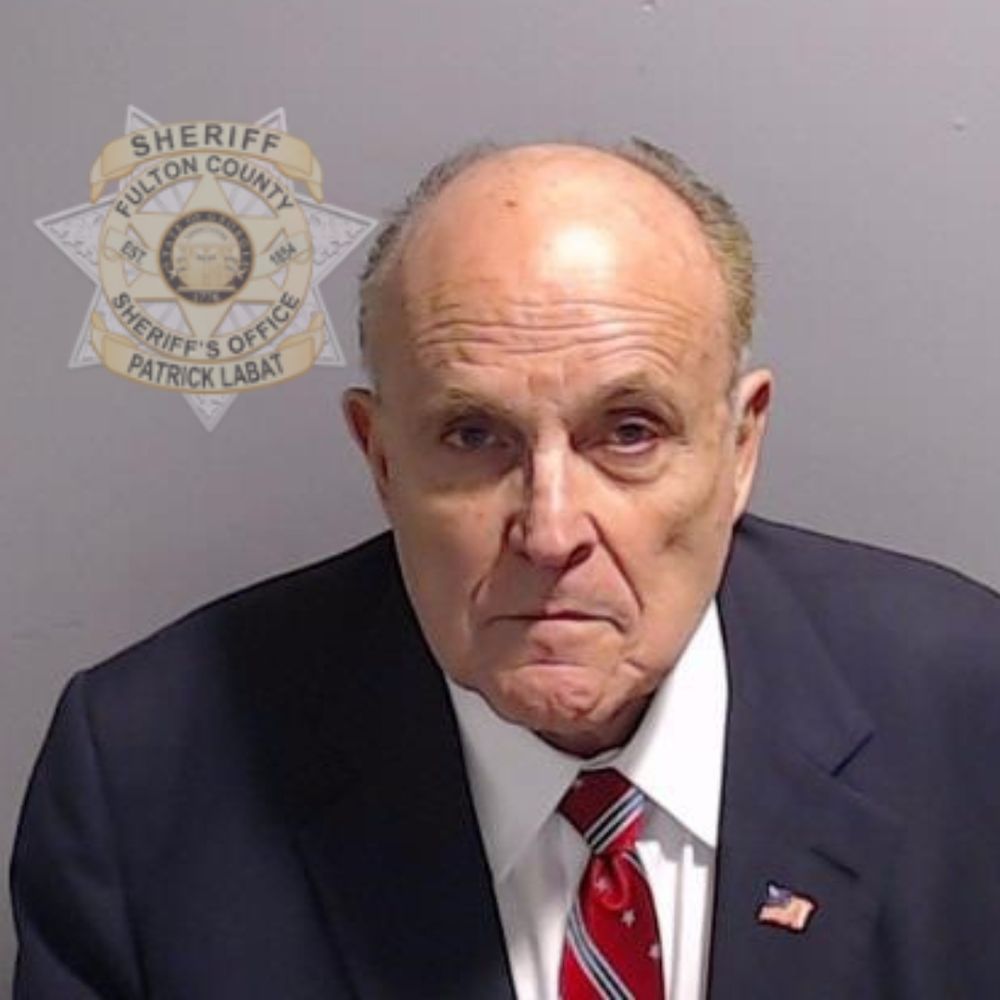
If Rudy Giuliani gets held in contempt for dicking around with the Ruby Freeman payments, Trump can simply pardon him out of prison again.Poof!

I expect that Trump will pardon Alexander Smirnov, who allegedly attempted to criminally frame Joe Biden in circumstances that Trump likely would like to keep quiet (not like it matters anyway because the press never showed any curiosity about how that happened).

And Trump has an incentive to pardon other corrupt grifters. I would be unsurprised if he pardoned Robert Menendez and Henry Cuellar — and the latter might have an incentive to switch parties if he were pardoned out of his trouble.

I would be shocked if Trump didn’t pardon Eric Adams, which would create an ally in New York City who controls a mob of corrupt cops and former cops.

All that said, Trump can’t pardon his co-conspirators out of their state cases (Fani Willis won reelection in Fulton County). He can’t pardon Steve Bannon out of his upcoming NY trial … though I am certain that they are plotting on a way for Bannon to avoid it.

In Trump’s first term, he pardoned his way out of his Russian trouble. He paid no price for it. It barely came up in the campaign … journalists were too busy talking about Joe Biden’s stutter.

Trump’s own impunity will do grave damage to the rule of law, however it happens.

But these pardons will turn it into a transactional form of loyalty test.

Update: I should add that Mike Davis, who will play a key role in Trump’s Administration (including, possibly, Attorney General if he could be confirmed), already taunted Jack Smith to lawyer up.

Update: Trump is also likely to pardon the guys who were prosecuted for insider trading on Truth Social.

Update: Other candidates for pardons might include Ghislaine Maxwell and Diddy.

Update: Multiple outlets are reporting that Jack Smith will wind down his two prosecutions of Trump. It seems there are multiple options to do this — the most obvious being a public report and referrals of anything else, like Mueller did. But by announcing they’re doing this, they may pre-empt Trump making demands, just like they did in August.

Share this entry

Trump Sold Grievance and America Liked What He Was Selling

Once Trump got everyone hooked on his grievance drug, Merrick Garland was never going to make a difference.

I have tried, over and over, to explain how the investigation into Trump and his co-conspirators proceeded. More recently, I’ve explained how you couldn’t have charged Trump with insurrection — the only thing that would have disqualified him from running — until after May 2023, and had Jack Smith done so, it would have ended up exactly where we are here, with John Roberts delaying everything until after the election.

No effort to explain the process — the two years of exploiting phones, the months of January 6 Committee delay, the ten months of privilege fights, the month Elon Musk stole, or the eight months John Roberts bought Trump — none of that has mattered, of course. People needed an explanation for their own helplessness and Merrick Garland was the sparkle pony they hoped would save them.

But nothing Merrick Garland would have done would have mattered anyway.

That’s because since January 2017, since Trump learned that Mike Flynn had been caught undermining sanctions on the phone with Sergey Kislyak, Trump has used every effort to hold him accountable as a vehicle to sell grievance.

This is the core premise of the Ball of Thread podcast I’ve been doing with LOLGOP.

Rather than being grateful when learning that FBI was investigating four of his close campaign advisors had monetized their access to him — rather than imagining himself as the victim of the men who snuck off and met with Russian spies — Trump made himself the victim of the FBI. He invented a claim he was wiretapped, and then kept inventing more and more such false claims. And then he (possibly on the advice of Paul Manafort, whose associate Oleg Deripaska funded HUMINT before the Democrats did) used the dossier as stand-in for the real Russian investigation. It wasn’t the Coffee Boy yapping him mouth that led to the investigation into those trying to monetize access, this false story tells, it was the dossier Russia filled with disinformation, a guaranteed way to discredit the investigation. Once you convince people of the lie that the FBI really did investigate a candidate based off such a flimsy dossier, it becomes easy to target all those involved, along the way gutting the Russian expertise at FBI.

Then Bill Barr came in and used the authority of the Attorney General to lie about what the investigation found; almost no media outlets have revisited the findings once it became clear that Barr didn’t even bother learning what the report said. While trying to kill Zombie Mueller — the parts of the investigation that remained after Mueller finished — Barr’s DOJ literally altered documents in an attempt to put Joe Biden at the genesis of the investigation into Donald Trump, yet another attempt to replace the actual investigation, the Coffee Boy and campaign manager and National Security Advisor and personal lawyer and rat-fucker who were found to have lied to cover up the 2016 Russian operation, with a storytale in which Democrats are the villains.

John Durham never bothered to learn what the report actually said either. Had he done so, it would have been far harder to criminalize Hillary Clinton for being a victim of a hack-and-leak operation, along the way taking out still more expertise on Russia.

And while Barr was criminalizing people, he followed Rudy’s chase for dick pics in an effort to criminalize Hunter Biden and his father.

Do you see the genius of this con, Donald Trump’s most successful reality TV show ever?

Vast swaths of America, including at least half the Supreme Court, and millions of working class voters, really believe that he — the guy who asked Russia to hack his opponent some more — was the victim.

And that’s how a billionaire grifter earns the trust of the working guy.

For the most part, the press just played along, repeating Trump’s claims of victimhood as if they were true.

It’s also the problem in thinking that if only Trump faces legal consequences, he’ll go away, he’ll be neutralized.

We saw this every time he faced justice. The first impeachment. The second one. The New York trials. Each time, his grievance became a loyalty oath. Each time, he sucked more and more Republicans into the con. Each time he made them complicit.

The hatred of and for Trump by Rule of Law is what made him strong, because he used it to — ridiculously!! — place himself into the role of the little guy, the target of those mean elites.

We’ll have decades, maybe, to understand why Trump resoundingly won yesterday. Some of it is inflation (and the unrebutted claims it is bigger than it is), which makes working people angry at the elites, people they might imagine are the same people persecuting Trump.

For many, though, it’s the appeal of vengeance.

Trump has spent nine years spinning a tale that he has reason to wreak vengeance on Rule of Law. The greatest con he ever pulled.

So even if DOJ had charged Trump, two months before Merrick Garland was confirmed (though all three of the charges people imagine would be easy — incitement, the call to Brad Raffensperger, and the fake electors plot — have been unsuccessful in other legal venues), even if DOJ had convicted Trump along with the earliest crime scene defendant in March 2022, even if Trump hadn’t used the very same means of delay he used successfully, which would have still stalled the case past yesterday’s election, it still wouldn’t have disqualified him from running.

It still would be the centerpiece of his manufactured tale of grievance.

It still would be one of the elements he uses to make working people think he’s just like them.

You will only defeat Trumpism by destroying that facade of victimhood. And you will not achieve meaningful legal victories until you do that first.

I know we all need an easy way to explain this — an easy culprit for why this happened.

But it’s not Merrick Garland, because years before he came on the scene, Trump had already convinced everyone that any attempt to hold him accountable was just another attempt by corrupt powers to take him down.

Trump sold the country on grievance and victimhood. And in the process he made half the country hate Rule of Law.

Update: This is a good summary of how Trump lures in people attracted to grievance.

The Republican Party has been the party of the Low-Trust voter for a very long time. It’s the party that wants to get rid of institutions, of any of the bonds that connect us all together. The Democratic Party is the party of institutions, the party of Good Governance. It’s the party of trusting other Americans to make good choices for you. There is very little that the Democrats can do to appeal to the Low-Trust voter, and you saw what that means for the future of our politics last night. I would go so far as to say that we’re seeing the effects of a realignment of what partisanship is. The GOP is the party of the perpetual outsider and the Low-Trust voter, the people calling for things to be torn down. The Democrats are the insiders, the institutionalists. That’s why you saw realignment of people like Liz Cheney and Vermont Governor Phil Scott, people who still think the government matters even if they disagree on how it should be doing things.

I don’t know what you can do to win back the Low-Trust voters.

[snip]

I don’t know how you build back trust in the government. Things like FEMA in disasters are supposed to be able to do that, but the post-hurricane situation in North Carolina, where outside agitators went in to try to destroy that trust, and people on the Internet went out of their way to spread lies about how the Federal government had abandoned Asheville, are just examples of how everything can be used to pop out more Low-Trust voters.

Share this entry

Donald Trump Will Become America’s Dictator on Day One

Fox News has called Wisconsin, and with it, the race for Trump.

Trump sold the country on a narrative of grievance.

The press showed no interest in checking him — much less explaining the governance successes of the Biden Administration.

What a catastrophic outcome for vulnerable people, the country, and the world.

Share this entry

Tonight’s Jam Session at King David’s House of Song

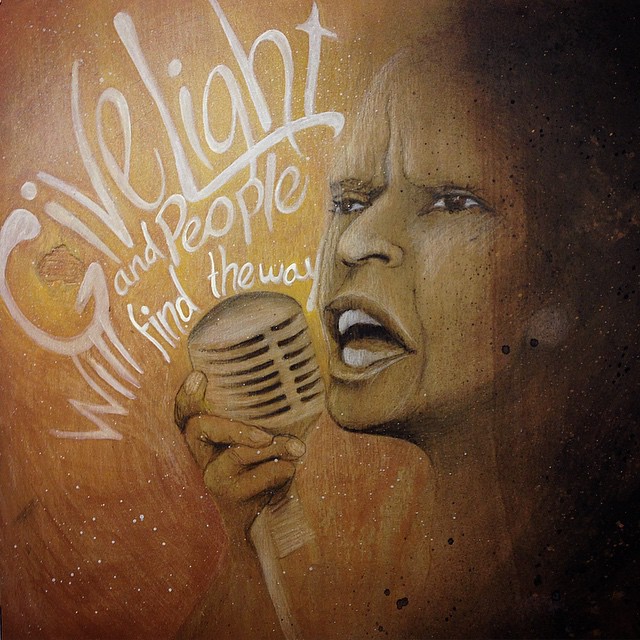
“Ode to Ella Baker” by Lisa McLymont (Attribution-NoDerivs 2.0 Generic (CC BY-ND 2.0)

Tonight, up in heaven, along the banks of the River of Life, there’s a local watering hole called King David’s House of Song. It’s a full house, with folks laughing and smiling as they watch the television screens reporting the results of the US elections. Then an old blind black man slowly makes his way through the tables and the people to an upright piano off against the wall, near a small raised stage in the corner.

A few people take notice, and start to poke each other and point to the man heading for the piano. “Shhh . . . Look – he’s gonna sing tonight.” The old man brushed his fingers across the keyboard, grinned the widest whitest smile at the crowd he could not see, and did just that, slowly dragging out the first line as his fingers ran riffs on the keys before him.

“Oh, beautiful, for heroes proved . . .”

As soon as the first syllable emerged from the old man’s mouth, a large black woman smiled and stood. The room parted for her, as she moved past the piano, up onto the stage, and joined her powerful voice to his: “. . . in liberating strife . . . “

Two white guys, one a balding blond and the other with graying brown hair, caught each other’s eyes, nodded, and grabbed a pair of guitars. Then they joined the woman on the stage, and began to sing the harmony parts: “who more than self, their country loved . . .”

Another black man then joined them on the stage, with his trim athletic body and a voice that echoed of the Caribbean, and his hands began beating on a pair of conga drums as he joined the singing: ” . . . and mercy more than life . . .”

Then a newcomer stepped up, turned to the crowd, raised his hands to conduct, and brought the whole place in right on time as the chorus came around: “America, America . . .”

When the song ended, the applause was deafening. When it began to die down, the old man at the piano waved folks to sit.

“Ladies and gentlemen, that was Bernice Johnson Reagon on lead vocals,” and the crowd applauded. As it quieted, the old man went on: “Jimmy Buffett and Kris Kristopherson on guitars,” and the applause returned again. “Harry Belafonte on drums.” More applause, louder, plus a few whistles. “And you can call me Ray” said the old man, grinning again as the cheers and whistles roared once more. “But let’s hear it for a newcomer to this joint,” said Ray, “Let’s give a big King David’s House of Song welcome to our conductor this evening, Mr. Quincy Jones!”

The reaction was electric, with waves of cheers and whistles and foot stomping that went on and on and on.

Finally, eventually, slowly, the sound died down, and a small African-American man in the back stood up with his glass raised. “A toast!” he shouted, and everyone was silent, as they turned and looked to see who it was. Then everyone — including King David himself behind the bar — raised their glasses in anxious anticipation.

Gesturing with his glass toward the television screens, the small man smiled a broad smile that took in the whole bar, and walked over to Harry Belafonte. Then he raised his glass even higher, and said three little words — “To good trouble!” — and *dinged* his glass with Harry’s.

“TO GOOD TROUBLE!” the assembly replied, as they all *dinged* their glasses together with each other.

And then the music really got going.

* * *

Back in 2007, late on a Friday afternoon at the height of the trial of Scooter Libby and the legendary liveblogging led by Marcy and the crew of Firedoglake, I told a story at FDL:

One of my kid’s favorite lines at dinnertime is, “We have to ding!”

It started on a Friday when he was not yet two, and we had finally sat down to dinner at the end of a long week for all of us. Mrs. Peterr raised her glass, I raised mine, and in a quiet, exhausted, but happy voice she smiled at me and said “To the weekend.” “To the weekend,” I echoed, touching my glass lightly against hers. Then, from the high chair, a little voice chimed in loudly and proudly, punctuating each word with a swing of his sippy cup: “To. The. Weekend! Now ding with me!

And so it is at our house, especially on Fridays: We have to ding.

The beverages vary widely, from glass to glass and from day to day – juice, wine, water, sparkling cider, beer, milk, scotch, etc. – and so do the toasts. Some days, we toast each other; other days we toast something great that has happened. Some days, the toasts bring happy thoughts, and on other days, they carry a note of sadness and loss. Some toasts are short, simply naming the person or thing for which we are grateful. Others are longer, and take on Dr. Seuss-like rhymes and rhythms.

The one thing they have in common, though, is a sense of shared gratitude. Mark Twain put it like this: “To get the full value of joy, you must have someone to divide it with.” Science fiction writer Spider Robinson takes Twain one step further: “Shared joy is increased; shared pain is lessened.”

It’s Friday, it’s the end of a rollercoaster of a week, it’s five o’clock somewhere, and we’ve got to ding.

A lot has happened since the Kid first swung that sippy cup. He is now a college graduate and is gainfully employed, Scooter was convicted, then had his sentence commuted, and eventually was pardoned. Dubya gave way to Obama, and then came four years — four long years — of Donald Trump. Four years ago, Biden began the long tough slog of repairing our relationships abroad, as well as our COVID-battered communities here at home.

Now, after four years of Trump plotting to return and wreak vengeance with Republican leaders embracing cowardice and cravenness, tonight is the end of a rollercoaster of a campaign, the polls are closed, and by God we *have* to ding.

Raising a glass

To good trouble, and the good troublemakers who make it!

*DING*

John Lewis is still dead, but the good troublemaking goes on. And we are going to need every bit of it and then some over the next four years.

So what’s in your sippy cup, and what’s your toast tonight?

Share this entry