“Classified Evening Briefing:” Mishandled and Stolen Documents Update

There has been a bunch of news in the various investigations into various constitutional officers who took documents home. Here’s my updated handy table.

Biden

On February 1, the FBI did a consensual search of President Biden’s Rehoboth home. No additional documents with classified marks were found, though the FBI did take some notes from Biden’s time as Vice President. Those kinds of notes are what I include among potential “trophy” documents, because they may reflect mementos.

NARA released information relating to Biden’s initial turnover of documents under FOIA. I assume they would have had to get DOJ’s permission to do so.

Pence

Mike Pence’s team announced that, after a consensual search of his Carmel, IN home, the FBI found one additional document with classification markings and six additional pages.

The FBI discovered an additional classified document at former Vice President Mike Pence’s Indiana home Friday during a voluntary five-hour search of the house, a Pence adviser said in a statement.

The adviser, Devin O’Malley, said “the Department of Justice completed a thorough and unrestricted search of five hours and removed one document with classified markings and six additional pages without such markings that were not discovered in the initial review by the vice president’s counsel.”

“The vice president has directed his legal team to continue its cooperation with appropriate authorities and to be fully transparent through the conclusion of this matter,” O’Malley said. He also noted that Pence and his legal team had “agreed to a consensual search of his residence that took place today.”

A source familiar with the search said DOJ was given unrestricted access to Pence’s home, and a member of his legal team was present through its duration.

The scope of the search included looking for documents that DOJ believed might be considered original documents that should have been sent to the National Archives, the source said, which could explain the six pages of additional material that were taken.

Given those six pages, I’ve changed the table to reflect possible “trophy” documents, things taken as keepsakes.

Pence has another weekend home in IN that has not been searched.

Trump

Trump may have used the news of Pence’s classified document as an opportunity to dump more news of his own. Multiple outlets reported that he had turned over:

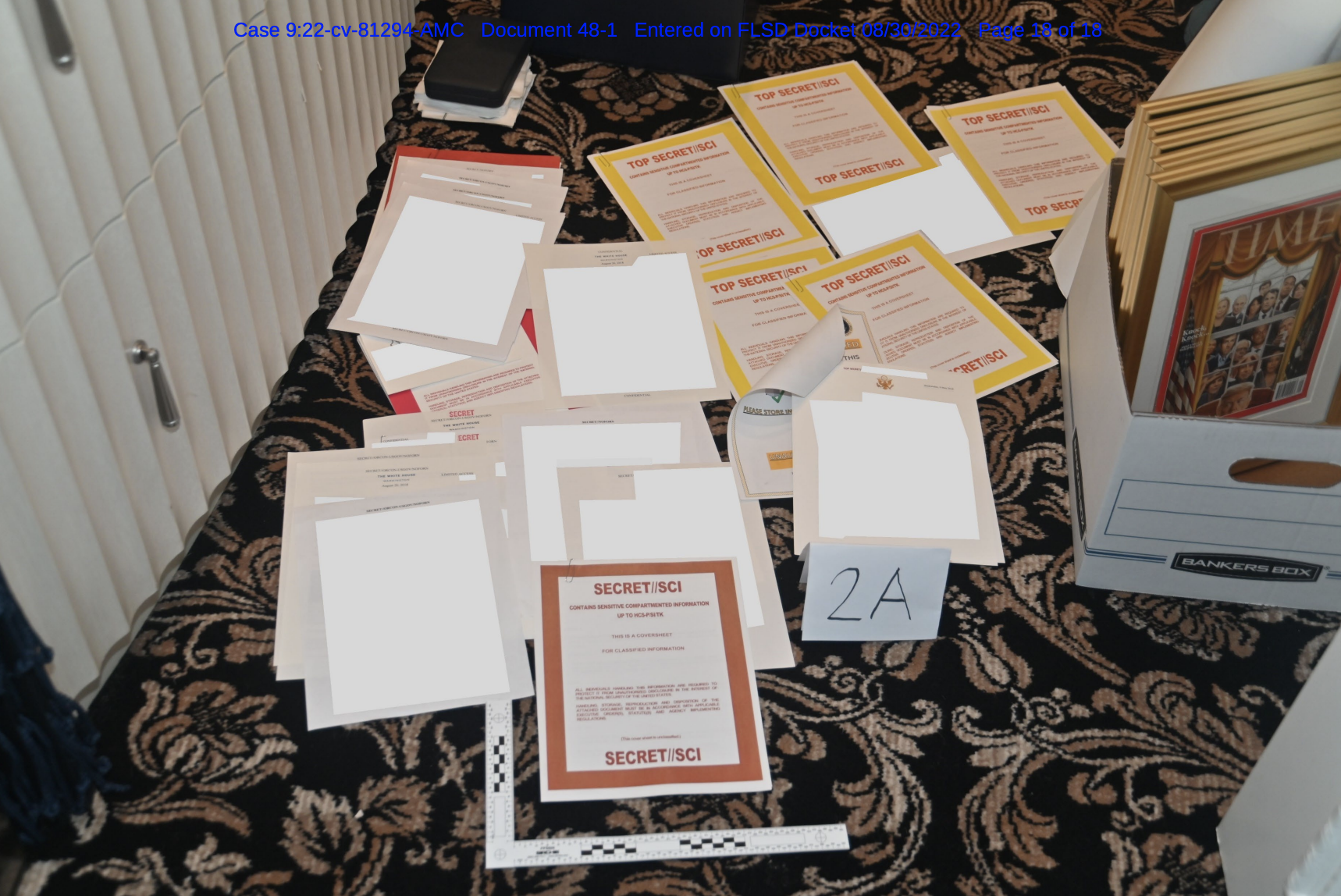
  • An empty folder marked “Classified Evening Briefing”
  • Some additional classified files
  • The laptop and thumb drive onto which digital versions of those files were copied

Here’s how ABC described the new materials:

The folder with classification markings was discovered in a box with additional papers, the sources said. A copy of the box’s contents was made electronically, raising the question about the existence of any additional electronic records that may be relevant to the special counsel’s investigation.

ABC News has also learned that after the information was recovered, federal agents retrieved the laptop from the aide. The laptop was not retrieved on the Mar-a-Lago grounds, the sources said.

Given the position of the person reportedly involved — who works for Trump’s PAC — it is possible that this person is the one who did a “compilation” of messages from a pollster, a faith leader, a book author, with two classified documents, one Secret and one Confidential.

Separately, there have been reports of at least three witnesses who have testified in the stolen document case:

  • In the second week of January, Evan Corcoran appeared before the grand jury. He’s the one who did the search that happened not to find the 100 documents Trump had hidden.
  • Late last year DOJ reached out to Alina Habba (she is represented by the same lawyer who had represented Christina Bobb). Habba filed a declaration in a NYS case claiming to have done a diligent search of Trump’s property for subpoenaed documents.
  • On February 2, Tom Fitton appeared before the grand jury. Fitton, who is not a lawyer, gave Trump catastrophically stupid advice saying that a suit he filed against Bill Clinton that was unrelated meant Trump could just determine what documents he could keep.
  • Robert O’Brien was subpoenaed in both the stolen documents and the attempted stolen election case and is asserting Executive Privilege over some matters. O’Brien would know the circumstances by which Trump was briefed, so this could be a follow-up to items more recently turned over to DOJ.
Share this entry

Roger Stone’s Stop the Steal Effort Included as Proof of Milkshake’s Obstruction

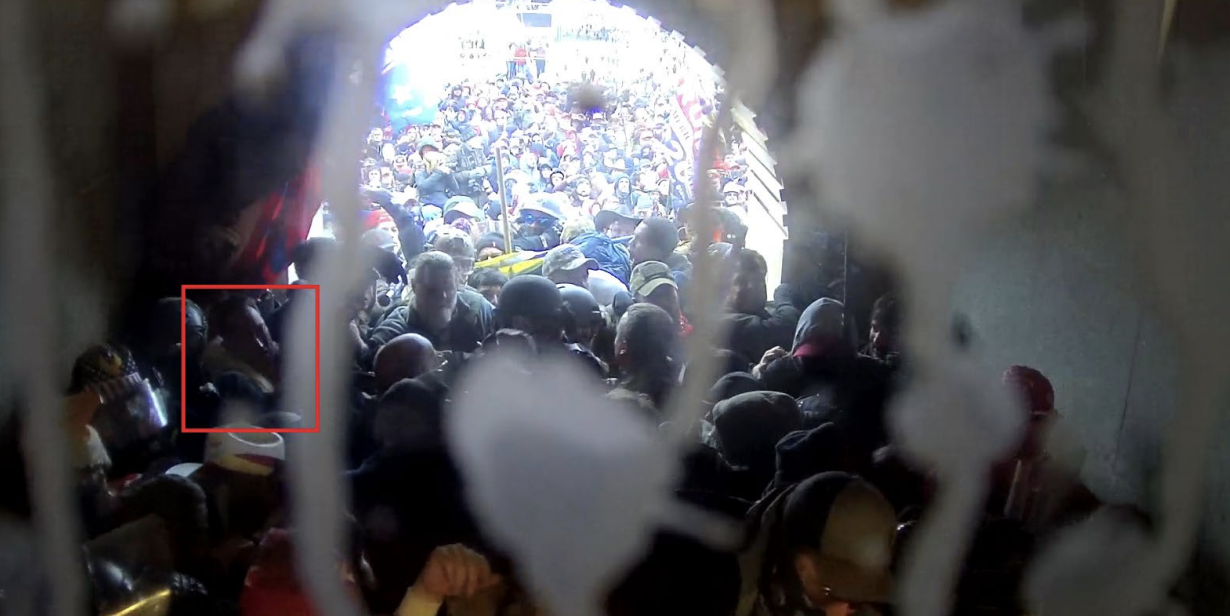
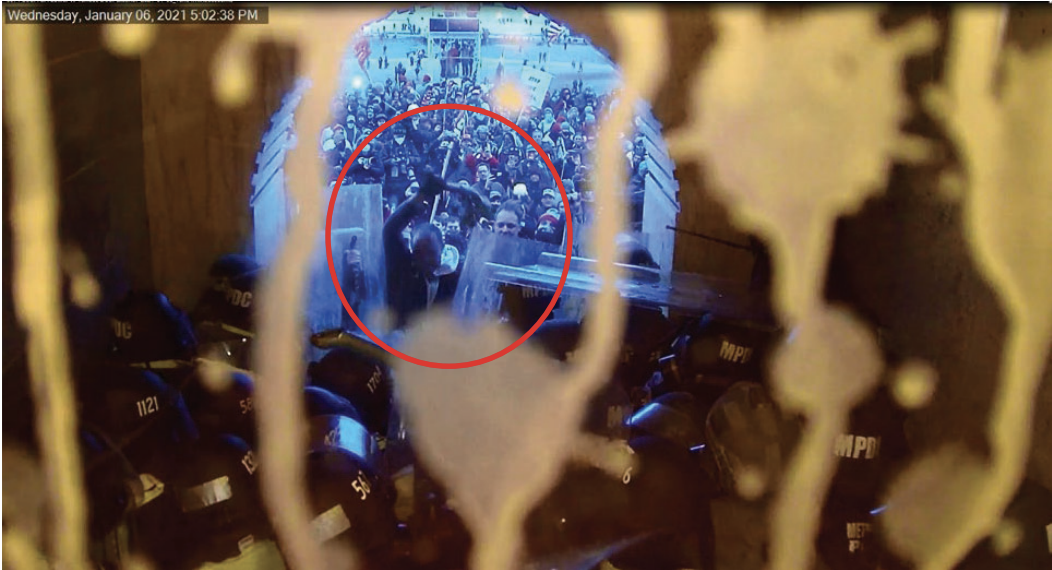
Dan “Milkshake” Scott pled guilty to obstruction and assault yesterday. He faces 41 to 63 months of prison.

His plea does not include a cooperation agreement, so unless DOJ has kept that hidden in some way (everything about the Proud Boy cases is weird, so I don’t rule it out, and his plea also does not include the standard cooperation paragraph, which often means someone has already been interviewed), Scott will not be called as a witness in the Proud Boy leader trial to explain why he yelled, “Let’s take the fucking Capitol” two hours before the Proud Boys did just that.

Indeed, his statement of offense is interesting for the abundant evidence that Scott knew his objective for the day was to stop the vote certification, but did not know Joe Biggs and Ethan Nordean’s plans for doing so. In addition to his “take the fucking Capitol” comment, for example, Scott is quoted as gleefully saying, “Oh god, we’re going to the Capitol, guys.” And he admitted that,

Scott’s purpose in being in this restricted area was to influence or impede Congress’s certification of the results of the 2020 presidential election, which was occurring inside the U.S. Capitol Building.

But the statement of offense also repeatedly describes that he was not aware of the alleged conspiracy to obstruct the vote or engage in sedition that Biggs and Nordean are being tried for.

  • Scott did not attend any meetings with Ethan Nordean, Joseph Biggs, or Zachary Rehl on January 5, 2021
  • Scott also was not a member of the Proud Boys’ coordination chats on Telegram, “Ministry of Self-Defense” (or “MOSD”) or “Boots on the Ground,” and did not know the content of the messages in those chats
  • Prior to his entry onto Capitol grounds, Scott had not been told the details of any plans made by Proud Boy leaders, such as Nordean, Biggs, and Rehl, for January 6

This statement of offense, even without a cooperation component, is written just as prosecutors on the Leader prosecution team would need it to support their argument that the Leaders used people like Scott as “tools,” not co-conspirators, to achieve their alleged goal of stopping the vote certification. The statement describes how the Leaders moved behind him, and then after he assaulted two cops, they went up the stairs towards the Capitol.

Scott did not go up the stairs after the assault. Once he saw them going up the stairs, Scott believed that that [sic] the group of Proud Boys led by Nordean, Biggs, and Rehl would attempt to enter the building to obstruct Congress’s certification of the vote including through the use of force if necessary.

Milkshake’s complete dissociation from the even the Telegram chats used to plan the attack and his acute awareness that the goal was to storm the Capitol is interesting for the one other detail used to substantiate his obstruction: Roger Stone.

It turns out, Milkshake was helping Roger Stone intimidate Rick Scott on January 3.

On January 3, 2021, Daniel Scott, Worrell, and other members of their local Proud Boy chapter attended a “Stop the Steal” rally in Naples, Florida. The headline speaker at this event was Roger Stone. Daniel Scott helped Stone up a ladder that Stone used to talk to the crowd. During this speech, Stone asserted that the 2020 presidential election was rigged due to voting fraud, and urged Florida’s U.S. Senators to vote against the certification of the Electoral College vote. Stone stated: “Rick Scott has a fundamental choice. He will either stand up for the constitution…” At that point, Daniel Scott yelled “Or give him the rope!” At another point in the rally, Daniel Scott chanted “Stop the Steal!” into a megaphone, along with the crowd at the rally.

I can’t recall another statement of offense that mentions that earlier Stop the Steal efforts — not even Brandon Straka or Baked Alaska, who were key players in the movement (though both, inexplicably, got off without pleading to obstruction). Even Jacob Chansley, who played a key role in storming the AZ Capitol prior to January 6 and who did plead to obstruction, does not include that earlier action.

Again, unless I’m mistaken, this is also the first mention of Roger Stone in a statement of offense, even among the cooperating Oath Keepers who had interaction with Stone in the weeks before the attack on the Capitol.

Milkshake, in this statement of offense, is described as a tool used by Nordean and Biggs.

But, by description, Roger Stone is what made him one.

Share this entry

Maggie Haberman Claims Asking a Witness to Repeat What He Said in Print Is “Most Aggressive” Move Yet

Exactly three months ago, I noted how some journalists were sowing false drama over whether DOJ would subpoena Mike Pence, given that he wrote up key details about January 6 in the WSJ (and his book).

For months, the press has been squawking about how unprecedented it would be to subpoena the former Vice President. But he just made the case for doing so, right here.

That post preceded, by almost two weeks, a 1,600-word piece from Maggie and Mike, squawking about how unprecedented it would be.

The effort to seek an interview with Mr. Pence puts both the department and the former vice president in uncharted territory.

For the record, it is not unprecedented for a Vice President to appear before a grand jury: Dick Cheney was interviewed by Pat Fitzgerald in what was treated as a grand jury appearance (though it was in Jackson Hole); he did so while he was still VP.

In that November piece, Maggie and Mike allowed Pence to make bullshit claims about profound separation-of-powers issues, even though they noted Pence already wrote it up.

However, in interviews for the release of his new book, “So Help Me God,” Mr. Pence has been more emphatic in his opposition to providing testimony to the House committee, asserting that “Congress has no right to my testimony” about what he witnessed.

“There’s profound separation-of-powers issues,” Mr. Pence told The New York Times in an interview. “And it would be a terrible precedent.”

[snip]

Mr. Pence has written in detail in his book about Mr. Trump’s efforts to stay in power and the pressure campaign he imposed on his vice president beginning in December 2020.

Maggie continues the hype in her story about the subpoena, with Glenn Thrush, from yesterday, claiming the mere act of asking a witness to repeat for a grand jury claims he already made in print is an aggressive act.

The move by the Justice Department sets up a likely clash over executive privilege, which Mr. Trump has previously used to try to slow, delay and block testimony from former administration officials in various investigations into his conduct.

The existence of the subpoena was reported earlier by ABC News.

It was not immediately clear when the special counsel, Jack Smith, sought Mr. Pence’s testimony. The move is among the most aggressive yet by Mr. Smith in his wide-ranging investigation into Mr. Trump’s role in seeking to overturn the outcome of the 2020 election. He is also overseeing a parallel inquiry into Mr. Trump’s handling of classified documents.

It’s not until the 16th paragraph before Maggie reveals that Pence wrote all this up in his book — which is nine paragraphs after NYT reveals that talks about voluntary testimony broke down.

Mr. Pence’s team held discussions with the Justice Department about a voluntary interview, according to the person familiar with the matter, but those talks were at an impasse, leading Mr. Smith to seek the subpoena.

[snip]

Mr. Pence described some of his ordeal in his recently published book, “So Help Me God.”

When a politician resists saying under oath what he has said in a book, you start the story with that fact. And if a politician has already said something in print, then stop pretending it’s really aggressive to expect him to say that to a grand jury.

This story should be about why Mike Pence is resisting repeating, under oath, claims he made as part of a presidential run.

Share this entry

DOJ Is Silent that Enrique Tarrio Is a “Friend of Stone”

There’s something curious about the Proud Boys trial.

Thus far, DOJ has made no mention of the Friends of Stone thread that Enrique Tarrio was part of, along with Alex Jones, Owen Shroyer, Ali Alexander, and Kellye SoRelle, as well as the rat-fucker himself.

That’s true even though it was mentioned repeatedly at Stewart Rhodes’ trial. DOJ submitted some texts Rhodes sent, including one seeming to ask Stone to get Trump to invoke the Insurrection Act.

And DOJ used those comms as part of their graphic showing the ties between all the alleged co-conspirators.

I find the silence about Tarrio’s involvement in the FOS list especially interesting given some Telegram texts submitted yesterday at trial.

In a thread of Telegram texts showing how the Proud Boys went from being called out by Donald Trump to planning for actions in DC, it included an exchange between Tarrio and Jeremy Bertino from November 7, showing their response to the media calling the election for Joe Biden.

Bertino immediately says, “should we roll out to the state houses?”

“Yes,” Tarrio says.

At the time, Ali Alexander, another participant on the Friends of Stone list, was working on a series of events at which mobs intimidated election workers.

On the 8th, Bertino informed Tarrio, “we[‘]re going to Raleigh this afternoon.”

Tarrio instructs, “Make sure…no colors,” meaning not to wear Proud boy yellow and black.

“Why not?” Bertino asks.

“The campaign asked us to not wear colors to these events,” says the guy whose relationship with Donald Trump’s rat-fucker goes back years.

Defense attorneys renewed their fight yesterday, without success, to prevent prosecutors from introducing Trump’s Stand Back and Stand By comment. It’s now officially an exhibit in a seditious conspiracy case, along with Trump’s December 19 tweet announcing January 6 that has been introduced in scores of January 6 cases.

But thus far, DOJ has made no move to mention Tarrio’s tie with Trump’s rat-fucker. Or to explain whether the Proud Boys were coordinating these efforts to intimidate election workers with Stone’s protégé, Alexander.


Share this entry

DOJ Has Spent Five Months Trying to Access Scott Perry’s Phone

Earlier this month, I noted the difficulty created by the fact that 25 of the known witnesses or investigative subjects in the January 6 investigation were attorneys. Days later, I reiterated the difficulty presented by the six or so key participants in Trump’s suspected crimes who are members of Congress.

An important scoop from Politico demonstrates how difficult that is. It confirmed that a still-sealed appeal of a Beryl Howell decision pertains to DOJ’s efforts to get into Scott Perry’s phone.

The existence of the legal fight — a setback for DOJ reported here for the first time — is itself intended to be shielded from public scrutiny, part of the strict secrecy that governs ongoing grand jury matters. The long-running clash was described to POLITICO by two people familiar with the proceedings, who spoke candidly on the condition of anonymity.

The fight has intensified in recent weeks and drawn the House, newly led by Speaker Kevin McCarthy, into the fray. On Friday, the chamber moved to intervene in the back-and-forth over letting DOJ access the phone of Perry, the House Freedom Caucus chair, reflecting the case’s potential to result in precedent-setting rulings about the extent to which lawmakers can be shielded from scrutiny in criminal investigations.

The House’s decision to intervene in legal cases is governed by the “Bipartisan Legal Advisory Group,” a five-member panel that includes McCarthy, his Democratic counterpart Hakeem Jeffries, and other members of House leadership. The panel voted unanimously to support the House’s intervention in the matter, seeking to protect the chamber’s prerogatives, according to one of the two people familiar with the proceedings.

[snip]

More than four months after the government obtained Perry’s phone, Howell sided with DOJ. While Howell’s rulings in the dispute remain under seal, along with any rationale that appeals court judges may have offered for their actions, some spare details about the fight appear in that court’s public docket.

Remember: When DOJ was trying to breach the privilege claims of lawyers Jeffrey Clark and Ken Klukowski, they appeared to do so, in part, by prioritizing Perry’s contacts, emails that could not be privileged given the clients that Clark and Klukowski should have been representing — for a significant period for both, US taxpayers. Yet for most of the time since then, DOJ has been blocked from getting the non-lawyer’s contacts, even though he played a central role in attacking the peaceful transfer of power.

I have not yet been proven correct in my speculation that one reason Merrick Garland appointed a Special Counsel was because the Republican majority in the House made it more difficult to investigate those members of Congress, starting with Perry, who participated in Trump’s coup attempt. But Jack Smith’s background in investigating former members of Congress sure will help this investigation.

Share this entry

Billy B and Johnny D Drank Whiskey before the Special Counsel Appointment

I’ll have more to say about the NYT piece on the corrupt Durham investigation, though probably not till next week. But many people are commenting about how close Billy Barr was to Durham, as depicted by the way they sipped whiskey together.

While attorneys general overseeing politically sensitive inquiries tend to keep their distance from the investigators, Mr. Durham visited Mr. Barr in his office for at times weekly updates and consultations about his day-to-day work. They also sometimes dined and sipped Scotch together, people familiar with their work said.

In some ways, they were an odd match. Taciturn and media-averse, the goateed Mr. Durham had spent more than three decades as a prosecutor before Mr. Trump appointed him the U.S. attorney for Connecticut. Administrations of both parties had assigned him to investigate potential official wrongdoing, like allegations of corrupt ties between mafia informants and F.B.I. agents, and the C.I.A.’s torture of terrorism detainees and destruction of evidence.

By contrast, the vocal and domineering Mr. Barr has never prosecuted a case and is known for using his law enforcement platform to opine on culture-war issues and politics. He had effectively auditioned to be Mr. Trump’s attorney general by asserting to a New York Times reporter that there was more basis to investigate Mrs. Clinton than Mr. Trump’s “so-called ‘collusion’” with Russia, and by writing a memo suggesting a way to shield Mr. Trump from scrutiny for obstruction of justice.

But the two shared a worldview: They are both Catholic conservatives and Republicans, born two months apart in 1950. As a career federal prosecutor, Mr. Durham already revered the office of the attorney general, people who know him say. And as he was drawn into Mr. Barr’s personal orbit, Mr. Durham came to embrace that particular attorney general’s intense feelings about the Russia investigation.

It is true that Special Counsels, under the regulations, are supposed to have more independence from the Attorney General than this.

But keep in mind that 17 months of whiskey sipping happened before Barr made Durham Special Counsel.

And Barr intervened this closely in many of the other investigations he orchestrated. I wouldn’t be surprised if he sipped whiskey with Scott Brady and Jeffrey Jensen, when they were conducting corrupt projects (accepting Russian-tied dirt on Joe Biden and undermining the Mike Flynn case, respectively) for him, as well.

The timing is significant in another way.

As NYT describes, when Billy and Johnny went to Italy chasing George Papadopoulos’ conspiracy theories, the Italians instead shared alarming information about suspected financial crimes with the two men. Rather than providing the tip to a normal investigator, Barr instead had Durham chase it down.

On one of Mr. Barr and Mr. Durham’s trips to Europe, according to people familiar with the matter, Italian officials — while denying any role in setting off the Russia investigation — unexpectedly offered a potentially explosive tip linking Mr. Trump to certain suspected financial crimes.

Mr. Barr and Mr. Durham decided that the tip was too serious and credible to ignore. But rather than assign it to another prosecutor, Mr. Barr had Mr. Durham investigate the matter himself — giving him criminal prosecution powers for the first time — even though the possible wrongdoing by Mr. Trump did not fall squarely within Mr. Durham’s assignment to scrutinize the origins of the Russia inquiry, the people said.

Mr. Durham never filed charges, and it remains unclear what level of an investigation it was, what steps he took, what he learned and whether anyone at the White House ever found out. The extraordinary fact that Mr. Durham opened a criminal investigation that included scrutinizing Mr. Trump has remained secret.

But in October 2019, a garbled echo became public. The Times reported that Mr. Durham’s administrative review of the Russia inquiry had evolved to include a criminal investigation, while saying it was not clear what the suspected crime was. Citing their own sources, many other news outlets confirmed the development.

The news reports, however, were all framed around the erroneous assumption that the criminal investigation must mean Mr. Durham had found evidence of potential crimes by officials involved in the Russia inquiry. Mr. Barr, who weighed in publicly about the Durham inquiry at regular intervals in ways that advanced a pro-Trump narrative, chose in this instance not to clarify what was really happening.

By description, this tip too appears to precede the time when Durham was appointed Special Counsel. That’s important because, with every other investigation into Trump, Barr attempted to ensure it was shut down during the summer of 2020. If Barr succeeded here, too, then it would mean that it would not fall into the scope of Durham’s Special Counsel activities.

That’s important, because Durham is, by regulation, required to write a report about his prosecution and declination decisions. If Durham wants to see his report made public, we should fairly expect to see this criminal tip on Trump included.

There are a lot of questions about why Durham remains at DOJ. But one potential reasons is that Lisa Monaco believes his report could be a worthwhile thing: basically a long list of conspiracy theories that Barr had Durham chase that turned out to be conspiracy theories.

And this story may put some pressure on DOJ to make sure that happens.

Share this entry

More on Brandon Straka’s So-Called Cooperation

There was a funny moment in Brandon Straka’s February 24, 2022 January 6 Committee interview.

Close to the beginning of the interview, he provided a description of how, he claimed, the idea for Stop the Steal came about: someone, probably Ali Alexander, simply renamed a pre-existing MAGAt Twitter DM list sometime after the election.

A So there was a Twitter DM thread, which s to say, like, a private message thread that somebody had created — I have no idea who because in all likelihood it was probably created significantly before I was added to it. It was called MAGA Verified, which essentially means anybody who is a MAGA or, you know, Donald Trump supporter, who has a blue checkmark next to their name, so as in verified on Twitter.

And so somebody had created a group, a direct message group, and so I don’t know if anyone here maybe does or does not understand how Twitter works, but with a Twitter DM group, somebody can create a group and just add people. They don’t have to have your permission. Then it’s up to you to either leave the group or decide if you  want to stay in the group. 1) So, like, as right now as we speak, I’m probably added to hundreds of groups because I don’t really check my DMs that thoroughly, and I don’t make it an effort to go through and remove myself from every group that I’m added to.

But this particular group was called MAGA Verified, and it was a collection of people who are verified, you know, Republicans or Donald Trump supporters.

And then as (he claims) results started changing, people on the group decided to adopt the hashtag #StopTheSteal.

And at after the election, so I guess around November 5th, I would say, of 2020, 6several of us were in that group just sort of expressing confusion, exasperation, sadness about how the election results had suddenly changed during the night on November 4th going into November 5th.

And thenI think over the course I mean, I’d have to go back and look, but it was over the course of, I think, a day or two that plans started getting made to kind of deploy to swing States and host these First Amendment-protected events to encourage people to keep their spirits up and encourage their State legislators to hold a thorough forensic audit of the votes in theirStates, because people were very concerned about irregularities. So I’m going to go out on a limb and assume it was probably Ali Alexander who started using the Stop the Steal hashtag.

According to the cooperation memo the government filed in advance of Straka’s sentencing last year, which just got unsealed, it’s the same story he told to the FBI.

The “Stop the Steal” effort was formed through a private Twitter group of which Straka was a member. The group was formed “long before” the 2020 election and referred to itself as the “MAGA Verified” group because it was comprised of MAGA followers who were verified on Twitter. The members of the group used Twitter to exchange private direct messages with one another. Straka provided information about an individual, Ali Alexander, who was part of the MAGA Verified group.

There are a few problems with the story. First, as J6C pointed out to Straka, he was already organizing a vote fraud event, to take place after the election, before the election.

So we’ll give you time to look at this document, but it is it looks like it’s a permit 3 application filed by WalkAway Campaign. ~The date is October 28 of 2020. It’s for John 4 Marshall Park, and it’s scheduled — the proposed scheduled date is for November 15th.

If we go down to the second, page, the purpose of the event is a demonstration for free and fair elections. So help us understand, why did you –what were you thinking about on October 28th to want to have an event on November 15th about free: and fair elections?

In response to this observation, Straka bullshitted for a while and then gave up.

It just didn’t make sense, he said.

A Julie Hanson is an event planner that we’ve worked with over – for years on various events that we’ve done. I can’t answer this question, because this doesn’t make sense to me. I don’t know if she made a mistake when she put the date on the application, or if I don’t want to speculate why Julie put that date on the application, but I can tell you this doesn’t make sense to me, because I thought that Donald Trump was going to win the election, and my reaction to how the election turned out began on November 5th. So it makes no sense to me that I would’ve done – I would’ve asked to submit an application a week before the election. That doesn’t make sense to me.

Q So it’s your just want to make sure we have your testimony clear. You don’t recall instructing Ms. Hanson or approving an application in October for this event after the election on November 15th?

A Not in October, I don’t recall that. I — again, it just doesn’t make sense.

Right: This story doesn’t make sense. That’s the problem.

Plus, as J6C pointed out, the hash tag was actually in use well before the election. After Straka engaged in a really long spiel about how he didn’t much care of Ali Alexander registered the hash tag — “I just want[] to be told where to show up, what time, and where’s the microphone” — (as he said about January 6), J6C asked about the timing again.

Q Got it. That brings me back thank you, that was helpful. That brings me back, though, to the permit application from October 28th. It looks like Stop the Steal, the hashtag, I mean, was really starting to get traction early as September 7th of 2020.

We’ve seen tweets of Jack Posobiec doing it.

So do you recall maybe filing this application in October, for November 15th, to advance the Stop the Steal messaging that was starting to percolate in September, October, and November of 2020?

A Again, it just doesn’t make any sense to me. That – because I believed wholeheartedly that Donald Trump was going to win the election. ~ So it ~ it just doesn’t make sense to me that I would’ve decided a week before the election to submit a permit under the assumption that we’re going to lose the election. It just – that just doesn’t add up inmy mind.

In fact, J6C already knew that the hashtag had been in use even longer than that.

Though Ali Alexander, in his December 9, 2021 testimony, had tried to distinguish the hashtag from everything else, when asked why he suggested he should sue the Kremers after Roger Stone was denied a speaking slot on January 6, Alexander explained,

And there was all this pretense that, you know, Roger Stone is the gentleman who came up with the phrase Stop the Steal. I have, you know, this gentleman’s agreement with him that I  have a perpetual use of the license.

And the FBI would know that Stop the Steal went back to 2016, because abundant evidence about it would have been collected by Robert Mueller’s team.

So no one should have believed Straka’s explanation.

I have long raised questions about whether DOJ allowed itself to be snookered in giving Straka a sweet plea, when instead they should have charged him with obstruction. There’s nothing in the filings unsealed in recent days to alleviate my concerns.

That’s true, first of all, because two of the things he threw at prosecutors seem to have been chum, waste material thrown out to distract predators. Straka provided second-hand information from someone who may have been in Nancy Pelosi’s office.

Information that Elijah Schaffer was inside of Nancy Pelosi’s office that is currently being investigated. It is unknown whether any other information has been discovered by the Government concerning this lead.

The government still had not verified the tip a year later.

On March 5, 2021, Straka was interviewed by the FBI a second time. Sometime after his first interview, Straka recalled that an individual, David Leatherwood, told him that an individual, Elijah Schaffer, was inside of Nancy Pelosi’s office on January 6. This information is being investigated for its accuracy.

And Straka, just before sentencing, provided the name of a guy he lived close to in Nebraska (but had not previously known), an identification he claimed came from someone he didn’t even know on Twitter.

On information and belief, Mr. Straka positively identified Gavin Crowl as an individual who participated in January 6. Mr. Crowl’s identity had not been previously provided by anyone to Law Enforcement for almost eleven months. Mr. Crowl is a convicted Sex Offender who has been placed on the Sex Offender Registry in Nebraska. His identity was confirmed by using information provided on the Sex Offender Registry, and by cross-referencing public information from his LinkedIn profile with information he provided in an Internet interview with Bobby Powell, a Government-identified “insurrectionist advocate”. This individual can be heard encouraging the crowd to take the shield of the officer in the video recorded by Mr. Straka. Other video information provided by Mr. Straka shows this individual moving toward entering the Capitol before he was stopped. It is unknown whether this individual actually did enter the Capitol Building; and what other criminal activity he participated in.

His J6C interview makes it clear Straka shared this guy’s name for the purpose of floating conspiracy theories about Antifa.

A Okay. So I — it had been brought to my attention by somebody on social media who I  don’t know, a complete stranger, had essentially reached out to me to tell me that they had identified somebody in a video who was at the Capitol who they said this person told me that they identified a person who they said was a member of antifa.

This person told me, I watched this person dressed entirely in black from head to toe, and they said, then he went away for 10, 15 minutes or whatever, and he came back dressed asa Trump supporter. And he was causing agitation, you know, et cetera.

I engaged in a conversation with this person, because the person said to me, I have this on video, or something like that, and I said, Okay. So I looked at the video that the person was talking about, just because it sounded interesting to me, and I was shocked when I discovered that recognized this person as being somebody who was standing directly beside me in my video when I was on the Capitol steps.

Now, you know, I know for a fact that one of the crimes I’m — I was accused of committing was being in a restricted area. So this person had certainly committed the same crime that I committed, and I was also very curious if this person might’ve been encouraging the crowd in ways that it was alleged that I was encouraging the crowd.

And so, I asked this person if they knew the identity of this individual, and this person said, Yes. And so he gave me the name of this individual. I googled this individual and discovered that this individual has a violent criminal record.

At that point – and –and I also discovered that this person lives, coincidentally, very close by where I live.

According to the government sentencing memo, they did open an investigation into Crowl; it was new information for them.

On December 8, 2021, counsel for Straka provided the government with information regarding a United Capitol rioter who was at the U.S. Capitol. Straka recalled observing the individual while he was standing outside on the steps outside of the East Rotunda Doors. This individual stood nearby as a U.S. Capitol Police Officer’s protective shield was taken away from him. Straka believes that the individual joined in with the crowd yelling “take it, take it,” as rioters struggled with the officer to take his shield. After January 6, the individual, identified by Straka as Gavin Crowl, participated in an interview with insurrectionist advocate, Bobby Powell. Crowl recounted what he observed at the U.S. Capitol. Straka and Crowl reside in Nebraska and live within a short distance of each other. Straka’s information is beneficial in that Crowl was not previously identified by the FBI prior to Straka’s identification of Crowl.

[snip]

Based in the information provided by Straka, the FBI has opened an investigation into Crowl and his conduct at the U.S. Capitol on January 6.

Crowl is the one, notably, that Straka claimed to be afraid of, not Trump people threatening to retaliate (though DOJ submitted exhibits of texts from someone else demanding that Straka recant his testimony).

This violent sex offender, if he learns of Mr. Straka’s cooperation in identifying him (which would be the primary reason for any subsequent arrest and prosecution) has a predatory and aggressive history, which could easily result in retaliation against Mr. Straka or his family.

Crowl has not yet — publicly, anyway — been arrested, and even if he was, it’s not clear he ever did anything more than trespass outside the building.

While the tip may have been helpful, it was not cooperation about things that Straka was uniquely positioned to know.

The single prosecution on which Straka’s cooperation was said to help (usually the standard for credit at sentencing) was Simone Gold, the anti-vax activist who was arrested even before Straka was in January 2021, and who had already been charged with felony obstruction six days before the February 11 Straka interview where he first provided the information. In its sentencing memo, the government said Straka provided a voice mail that might help get Gold to plead.

Straka provided the government with voicemail messages that he received from Gold, whom he met in Washington D.C. on either January 5 or 6. The information contained in the voicemail messages is valuable in the government’s prosecution of Gold and may assist in a plea resolution of the Gold prosecution.

After further delay, Gold did plead out, not to the felony obstruction count, but to the more serious trespassing count. Her plea agreement had the standard cooperation paragraph in it, which sometimes suggests that the person had not yet sat for the further FBI interview required by virtually all misdemeanor pleas. The government sentencing memo in her case laid out several ways she continued to delegitimize her prosecution — and fundraise, to the tune of $430,000 — off it. In short, there’s absolutely no evidence that DOJ used the information Straka provided on Gold to advance the overall investigation. It made a misdemeanor plea easier to get, but not much more than that.

Gold is more likely to be held accountable in a lawsuit by her anti-vax group, which has split into factions over how she grifted the fundraising from it (though the failed attempt by Gold’s attorney, Kira West, to drop her as a client may suggest there might be legal accountability for the grift, as well).

The combined memos make it clear that the government viewed Straka’s cooperation to be most valuable for his insight into Stop the Steal, especially Alexander. Straka himself describes identifying people on one of the Stop the Steal threads (though this sounds like the known Twitter DM list; in his J6C transcript, he described a Signal thread as well).

Contact information regarding the following members of the Stop the Steal text thread, to include: Ali Alexander, Michael Coudrey, Scott Presler, Ashley St. Clair, Nathan Martin, Courtney Holland, Megan Barth, CJ Pearson, Ryan Fournier, and another telephone number unknown to Mr. Straka.

There’s a non-zero chance that the tenth number is either that of Paul Gosar or one of his staffers, because he was on that Twitter thread (and Straka filibustered about him when asked by J6C).

There are reasons for concern, though. None of the documents pertaining to Straka — from either J6C or DOJ — mention Mike Flynn, next to whom Straka sat at the Ellipse rally, which is particularly important given Straka’s description that he went back to the Willard after the rally.

And in the discussion of Straka’s information on the organizers of Stop the Steal (Straka did not mention Caroline Wren, though he may not have understood her role), DOJ adopts the same misspelling of the Kremers’ name as Straka did: “Kremmer” rather than “Kremer.”

Straka provided information about “Stop the Steal” members Amy Kremmer, Kylie Kremmer, Cindy Chafian. This information was useful in that it identified members of “Stop the Steal.” Neither the Kremmers nor Chafian are being prosecuted by the government at this time.

Note that J6C seemed not to have communications between Straka and Chafian that should have been in his production.

How aggressively must prosecutors be following this if, over a year into an investigation of January 6, they’re still not clear on who the Kremers are, whether or not their actions are deemed suspect?

And Straka’s memo seems to confirm my fear that DOJ had not yet turned to the earlier incitement from Stop the Steal — which was a key threat to state lawmakers are they were considering whether to support Trump’s coup attempt — until his third interview, in January 2022.

Additional information concerning Michael Coudrey, Scott Presler, Ashley St. Clair, Courtney Holland, Megan Barth, CJ Pearson, and Ryan Fournier, Amy and Kylie Kremmer, Cindy Chafian, Alex “Bruisewitz” (spelling unknown), Crystal (LNU) (an organizer and logistics person involved in rallies for President Trump), and Jenny Beth Martin; as well as information about specific rallies held in the months prior to January 6, was provided during Brandon’s third interview. [my emphasis]

Brandon Straka played a central role in intimidating election workers in my state of Michigan in 2020, and the government got all the way to sentencing before asking him about that process. That pisses me off and raises real questions about how thoroughly they investigated Straka before agreeing to a misdemeanor plea.

In his J6C interview, almost seven weeks after that third interview, Straka revealed that FBI at that point still retained all his devices except his phone. Three months after his third interview, DOJ subpoenaed Alexander. DOJ may not be done with Straka.

It may be that the trade-off — of getting immediate access to his devices rather than waiting to crack whatever security he had — still made the plea worth it. It may be that that early cooperation, and more importantly, the follow-up in January 2022, provided DOJ information they couldn’t have gotten without a lot more effort.

But J6C, without warrants, was able to poke a key hole in Straka’s story. At least on the public record, it seems that FBI was not so thorough, even with warrants and seized devices in hand.

Links

Timeline

January 11, 2021: Tip on Straka’s post to Twitter

January 13, 2021: Interview with Straka relative

By January 13, 2021: Straka removes January 5 video from Twitter; last view date for December 19, 2020 video cited in sentencing memo but not arrest affidavit

January 20, 2021: Straka charged by complaint

January 25, 2021: Straka arrest

February 17, 2021: First FBI interview

February 18, 2021: First continuance

March 25, 2021: Second FBI interview

June 3, 2021: Second continuance

July 2, 2021: Protective order

August 25, 2021: Third continuance

August 31, 2021: Date of plea offer

September 14, 2021: Deadline to accept plea

September 15, 2021: Straka charged by information

September 30, 2021: Stuart Dornan files notice of appearance for Straka

October 5, 2021: Updated information

October 6, 2021: Change of plea hearing (plea agreementstatement of offense); sentencing scheduled for December 17, with initial memo due December 10 and response due by December 15

Between October 7 and November 19, 2021: Pretrial services interview (sealed docket #28)

November 19, 2021: Brittany Reed substitutes for April Russo

December 8, 2021: Sentencing reset for December 22; sentencing memo due by December 15; Straka “provide[s] counsel for the government with information that may impact the government’s sentencing recommendation”

December 9, 2021: Ali Alexander J6C testimony

December 10, 2021: Straka shares sentencing position (possibly filed under seal)

December 11, 2021: Government tells defendants it seeks to continue, tells Straka it will consider request to dismiss case

December 16, 2021: Last view date for 2018 Straka video, Walkaway Foundation website, WalkAway Campaign PAC website, WalkAway Campaign YouTube Channel; ProPublica article on Michael Courdrey message (and attempts to distance Alex Jones and Ali Alexander)

December 17, 2021: Motion to continue (presented as joint) 30 days

By December 23, 2021: Sealed motion attempting to seal publicly filed motion to continue, denied by Judge Friedrich

January 5, 2022: Third FBI interview, this time including prosecutors (plural)

January 13, 2022: Government sentencing memo (sealed addendum at docket #37); government denies Straka request to dismiss case

January 14, 2022: Bilal Essayli files notice of appearance for Straka

January 20, 2022: Straka sentencing

February 22, 2022: Brandon Straka J6C testimony

April 8, 2022: Ali Alexander reports receiving a subpoena

June 24, 2022: Ali Alexander grand jury appearance

Share this entry

About Your Pence Special Counsel Complaint: On the Missing Coverage of Section 600.2(b)

I’m seeing people ask why Merrick Garland hasn’t appointed a Special Counsel yet to investigate Mike Pence when (the claim is) he did for President Biden.

The answer is … that’s not what happened.

DOJ learned about the documents at Pence’s house no earlier than January 18 (probably on January 19), so seven or eight business days ago.

At this stage of the Biden review (seven days after DOJ learned about the documents from the Archives), Garland hadn’t appointed US Attorney for Chicago John Lausch yet. As Attorney General Garland explained when he announced the appointment of Robert Hur, ten days after DOJ learned about the documents at Biden’s office, he asked Lausch to investigate:

  • November 4: DOJ learns of the Biden documents
  • November 9: FBI starts an assessment
  • November 14: Garland appoints John Lausch

More importantly, Lausch wasn’t appointed as a full Special Counsel under 28 CFR 600.4, which is what Jack Smith was appointed under. Rather, Garland appointed Lausch under 600.2(b).

On November 14, pursuant to Section 600.2(b) of the Special Counsel regulations, I assigned U.S. Attorney Lausch to conduct an initial investigation to inform my decision whether to appoint a Special Counsel.

Section 600.2(b) permits the Attorney General to appoint someone to conduct an “initial investigation” to better inform the decision whether to appoint a full-blown Special Counsel.

Importantly, Garland didn’t reveal that he had appointed Lausch until the day he appointed Hur, this time under 600.4.

So Garland could well have appointed someone — could be Lausch, could be Hur, could be someone who wasn’t appointed under the Trump-Pence Administration, as both Lausch and Hur were — to conduct an initial assessment regarding Pence’s documents without telling the public, just as he did with Biden. If he followed the same approach he did with Biden, he might not reveal that step unless and until he appointed a full Special Counsel.

Check back on March 17 to see where DOJ is with a Pence review, which would be the same almost two months out as it took to appoint a Special Counsel with Biden.

Maybe by then someone will have been appointed to review the classified holdings of all former Presidents and Vice Presidents.

To anticipate one more complaint, about why Garland waited nine months after the discovery of classified documents in boxes that had been at Mar-a-Lago before appointing Jack Smith: DOJ started using a grand jury no later than May 11 in Trump’s case, which is when they sent a subpoena for all documents with classification markings (I believe the subpoena reflects a grand jury seated on April 27). The subpoena came just over two months after FBI received the NARA referral on February 9. The timing of the Special Counsel appointment pivoted on the fact that Trump announced his his run for President, not the intensity of the investigation.

In fact, Garland might not appoint a Special Counsel if Pence doesn’t formally announce (if even there’s cause to do so).

It’s not at all clear that these investigations should follow a parallel track. But even if they should, Pence has not yet been treated differently than Biden.

Share this entry

“Why Did Mike Pence Wait So Long to Reveal His Stash of Classified Documents?”

At a press availability yesterday, Merrick Garland repeated a line he often uses, that DOJ applies the law the same for everyone.

“We do not have different rules for Democrats or Republicans, different rules for the powerful or the powerless, different rules for the rich and for the poor, we apply the facts, and the law in each case in a neutral, non-partisan manner,” Garland told reporters during a press availability at Justice Department headquarters. “That is what we always do.”

Many of the reporters covering it treated it as a comment about DOJ’s handling of the Trump and Biden classified document inquiries. Maybe it was.

Little did anyone know, though, that Garland might well have had the FBI’s collection of about a dozen documents with classified markings from Mike Pence’s home in mind.

Greg Jacob first told the Archives about the documents on January 18, six days ago and two days after the search. The next day, the FBI arrived in Indiana to collect the documents, which Jacob complained was against standard protocol. Yesterday Pence’s staff delivered several boxes to the Archives to check for adherence to the Presidential Records Act.

I don’t much care that Pence didn’t immediately run to the press to announce the documents, but it is the kind of thing that journalists who are good at horse race coverage, unaware of many of the thus-far distinguishing details about the Trump documents, and ill-equipped to cover classified documents stories latched onto with Biden.

So in an effort to provide some structure for the kids-chasing-a-soccer-ball-like coverage we’re already seeing, here’s a table that summarizes what we know and don’t know about all three cases.

Until we have answers about some of the details that currently distinguish Biden and Pence from Trump — like whether they knew of the documents (both claim they did not), whether they ever accessed the documents after leaving office, whether we have reason to believe they’re harboring more — this should not be a story.

And the key difference, one that should be included in every story that tries to make such a comparison, is that Trump refused to give documents back, whereas Biden and Pence freely offered them up.

The reason that’s important, aside from the both sides drama of it, is that it is an element of the offense that would be most likely to be used if DOJ took the unprecedented step of charging a former Original Classification Authority with harboring classified documents.

As we can now see, it happens that men who have aides pack them up at the end of their tenure go home with documents they didn’t know they had. It happens. (By the time Kamala Harris leaves, there’s likely to be a new protocol in place, so Harris can set a perfect record as the first woman being packed up.) What matters — what distinguishes a mistake from a potential crime — is what you do with the documents when you become aware you have them.

It’s possible we’ll learn details that suggest Biden knowingly stashed classified documents. But thus far, we don’t have any such details. And that should — but thus far has often not — show up in any competent coverage.

Share this entry

When Your Lawyer is Acting Like H.R. Haldeman, It’s Time to Get a New Lawyer

President Richard Nixon and his Chief of Staff HR Haldeman, before Nixon resigned in disgrace and Haldeman went to prison for 18 months after being convicted of perjury, conspiracy, and obstruction of justice.

When Cassidy Hutchinson’s September 14, 2022 testimony to the J6 committee first came out, I remember being struck by three sentences in bold below (emphasis added) as I read it (from p. 48):

Ms. Hutchinson. And then just, at the end of that meeting, we had — because I had asked him about doing the, like, mock question preparation, and he said, “No.” So said, “Well, do you recommend anything that I can do to prepare for next week?” He’s like, “Get a good night’s sleep,” like, a few wishy-washy things.

And he said, “Don’t read anything about this on the internet.” He said, “Again, Cass, like, just trust me on this. I’m your lawyer. I know what’s best for you. The less you remember, the better. Don’t read anything to try to jog your memory. Don’t try to put together timelines.”

And he was like, “Especially if you put together timelines, we have to give those over to the committee. So anything you produce we have to give over to the committee. So l really” — he was like, “You can have things in front of you, but really don’t want you to, because we have to give that to the committee.”

So now I’m like, oh now I’m kind of scared. — Like, what if I want notes in front of me and he gets mad at me because I have to give them to the committee now? I didn’t know I would have to give them to the committee, but he told me I did, and he was my lawyer, so I was trying to trust him.

This wasn’t the only place in the transcript where words like these were used – they were almost a refrain. “Where have I heard this before?” I asked myself, then kept reading. Over this past weekend, while helping my mom clean out some old magazines, the penny dropped.

The date was March 21, 1974 1973 [corrected] – two days before the scheduled sentencing of the convicted Watergate burglars. At the White House, things were tense, as the scandal was growing and the coverup was in the process of unraveling. President Nixon, Chief of Staff H.R. Haldeman, and White House Counsel John Dean met for almost two hours, taking stock of the mess and looking for possible routes forward. They discussed additional payments to keep people quiet (noting that earlier payments had bought them silence through the 1972 election), and tried to figure out how to sideline the recently formed Senate Watergate committee chaired by Sen. Sam Ervin (D-NC).

Toward the end of the meeting, Nixon brought up a suggestion from his Domestic Policy Advisor  (and former White House Counsel) John Ehrlichman: instead of letting the Ervin committee run riot in public, announce that all this was going to a new grand jury. From the transcript of the Nixon tapes (with all the typos, punctuation, etc. in the original, but with emphasis added):

PRESIDENT:    John Ehrlichman, of course, has raised the point of another grand jury. I just don’t know how you’re going to do it. On what basis. I, I could call for it, but I…

DEAN:              That would be, I would think, uh…

PRESIDENT:    The President takes the leadership and says, Now, in view of all this, uh, stripped land and so forth, I understand this, but I, I think I want another grand jury proceeding and, and we’ll have the White House appear before them.” Is that right John?

p. 89 [sic, should be 88]

DEAN:              Uh huh.

PRESIDENT:    That’s the point you see. That would make the difference. (Noise banging on desk) I want everybody in the White House called. And that, that gives you the, a reason not to have to go up before the (unintelligible) Committee. It puts it in a, in an executive session in a sense.

HALDEMAN:   Right.

PRESIDENT:    Right.

DEAN:              Uh, well…

HALDEMAN: And there’d be some rules of evidence. aren’t there?

DEAN:              There are rules of evidence.

PRESIDENT:    Both evidence and you have lawyers a

HALDEMAN: So you are in a hell of a lot better position than you are up there.

DEAN:              No, you can’t have a lawyer before a grand jury.

PRESIDENT:    Oh, no. That’s right.

DEAN:              You can’t have a lawyer before a grand Jury.

HALDEMAN: Okay, but you, but you, you do have rules of evidence. You can refuse to talk.

DEAN:              You can take the Fifth Amendment.

PRESIDENT:    That’s right. That’s right.

HALDEMAN: You can say you forgot, too, can’t you?

DEAN:              Sure. –

PRESIDENT:    That’s right.

p. 89

DEAN:              But you can’t…you’re…very high risk in perjury situation.

PRESIDENT:    That’s right. Just be damned sure you say I don’t…

HALDEMAN:  Yeah…

PRESIDENT:    remember; I can’t recall, I can’t give any honest, an answer to that that I can recall. But that’s it.

Hutchinson is too young to have lived through Watergate, but she clearly recognized that Stefan Passantino was acting more like he was more worried about someone else’s legal issues and not her own. It took her a while, but she eventually punted him and found a legal team who agreed to work on her behalf.

Passantino was clearly channeling his inner Haldeman when he told Cassidy Hutchinson “The less you remember, the better.”

Maybe this is a new entry in the DC book of Proverbs: “When your lawyer is acting like H.R. Haldeman, it’s time to get a new lawyer.”

Share this entry